Cool LED lights are easy to find. Choosing the right ones is harder.
A room can look impressive in a product photo, but the final result depends on more than color. The strip type, brightness, color temperature, controller, power supply, installation surface, and environment all affect how the lighting will look after installation.
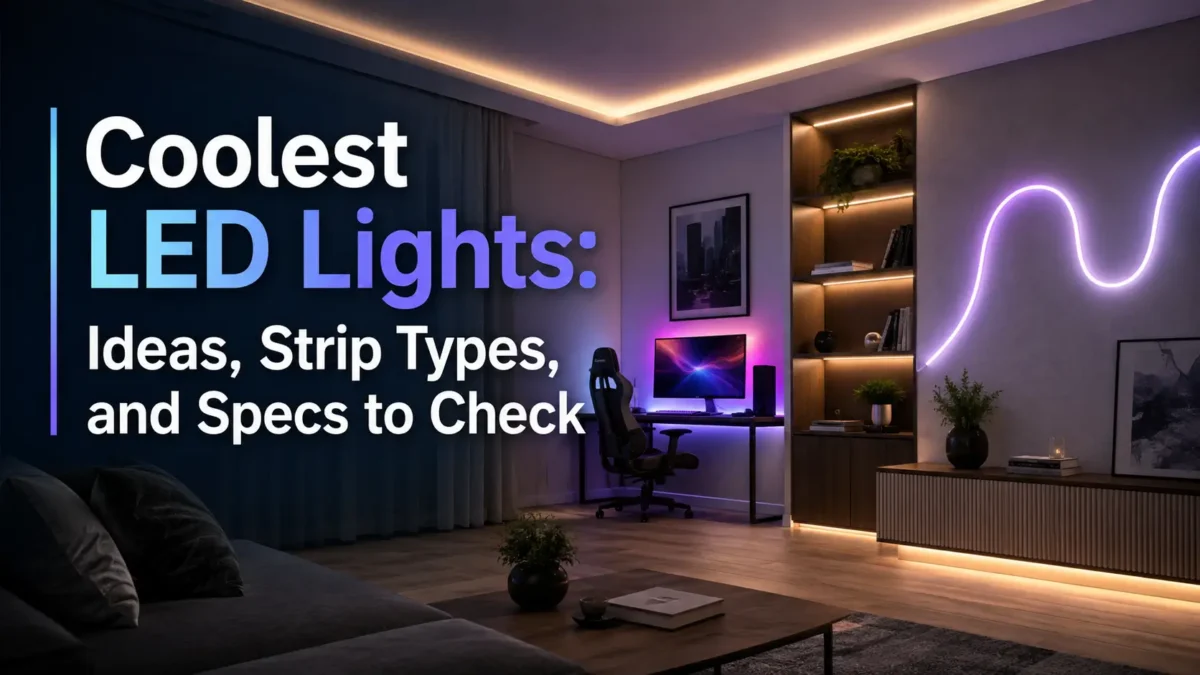
This guide explains cool LED light ideas by effect, then shows how to match each effect with the right LED strip type and selection details.
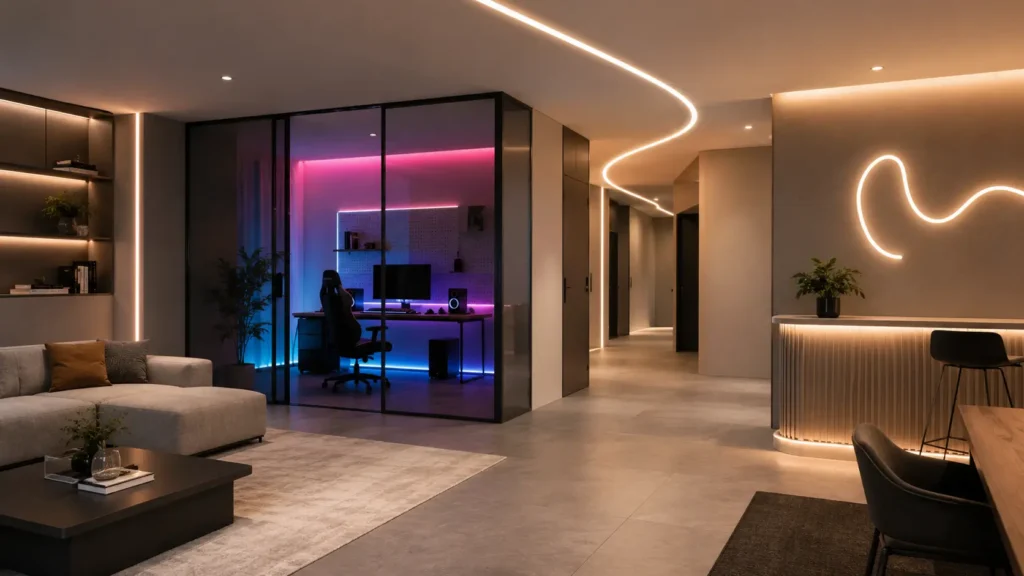
The coolest LED lights depend on the effect you want. RGB or RGBIC strips work well for colorful accent effects, COB strips create a smoother light line, neon flex suits curved or sign-like designs, and diffused LED strip profiles create a cleaner architectural look. Before choosing, check brightness, color temperature or color control, voltage, run length, controller, power supply, mounting method, and environment.
A “cool” LED lighting effect usually starts with the mood or visual result you want. The right choice is not always the brightest strip or the most colorful controller. It is the option that fits the space, surface, viewing distance, and use case.
Hidden LED strips can create a floating ceiling effect or soft wall glow. This works best when the strip is concealed behind a ledge, profile, or recess so the viewer sees the reflected light instead of individual LED points.
Often considered for:
Selection notes:
Color-changing LED strips can add contrast behind a desk, monitor, shelf, or wall panel. RGB or addressable strips are usually considered when the goal is dynamic color effects.
Often considered for:
Selection notes:
Some projects need a clean continuous line instead of visible LED dots. COB strips or LED strips inside diffused profiles can help create a smoother visual line.
Often considered for:
Selection notes:
Neon flex or flexible LED rope-style lighting is useful when the design needs curves, outlines, letters, or decorative shapes. It gives a different look from a flat LED strip because the light is usually diffused through a flexible body.
Often considered for:
Selection notes:
LED strips can make products, collectibles, kitchen shelves, or display cases stand out. For these applications, the color quality and installation position may matter more than dramatic color effects.
Often considered for:
Selection notes:
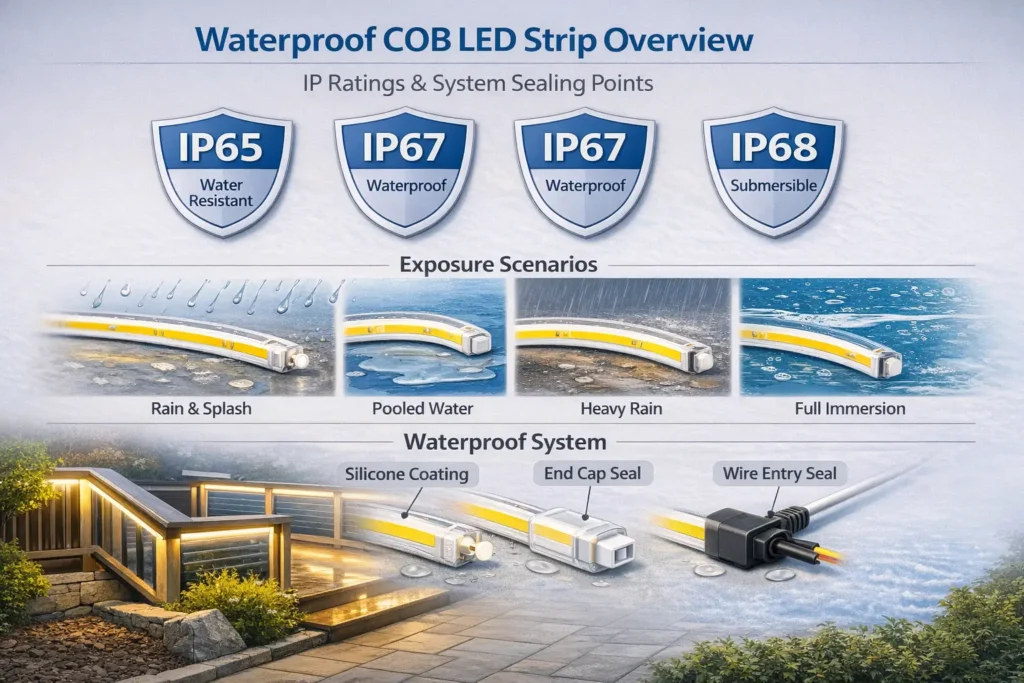
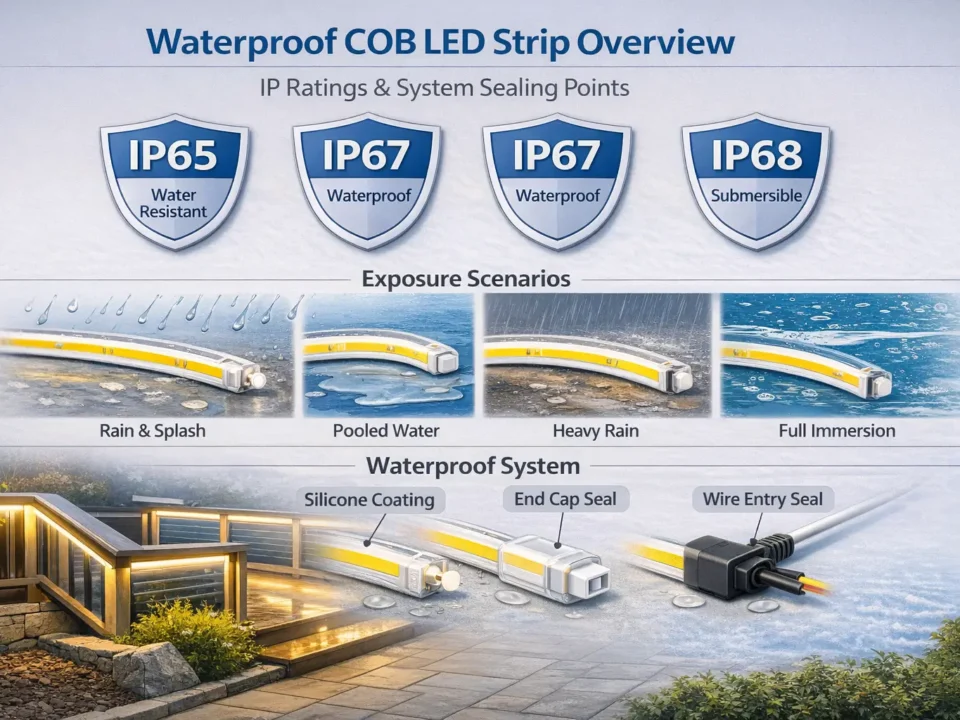
LED strips can be used for covered patios, signage, outdoor accents, or damp environments, but the environment must be checked first.
Often considered for:
Selection notes:
| Desired Effect | LED Type to Consider | Where It Often Fits | Specs to Check | Avoid |
|---|---|---|---|---|
| Color-changing room glow | RGB LED strip | Bedrooms, gaming rooms, accent walls | Controller, brightness, voltage, run length | Choosing by color effects only |
| Dynamic chasing or segmented effects | RGBIC / addressable strip | Gaming setups, display walls, entertainment spaces | Controller type, pixel/addressable design, power needs | Assuming every strip can be cut freely |
| Smooth continuous light line | COB LED strip | Shelves, cabinets, close-view accent lines | Lumens per foot, voltage, mounting surface, heat path | Assuming “dot-free” in every installation condition |
| Curved neon-style outline | Neon flex | Signs, feature walls, curves, outlines | Bend direction, bend radius, voltage, IP rating | Forcing tight bends beyond product limits |
| Clean architectural accent | LED strip with diffused profile | Cove lighting, stairs, cabinets, commercial interiors | Profile size, diffuser, strip width, brightness | Using bare strip where glare or LED dots matter |
| Product or shelf display | White or tunable white strip | Retail shelves, cabinets, display cases | CCT, lumens, CRI if color appearance matters | Using dramatic RGB where accurate appearance matters |
| Outdoor accent | Outdoor-rated strip or neon flex | Covered outdoor areas, signs, exterior accents | IP rating, installation environment, mounting | Using indoor strip in damp or exposed areas |
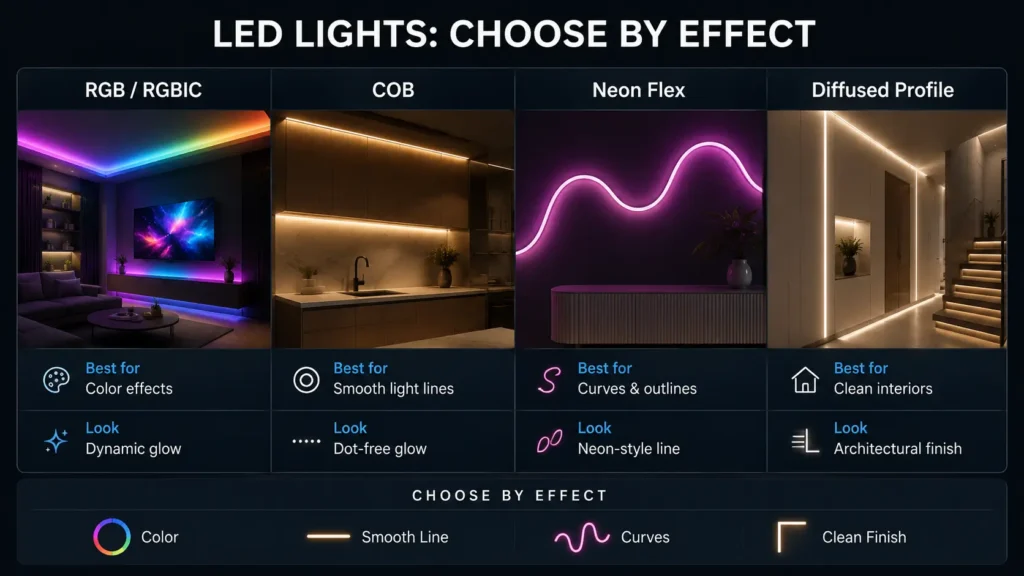
RGB strips mix red, green, and blue light to create color effects. They are a common choice for bedrooms, gaming setups, accent walls, and decorative lighting.
Use RGB when:
Check: controller type, voltage, brightness, length, and power supply.
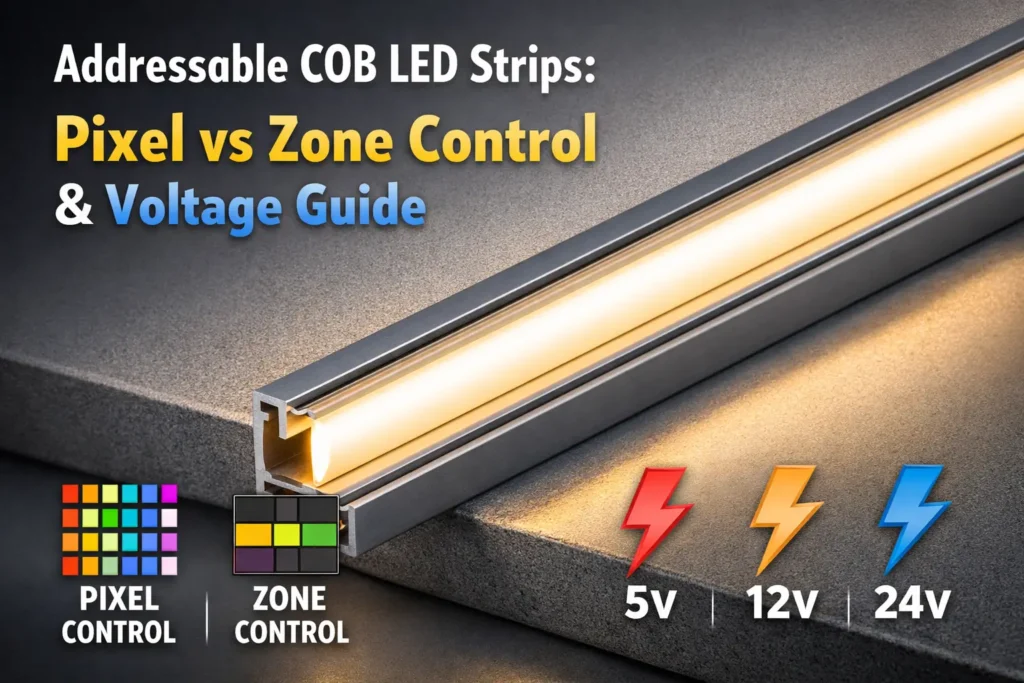
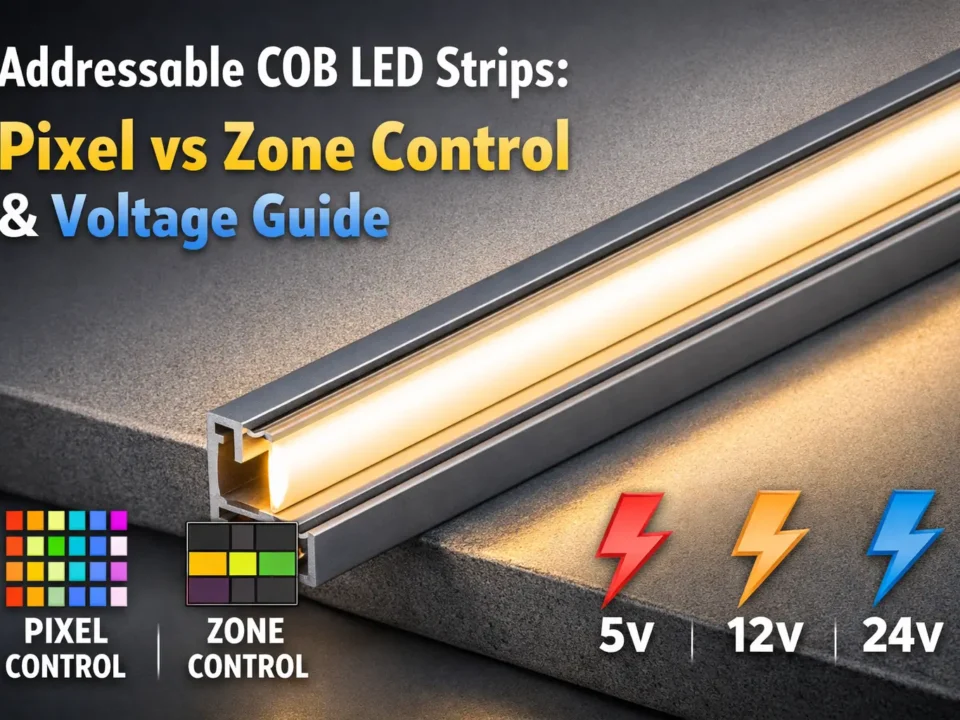
RGBIC or addressable strips can control sections or individual LED groups, depending on the design. This makes them useful for chasing, flowing, or segmented color effects.
Use addressable strips when:
Check: controller compatibility, data/control method, cut points, power requirements, and run length.
COB strips place many LED chips closely together under a continuous phosphor layer or surface. They are often chosen when the goal is a smoother light line with less visible dotting at close range.
Use COB when:
Check: lumens per foot, strip width, voltage, mounting surface, heat path, and dimming compatibility.
Neon flex creates a diffused line inside a flexible body. It is often used for decorative curves, outlines, and sign-like effects.
Use neon flex when:
Check: bend direction, bend radius, cut length, IP rating, mounting clips or channels, controller, and voltage.
A diffused profile places an LED strip inside an aluminum channel with a cover. This can improve the finish, reduce glare, and make the installation look cleaner.
Use profiles when:
Check: profile size, diffuser type, strip width, brightness after diffusion, and mounting method.
A cool LED idea can fail when the specifications do not match the space. Before choosing a strip, check the details below.
| Spec | Why It Matters | What to Check |
|---|---|---|
| Brightness | A strip can look too dim, too harsh, or uneven. | Compare lumens or lumens per foot, not wattage alone. |
| CCT / Kelvin | White light can look warm, neutral, cool, or bluish. | Choose the color appearance that fits the room or product display. |
| RGB / RGBIC / white light | Color effects and white-light quality are different needs. | Decide whether you need mood color, dynamic effects, white light, or both. |
| Voltage | Voltage affects power planning and compatible components. | Match strip voltage with the power supply and system design. |
| Run length | Long runs can affect layout and power planning. | Confirm total length, cut points, and where power will be supplied. |
| Controller | Controls determine color, dimming, scenes, or addressable effects. | Match controller type to the strip and desired control method. |
| Power supply | The strip needs a suitable power source. | Check voltage and wattage requirements for the planned length. |
| Mounting surface | Poor mounting can affect appearance and stability. | Check surface material, profile need, and installation position. |
| IP rating | Damp, dusty, or outdoor environments need different protection levels. | Match product rating to the installation environment. |
| Diffuser/profile | A bare strip may show dots or glare. | Use a profile or diffuser when the strip is visible or close to the viewer. |
A strip may look exciting in a video but still be wrong for the room. Color effect is only one part of the decision. Brightness, strip type, controller, voltage, length, and installation method also matter.
Better approach: Start with the effect, then check the installation details.
A 6000K light may look cooler or bluer than a 4000K light, but Kelvin does not tell you how bright the light is. Brightness should be compared by lumens or lumens per foot.
Better approach: Use Kelvin for color appearance and lumens for brightness.
Bare LED strips can show visible points, especially at close viewing distances. That may be fine for hidden accent lighting, but it may not be right for shelves, cabinets, stairs, or display edges.
Better approach: Consider COB strips or a diffused profile when the light line is visible.
Not every controller works with every strip type. RGB, RGBIC/addressable, tunable white, and single-color strips may need different control methods.
Better approach: Confirm the strip and controller together.
A long LED strip run needs proper power planning. The power supply should match the strip voltage and the expected load for the planned length.
Better approach: Check voltage, wattage per foot or meter, and total run length before installation.
Indoor LED strips are not automatically suitable for damp, dusty, or outdoor conditions.
Better approach: Check the product’s IP rating and the actual installation environment.
A strong brand name does not automatically mean the strip fits your project. The right option depends on the effect, specs, installation method, support needs, and environment.
Better approach: Compare product fit first, then compare supplier support and documentation.
Prepare the project details before you buy LED strips or ask for selection help. This reduces back-and-forth and makes it easier to choose the right strip type.
| Detail to Prepare | Why It Helps |
|---|---|
| Application | Bedroom, retail shelf, signage, cabinet, gaming setup, outdoor accent, or another use case |
| Desired effect | Static color, dynamic RGB, smooth white line, neon outline, hidden glow, or display lighting |
| Total length | Helps with strip quantity, power planning, and layout |
| Installation location | Ceiling, wall, cabinet, shelf, stair, sign, display, or outdoor area |
| Indoor or outdoor environment | Helps decide whether IP rating or protective design matters |
| Brightness target | Helps compare lumens or lumens per foot |
| Color requirement | Warm white, neutral white, cool white, RGB, RGBIC, tunable white, or fixed color |
| Voltage preference | Helps match strip, power supply, and controller |
| Control method | Remote, wall control, app, DMX, SPI, sensor, or other system needs |
| Mounting method | Adhesive, clips, aluminum profile, recess, or custom mounting |
| Quantity | Helps plan product selection and quotation |
| Drawing or photo | Helps clarify dimensions, installation surface, and effect expectations |
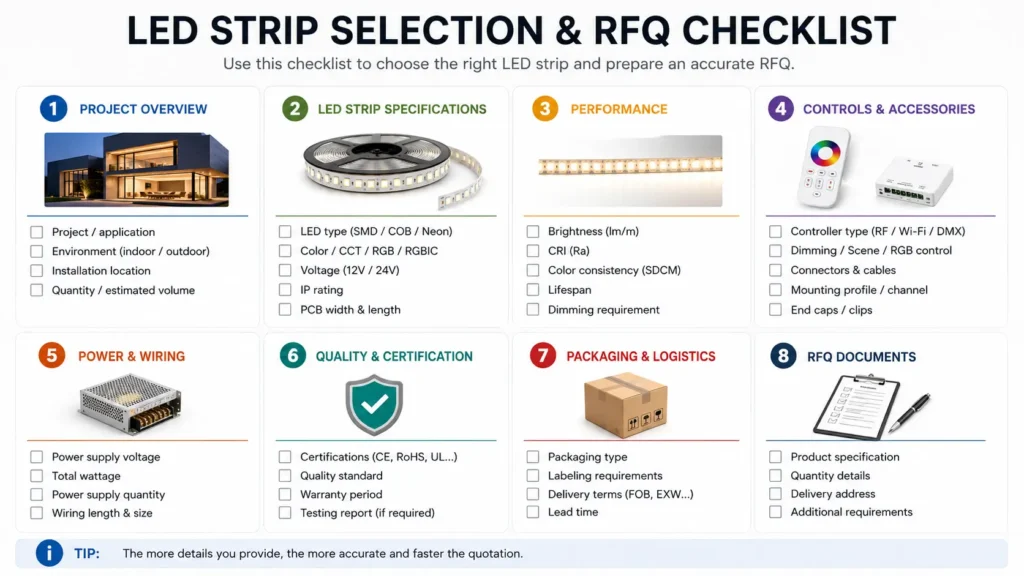
For custom or project-based lighting, the most useful first message usually includes the application, total length, desired color/effect, brightness target, voltage preference, control method, installation environment, and quantity.
For rooms and bedrooms, popular cool effects include hidden cove lighting, RGB accent walls, smooth under-shelf lighting, monitor backlighting, neon-style wall outlines, and diffused LED strips inside profiles. The right choice depends on whether you want colorful mood lighting, a smooth white line, dynamic effects, or a cleaner architectural look.
It depends on the effect. RGB strips suit simple color mood lighting. RGBIC or addressable strips suit dynamic segmented effects. COB strips suit smoother close-view light lines. Neon flex suits curves and outlines. Diffused profile systems suit clean architectural accents.
In white lighting, higher Kelvin values generally look cooler or bluer. Lower Kelvin values look warmer or more yellow. For example, warm white is commonly used for softer room ambience, while cooler white may look sharper or more daylight-like. Choose by the mood and task, not by color temperature alone.
4000K and 6000K describe color appearance, not brightness. A 6000K light may look cooler or bluer, but brightness should be checked by lumens or lumens per foot. Two LED strips can have the same Kelvin rating and different brightness levels.
There is no safe universal answer without knowing the application. Compare LED lights by strip type, brightness, color control, voltage, controller compatibility, installation method, IP rating, documentation, and support. A product that works well for a gaming room may not be the right choice for cabinet lighting, signage, or a damp environment.
LED strips can support bedroom lighting, but whether they work as the main light depends on brightness, layout, color temperature, placement, diffuser/profile use, and the room’s needs. Many bedrooms use LED strips as accent or indirect lighting rather than relying on a single strip as the only light source.
Check lumens or lumens per foot, CCT/Kelvin, RGB or white-light type, voltage, total run length, controller, power supply, mounting surface, diffuser/profile needs, and IP rating for the environment.
Prepare the application, total length, desired color or effect, brightness target, voltage preference, control method, installation environment, mounting method, quantity, and any drawings or photos. These details make selection review easier and reduce unclear assumptions.
Cool LED lighting starts with the visual effect, but the final result depends on the details behind it.
Share the application, total length, desired color or effect, brightness target, voltage preference, control method, installation environment, mounting method, and quantity. Those details make it easier to review which LED strip type and specification path may fit the project.
Contact Elstar with these details when you are ready to discuss a LED strip lighting project.

 English
  Spanish
  French
  Arabic