Waterproof LED strips are best for wet, damp, outdoor, or moisture-prone areas, while non-waterproof LED strips work best in dry indoor spaces. The right choice depends on the installation area, IP rating, heat control, safety needs, and budget.
Therefore, do not choose by price alone. First, check whether the strip will face water, humidity, dust, cleaning, or outdoor weather. Then, match the IP rating, sealing method, power supply, and mounting plan to the project.
For related internal resources, review Elstar’s LED strip lights, COB LED strips, LED power supplies, and contact page. For an outside reference, see Flexfire LEDs’ LED IP ratings guide.
What Are Waterproof LED Strips and Non-Waterproof LED Strips?
Waterproof and non-waterproof strips use similar LED strip ideas, but their protection levels are different. As a result, they fit different rooms, sites, and safety needs.
Understanding waterproof LED strips
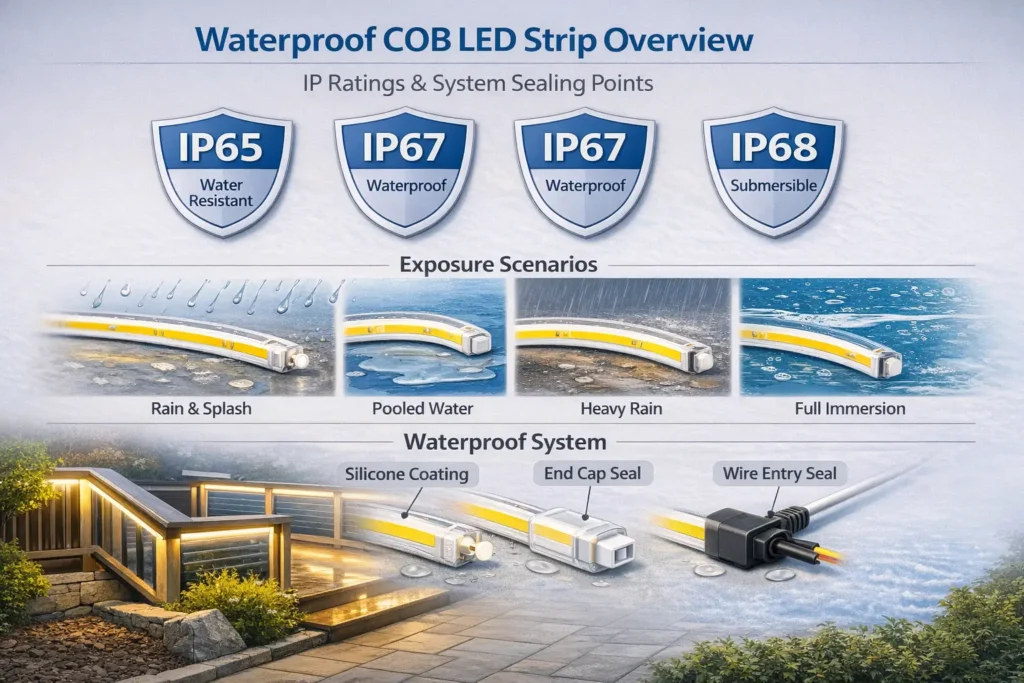
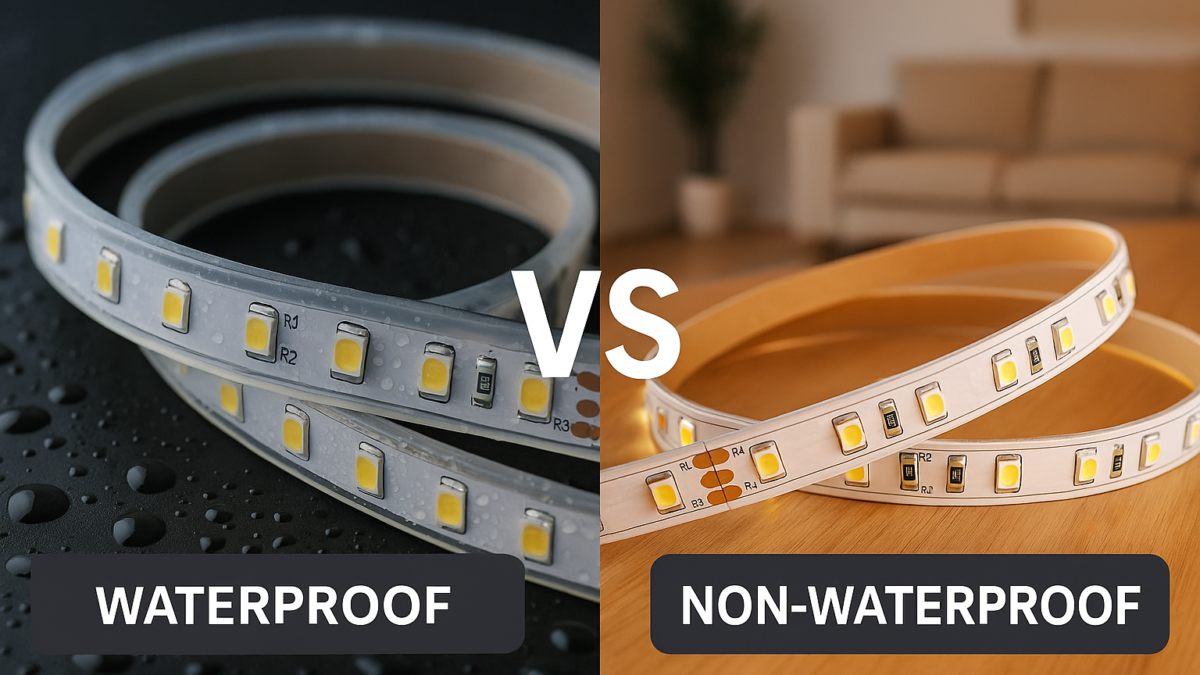
Waterproof LED strips use coatings, silicone sleeves, or sealed jackets to help protect the LEDs from moisture, dust, and weather. They usually carry IP ratings such as IP65, IP67, or IP68.
Understanding non-waterproof LED strips
Non-waterproof strips usually have little or no moisture protection. However, they are easier to handle, easier to cut, and better at releasing heat in dry indoor areas.
Quick answer
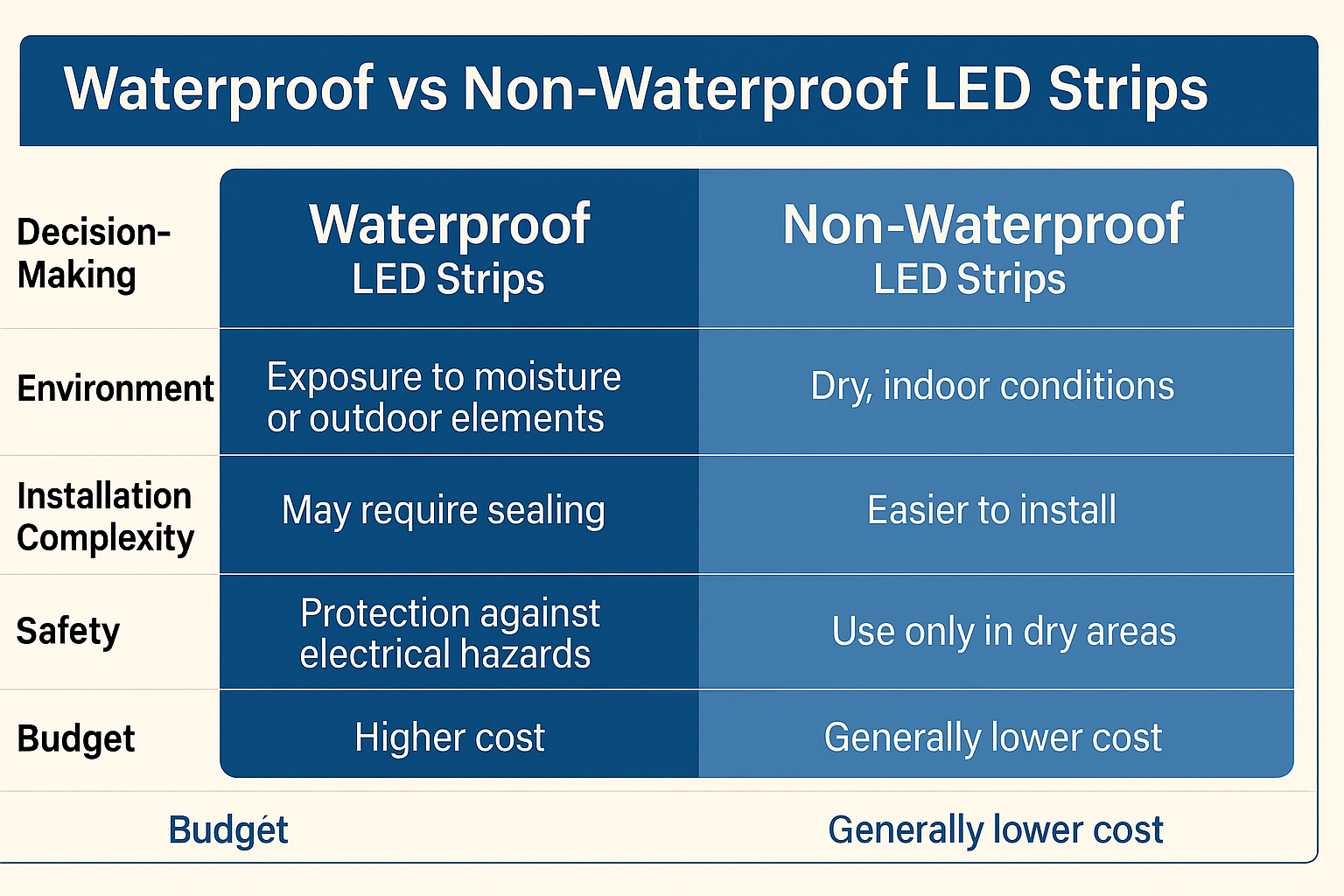
Use waterproof LED strips outdoors, in bathrooms, kitchens, damp rooms, and other wet areas. Use non-waterproof strips only in dry indoor spaces where moisture is not a risk.
Waterproof LED Strips: IP Ratings and Technical Differences
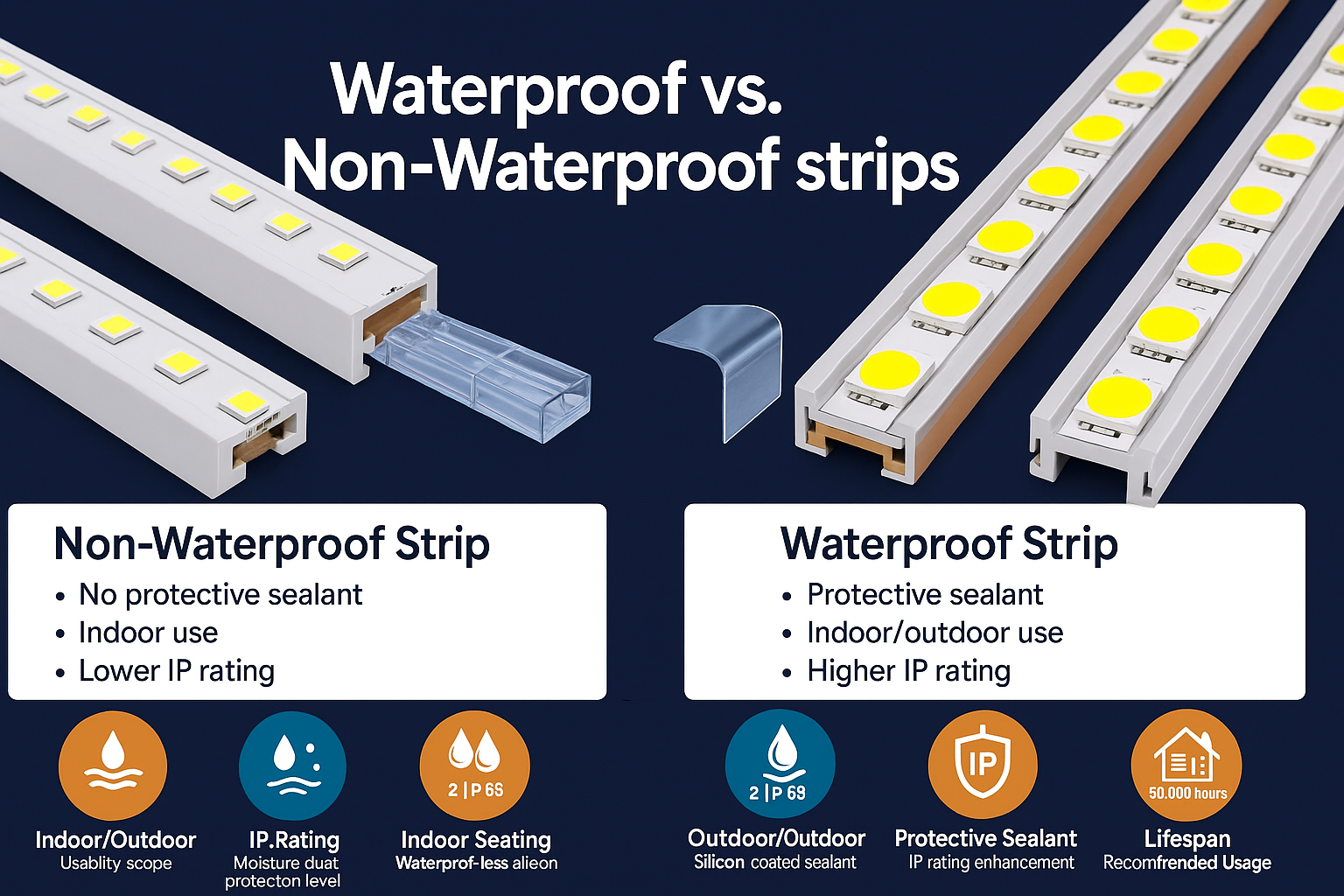
The biggest technical difference is moisture protection. Also, waterproofing can affect heat, handling, cutting, and installation work.
Waterproofing and IP ratings
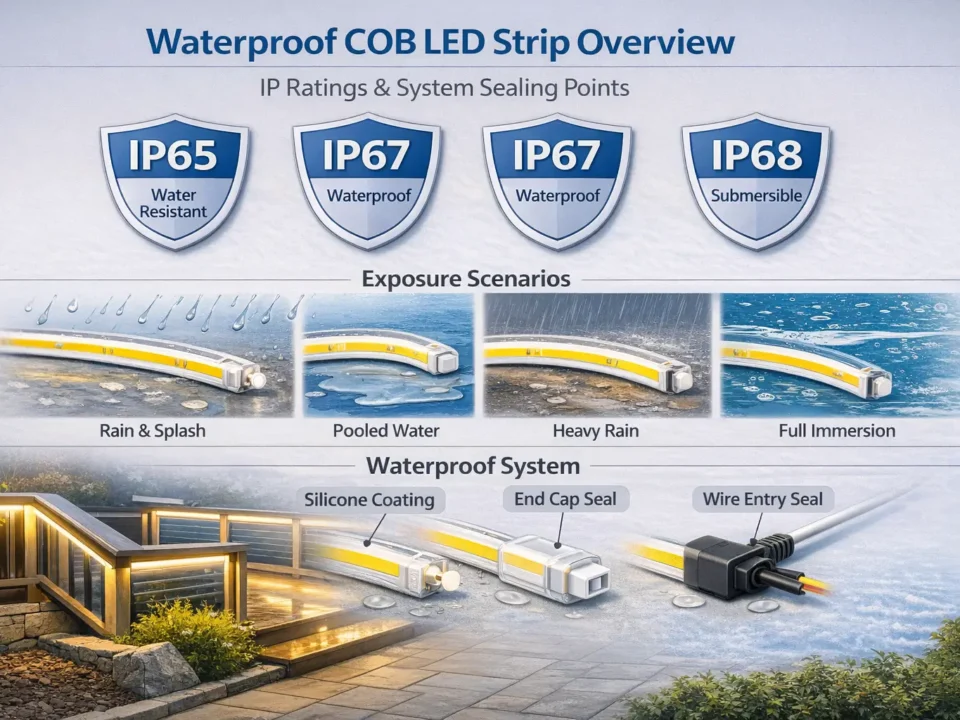
Waterproof LED strips use an IP rating to show dust and water protection. Common ratings include:
- IP65: protection against water jets; useful for many outdoor or damp areas.
- IP67: protection for temporary immersion; useful for areas that may get wet often.
- IP68: higher protection for longer or continuous water exposure when the product is rated for it.
Non-waterproof strip rating
Non-waterproof strips are often IP20. Therefore, they should stay in dry indoor areas and away from splash, steam, rain, or wash-down zones.
Heat and performance
- Waterproof strips: protective coatings may trap more heat, so airflow and mounting matter.
- Non-waterproof strips: heat can escape more easily, which can help in dry indoor projects.
If a non-waterproof strip gets wet, it can short, corrode, flicker, or fail. Therefore, use the correct IP rating before installation.
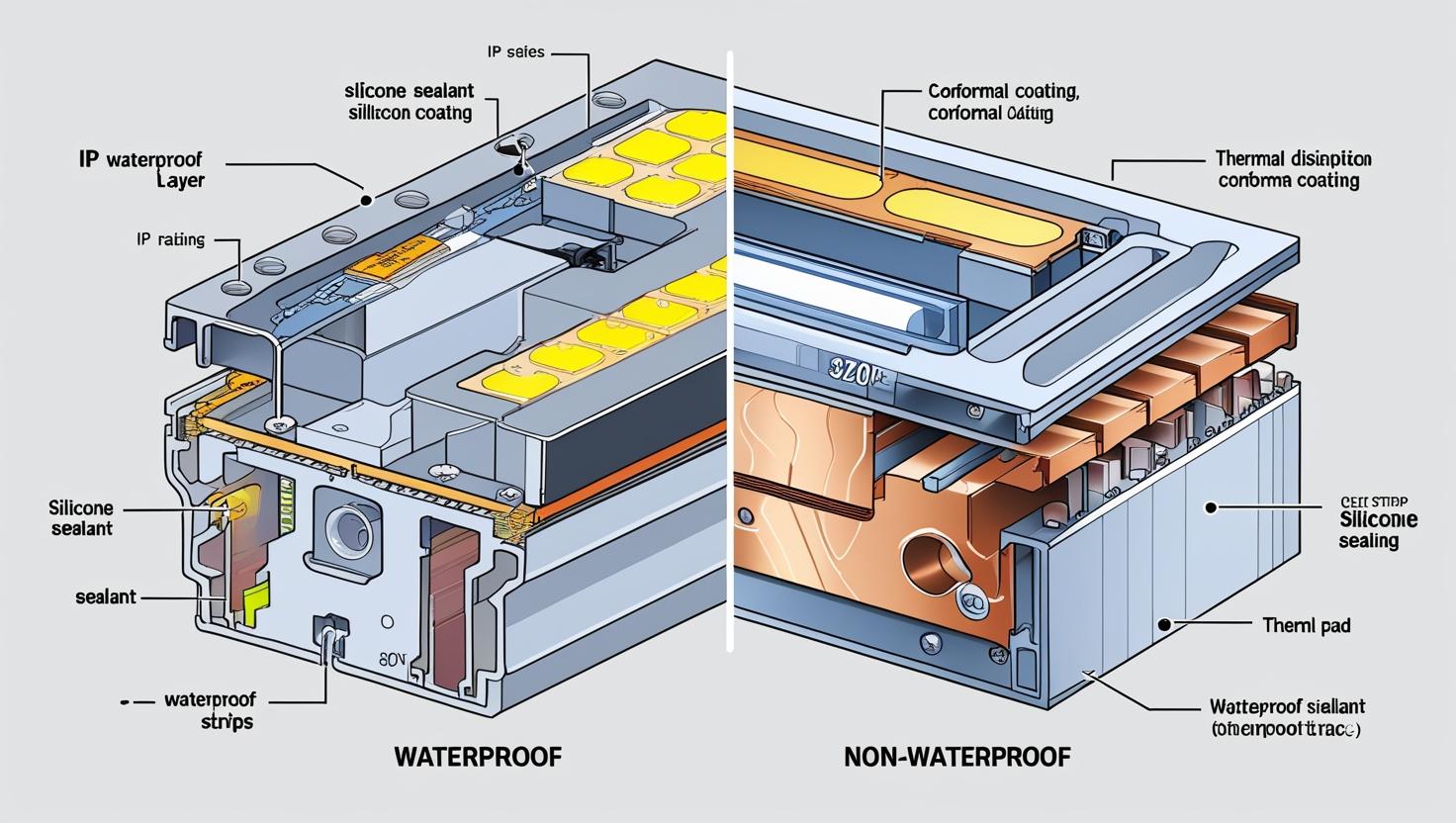
Safety Considerations for Waterproof LED Strips
Safety depends on the strip, power supply, sealing, wiring, and installation area. Therefore, waterproof labeling alone is not enough.
Safety factors for waterproof strips
- Moisture protection: choose IP65, IP67, or IP68 based on the site.
- Sealed ends: protect cut points, joints, and cable exits after cutting.
- Correct power supply: keep drivers and controllers away from water unless rated for the location.
- Heat control: avoid trapping heat under thick coatings or sealed spaces.
Safety factors for non-waterproof strips
- Use them only in dry indoor areas.
- Keep them away from sinks, showers, outdoor routes, and humid zones.
- Also, avoid installing them where cleaning water may reach the strip.
Can waterproof LED lights go in a shower?
They may be used in wet areas only when the IP rating, power supply location, sealing, and local safety rules support the install. For showers or wet rooms, use qualified electrical support.
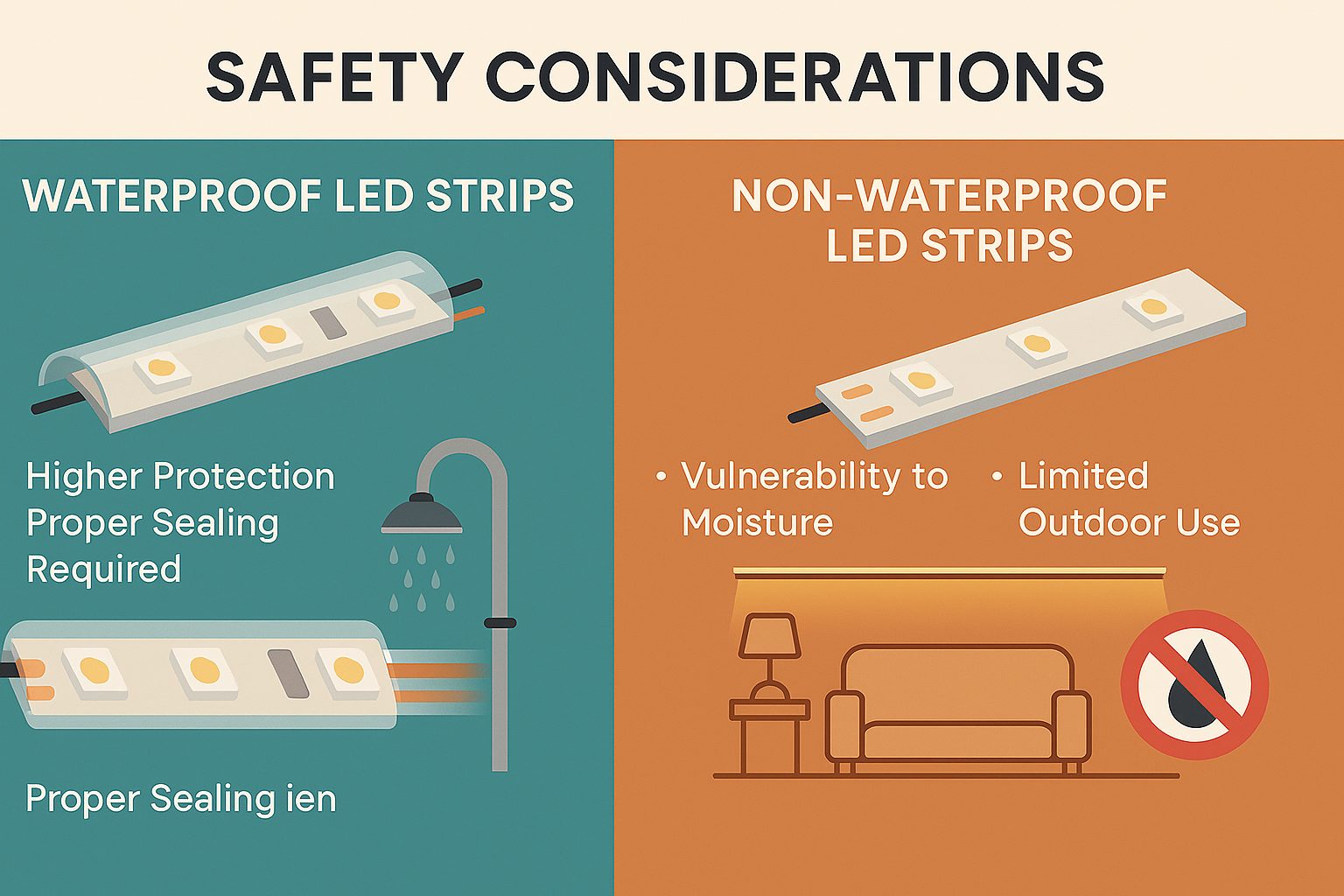
Pros and Cons of Waterproof and Non-Waterproof LED Strips
Both strip types can work well when matched to the right environment. However, each option has trade-offs.
Pros of waterproof LED strips
- Moisture protection: useful for outdoor, bathroom, kitchen, and damp areas.
- Better durability: coatings help protect against dust and humidity.
- Outdoor use: suitable when the product rating matches the weather exposure.
Cons of waterproof LED strips
- More heat concern: coatings can reduce heat release.
- More installation work: cutting and resealing need extra care.
- Higher cost: sealed versions often cost more than dry-location strips.
Pros of non-waterproof strips
- Better heat release: no thick coating blocks heat as much.
- Easier handling: dry indoor strips are simple to cut, mount, and wire.
- Lower cost: they often fit budget indoor projects.
Cons of non-waterproof strips
- No moisture protection: water exposure can damage the strip.
- Indoor-only use: they are not suitable for outdoor or damp areas.
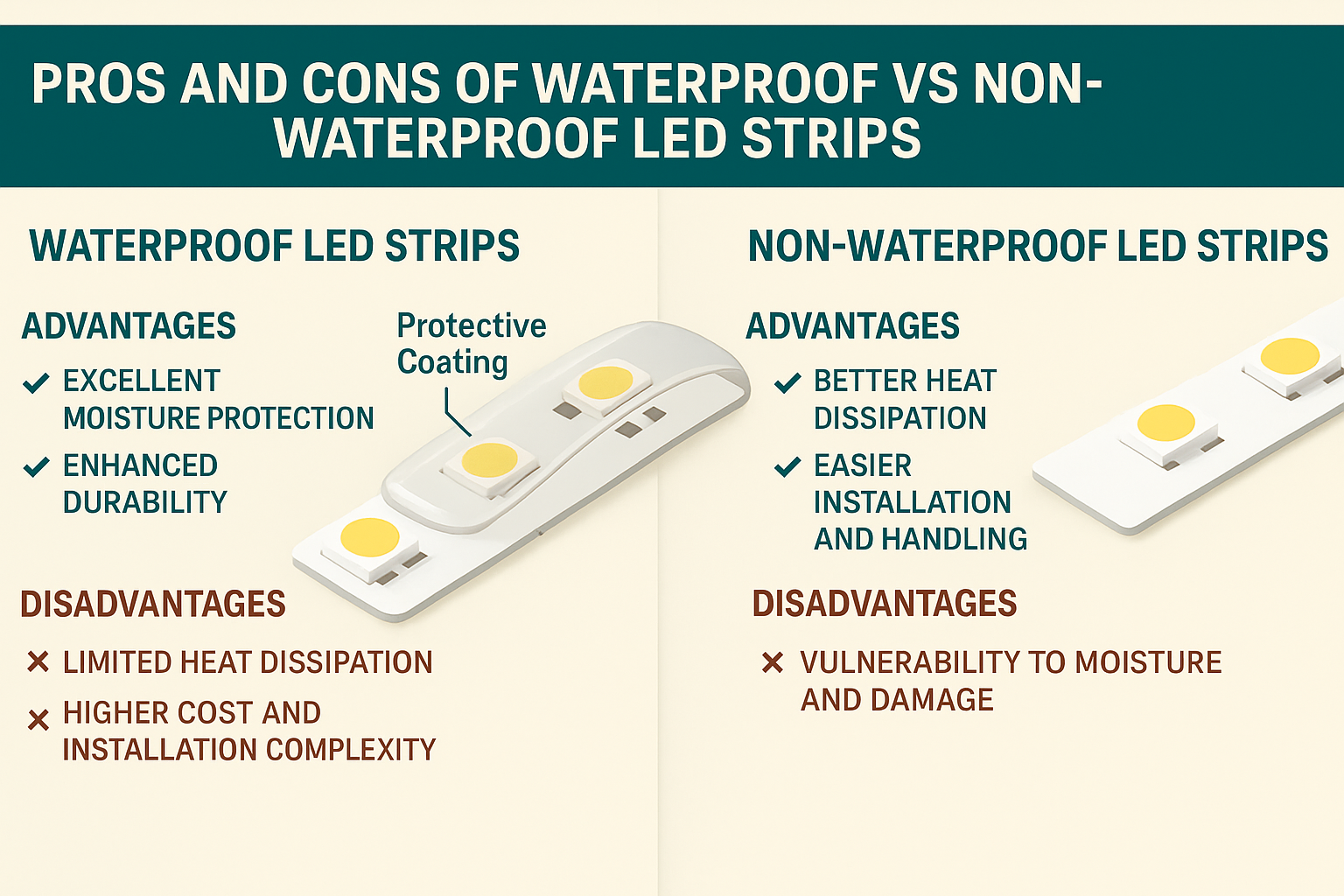
Best Applications for Waterproof LED Strips
Use the environment first. Then, choose the strip type based on water risk, heat, safety, and installation effort.
Ideal uses for waterproof LED strips
- Outdoor lighting: patios, gardens, pathways, and building exteriors.
- Kitchens and bathrooms: areas with splash, steam, or humidity.
- Pools and fountains: only when the strip has the correct IP rating and install method.
- Commercial wet zones: areas that need extra protection from moisture or cleaning.
Ideal uses for non-waterproof strips
- Interior decorative lighting: bedrooms, living rooms, dry coves, and shelves.
- Detailed accent lighting: cabinets, furniture, and ceiling details.
- Dry commercial interiors: offices, displays, and controlled indoor spaces.
Can non-waterproof strips be used outdoors?
No, not safely. For outdoor or moisture-prone areas, choose waterproof LED strips with the correct IP rating and sealed connections.
How to Choose Waterproof LED Strips
Choose by location, not just by product name. Also, check sealing, power supply placement, and heat before buying.
Key decision factors
- Environment: choose waterproof strips for moisture, rain, splash, or humidity.
- IP rating: match IP65, IP67, or IP68 to the actual exposure.
- Installation work: plan cutting, sealing, mounting, and cable exits.
- Safety: protect power supplies, controllers, and joints from water.
- Budget: compare the full system cost, not only the strip price.
Common mistakes
- Do not use IP20 strips in damp or wet areas.
- Also, do not cut waterproof strips without resealing the cut end.
- Do not ignore heat buildup under thick coatings.
- Finally, do not place a non-rated power supply in a wet area.
For more detail, review the external LED IP ratings guide.
Installation and Maintenance Tips
Good installation helps the strip last longer. Therefore, prepare the surface, seal exposed points, and test before final mounting.
Waterproof strip installation
- Plan the route: measure the area and identify moisture exposure.
- Clean the surface: remove dust, oil, and moisture before mounting.
- Seal cut points: use suitable caps, sealant, or rated connectors.
- Protect power parts: keep drivers and controllers in rated locations.
- Test the strip: check brightness and seals before long-term use.
Non-waterproof strip installation
- Choose a dry area: avoid sinks, showers, outdoor routes, and damp corners.
- Prepare the surface: clean and dry the mounting area.
- Mount carefully: avoid tight bends and cable pull.
- Connect and test: check polarity, voltage, and brightness.
Maintenance tips
- Inspect seals on waterproof strips often.
- Also, clean dry strips with a soft cloth.
- Check heat in sealed or high-output runs.
- Then, replace damaged sections before water reaches the circuit.

FAQs About Waterproof LED Strips
Can I put waterproof LED lights in my shower?
Only if the strip, power system, sealing, and local safety rules support wet-area use. For showers, use properly rated parts and qualified electrical installation.
What IP rating is best for outdoor LED strips?
IP65 may fit many outdoor splash areas. However, harsher exposure may need IP67 or IP68, depending on rain, cleaning, submersion, and product design.
Are non-waterproof LED strips safe indoors?
Yes, if the area stays dry. Keep them away from water, steam, splash zones, and damp surfaces.
Do waterproof LED strips run hotter?
They can, because coatings or sleeves may reduce heat release. Therefore, use good mounting, airflow, and proper power sizing.
Conclusion: Choosing Waterproof LED Strips
Waterproof LED strips are the safer choice for damp, wet, outdoor, or weather-exposed areas. In contrast, non-waterproof strips fit dry indoor spaces where easier handling, lower cost, and better heat release matter more.
Before buying, check the IP rating, water exposure, power supply location, cutting and sealing method, and heat path. As a result, your LED strip setup will be safer and more reliable.
Ready to select the right LED strip? Browse Elstar’s LED strip lights, LED power supplies, or contact Elstar for project support.


 English
  Spanish
  French
  Arabic