3528 SMD LED is a common term in LED strip lighting. However, it is easy to read too much into the number. Some buyers treat “3528” as the full product spec. Others compare it with 2835, 5050, or 5630 LEDs before they check voltage, LED density, PCB width, power, color, CRI, IP rating, or site needs.
As a result, a project can start with the wrong strip type.
So, this guide keeps the choice simple. First, it explains what 3528 SMD LED means. Next, it shows which specs to check. Then, it compares 3528 with other LED packages and gives you an RFQ checklist for a clearer quote.
A 3528 SMD LED is a surface-mounted LED package that is often about 3.5 mm × 2.8 mm. “SMD” means surface-mount device, so the LED is mounted on the PCB surface. However, 3528 only tells you the LED package size. It does not tell you the full strip spec. Therefore, buyers should also check voltage, LED density, PCB width, watts per meter, color or CCT, CRI, IP rating, dimming, and the install site.
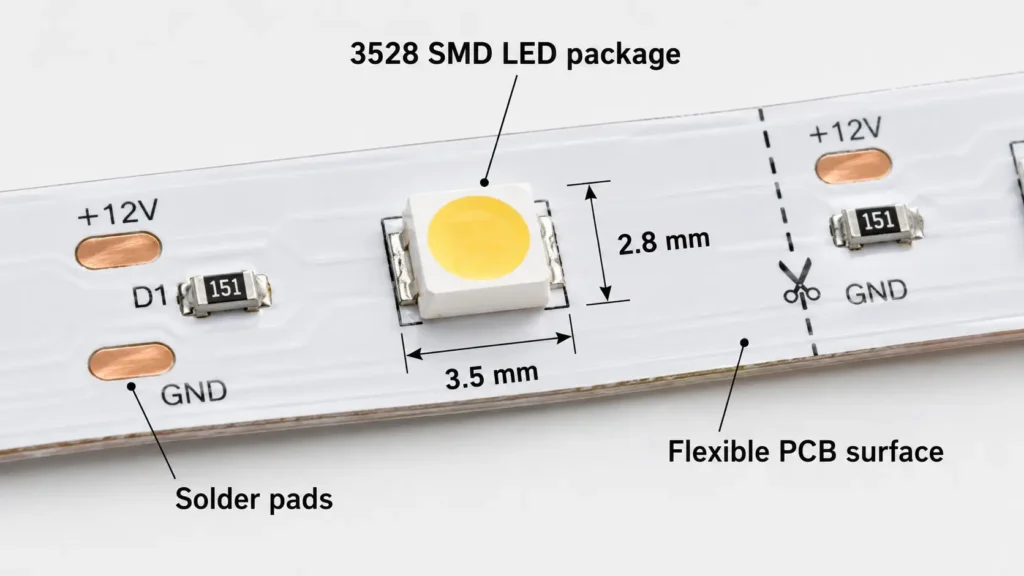
First, the number 3528 helps identify the physical LED package. In many LED package codes, the first two digits refer to width and the last two digits refer to length, in tenths of a millimeter. Therefore, 3528 means about 3.5 mm wide and 2.8 mm long.
However, the package is only one part of the strip.
For example, two LED strips can both use 3528 LEDs and still act very differently. They may use different PCB widths, LED counts, power levels, colors, or IP ratings.
| Spec | Why it matters |
|---|---|
| LED density | Affects dot spacing and total light output. |
| Voltage | Must match the power supply and wiring plan. |
| PCB width | Affects fit, connector choice, and heat behavior. |
| Power per meter | Helps size the power supply and estimate load. |
| Color or CCT | Sets the look, such as warm white, cool white, or color light. |
| CRI | Matters when color appearance is important. |
| IP rating | Helps match the strip to dry, damp, or protected wet areas. |
| Dimming method | Must match the driver, controller, and wiring plan. |
| Cut length and roll length | Affects layout, waste, and install work. |
In short, do not choose a 3528 LED strip by chip size alone. Instead, ask whether the full strip spec fits the project.
Before you choose a 3528 LED strip, check the full product spec. Also, share these details when you ask for a quote. That way, the supplier can review the real project need, not just the LED package name.
| Spec to check | What to ask | Why it matters |
|---|---|---|
| Voltage | Is the strip 12 V, 24 V, or another voltage? | It must match the power supply and wiring. |
| LED density | How many LEDs per meter? | It affects light output and dot spacing. |
| PCB width | What is the strip width? | It affects the fit in channels, profiles, and tight spaces. |
| Power per meter | How many watts per meter? | It helps size the power supply and load. |
| Color / CCT | Do you need color, warm white, neutral white, or cool white? | It controls the final look. |
| CRI | What CRI do you need? | It matters for display, retail, and color-sensitive use. |
| IP rating | Will the strip be used in a dry, damp, or wet-protected area? | It must fit the site. |
| Dimming | What dimmer or controller will be used? | It avoids driver or control mismatch. |
| Cut length | Where can the strip be cut? | It affects layout and install work. |
| Accessories | Do you need connectors, aluminum profiles, or a power supply? | It helps avoid missing parts on site. |
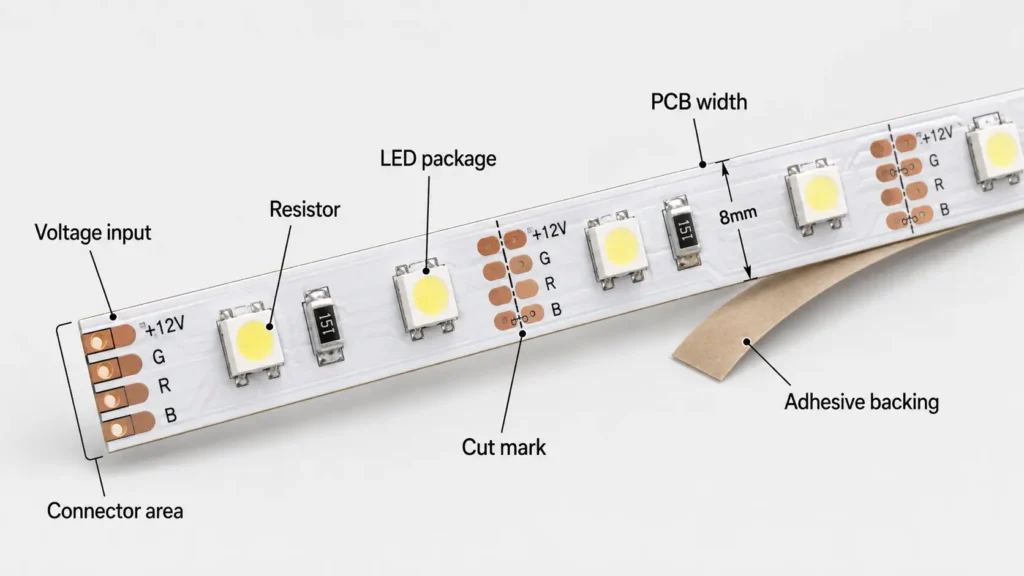
For example, one currently listed ELSTARLED 3528 product variant is a 3528 30 LEDs/m 12 V LED strip. The page lists an 8 mm PCB width, 2.4 W/m max power use, 100 mm cut unit, CRI >80Ra, several color options, IP20/IP65/IP67/IP68 options, and 5 m/roll packing.
However, treat those details as a product-page example. Before final use, confirm the latest product page or datasheet.
3528 is often compared with 2835 and 5050 because all three appear in LED strip products. However, the right choice depends on the strip design and project need, not only the package name.
For more detail, see ELSTARLED’s 2835 vs 3528 LED strip guide and 5050 vs 3528 LED strip guide.
| LED package | Common role | When to consider it | What to confirm |
|---|---|---|---|
| 3528 | Compact package often used in single-color strip designs. | Accent lines, decor light, cabinet light, or compact layouts. | LED density, output goal, voltage, CRI, PCB width, IP rating, and dimming. |
| 2835 | Compact package often used where more output is needed. | Projects that need more light from a small strip design. | Heat, watts per meter, lumen target, PCB design, and install site. |
| 5050 | Larger package often linked with RGB or multi-chip designs. | RGB effects, color-change strips, or higher output needs. | Controller match, power load, RGB/RGBW needs, and heat. |
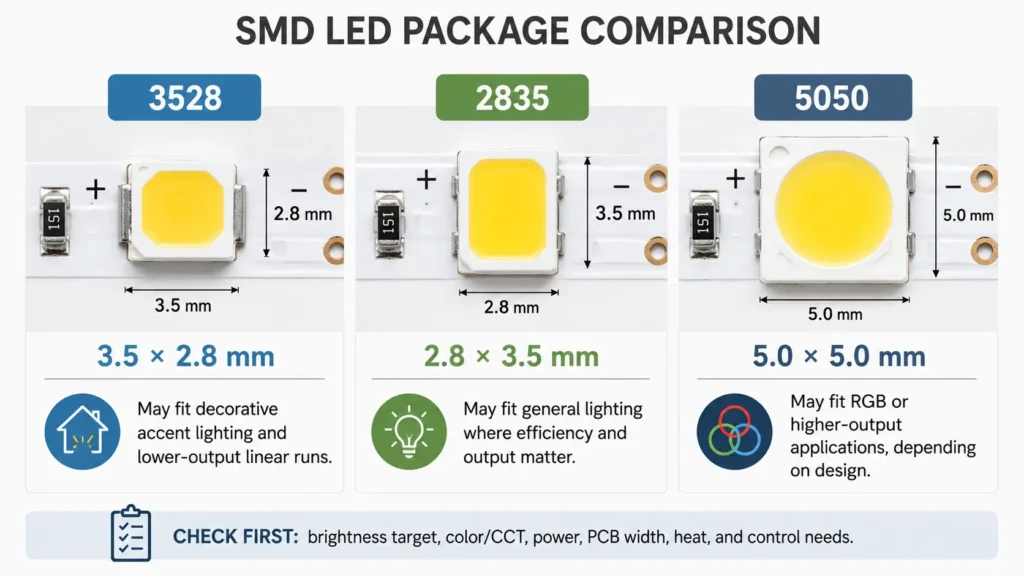
Also, package material and heat design can affect power capacity. Therefore, package size should not be treated as the only performance factor. A 5050 package is also often linked with RGB LED packaging because it can have space for multiple LED chips.
A safe way to compare these packages is:
Still, no package is best for every job. The strip design, site conditions, and power plan still matter.
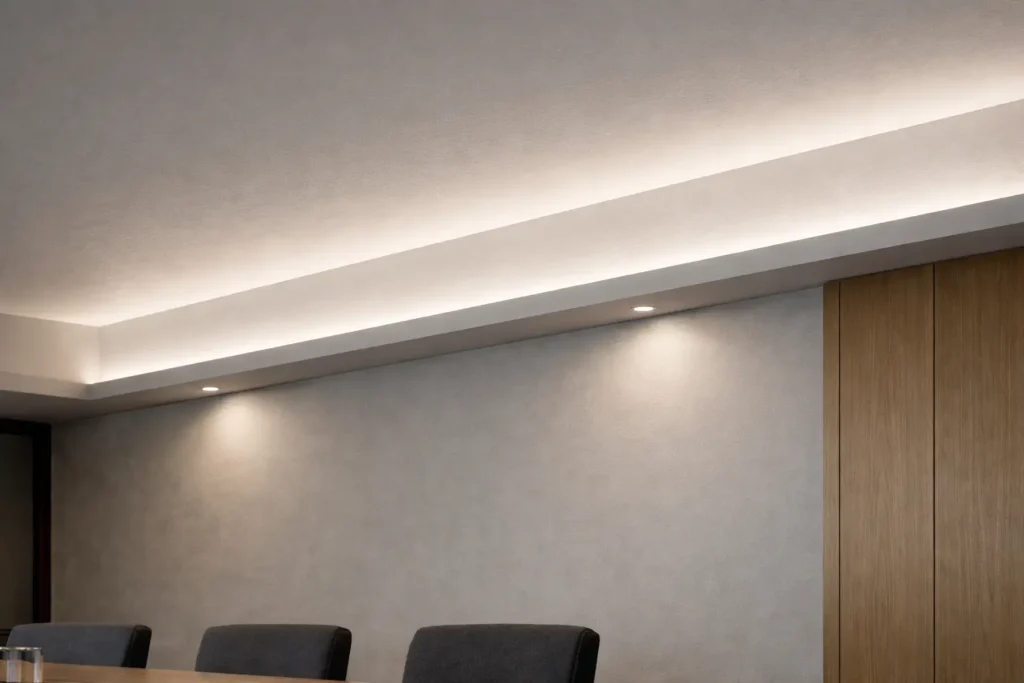
3528 LED strips are often used where compact size, moderate light, and flexible layout matter. For that reason, they can work well in many accent and decor layouts when the full strip spec fits the site.
| Use type | Why 3528 may fit | What to confirm first |
|---|---|---|
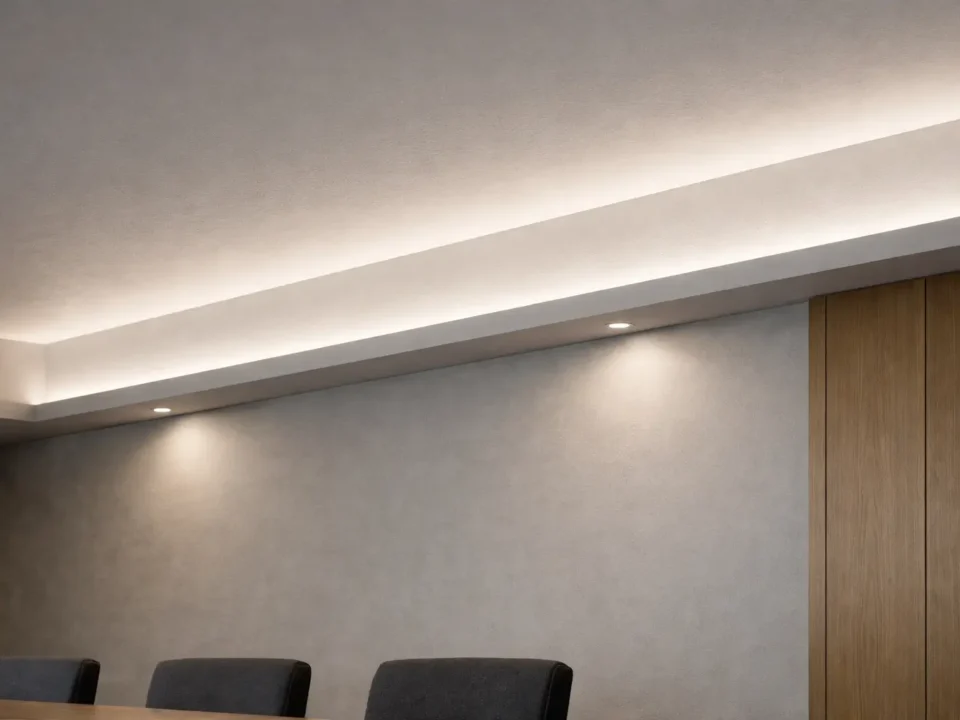
| Cove light | A compact strip can fit into narrow details. | Light level, voltage drop, profile depth, and dimming. |
| Shelf or display light | Moderate line light can work where space is limited. | CRI, CCT, glare, and heat. |
| Signage or decor lines | Single-color or color strips can support visual effects. | Color, viewing distance, IP rating, and power layout. |
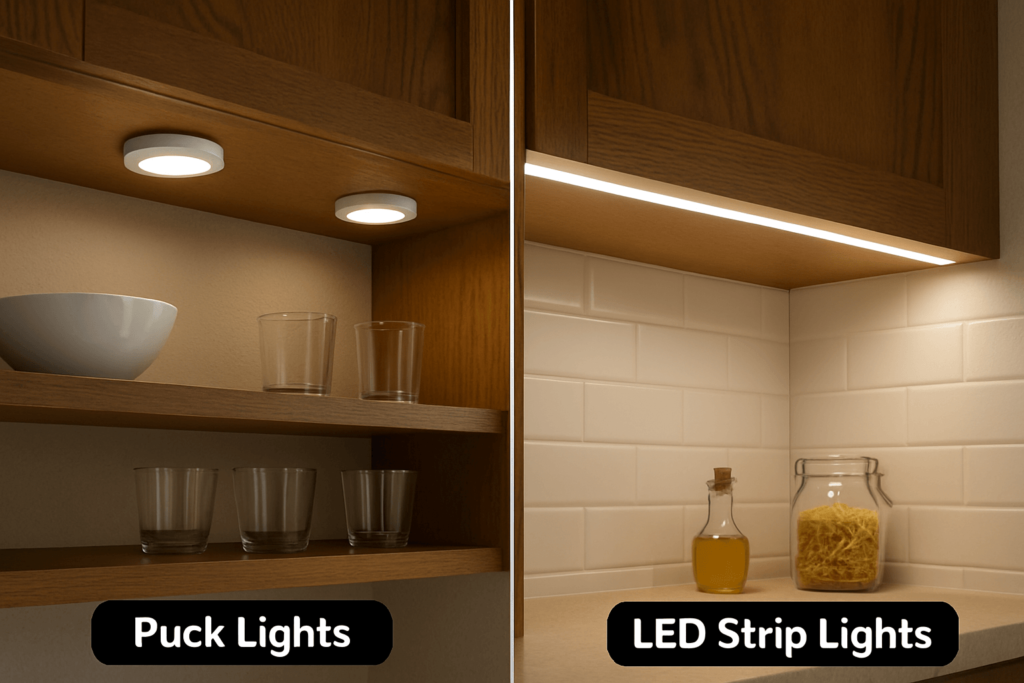
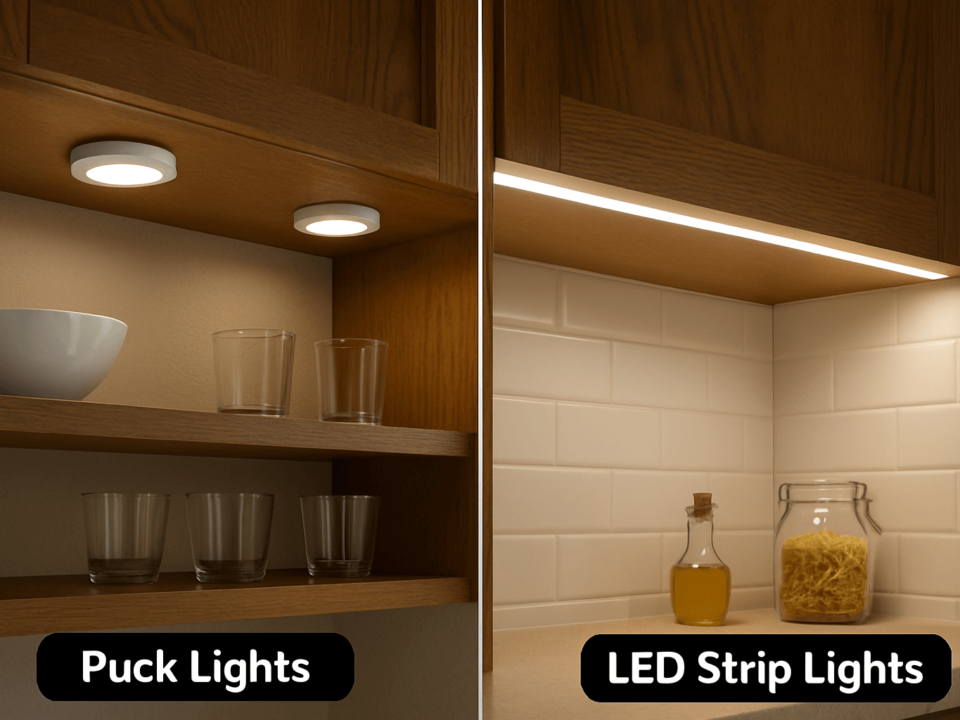
| Furniture or cabinet light | Narrow strip size may help in hidden spaces. | PCB width, mounting surface, cut length, and controller. |
| Retail or hotel accents | It can add mood light rather than main room light. | Light level, color match, CRI, dimming, and access for service. |
| Indoor line details | It can support simple linear accents. | Power plan, profile, heat, and site conditions. |
In short, 3528 may be enough for accent light. However, another strip type may be better if the project needs high output, long runs, RGB effects, smooth dot-free light, or special protection.
Sometimes, a 3528 LED strip is not the best fit. For example, another strip type may be better when the project needs:
For example, a 5050 LED strip may fit RGB effects. Meanwhile, a 2835 strip may fit cases that need more output from a compact strip. Also, COB LED strips may fit designs that need a smoother light line. Therefore, the final choice should be based on the light effect, power design, site, and buying needs.
ELSTARLED has a listed 3528 LED strip product page for a 30 LEDs/m 12 V variant. The page lists details such as SMD3528 LED type, 30 LEDs/m, 8 mm PCB width, 12 V voltage, 2.4 W/m max power use, single row, 100 mm cut unit, CRI >80Ra, several color options, IP20/IP65/IP67/IP68 options, and 5 m/roll packing.
However, you should verify these as current product-page details during inquiry. Before final choice, ask for the latest spec sheet. Also, confirm that the listed option matches your voltage, color, IP rating, controller, site, and quantity.
In addition, ELSTARLED’s custom LED strip page lists areas such as CRI, kit and accessory options, dimming options, strip size, brightness, and IP rating. Still, custom fit depends on project needs, electrical design, PCB layout, LED package, protection level, and order details.
A clear RFQ helps the supplier review whether 3528 is a good fit. Also, it helps them decide whether another strip type should be checked. Before you contact a supplier, prepare the details below.
| RFQ item | What to provide |
|---|---|
| Use case | Where and how the LED strip will be used. |
| Install site | Indoor, damp area, protected outdoor area, cabinet, cove, sign, profile, or other site. |
| Length | Total length, run length, and cut needs. |
| Voltage | 12 V, 24 V, or a project power plan. |
| Color / CCT | Single color, warm white, neutral white, cool white, RGB, or custom color. |
| Light goal | Target visual effect or rough light level. |
| CRI need | Needed for display, retail, work area, or color-sensitive use. |
| IP rating | Protection level based on the site. |
| Dimming/control | Dimmer, controller, sensor, smart system, or on/off use. |
| Accessories | Power supply, connector, aluminum profile, controller, diffuser, adhesive, or mount hardware. |
| Quantity | Estimated meters, rolls, or project batch. |
| Docs needed | Datasheet, test info, warranty terms, and compliance docs if needed. |
Therefore, avoid asking only for “3528 LED strip price.” A supplier needs the project context to suggest the right strip type.
Before you confirm an order, ask questions that lower buying and install risk:
For general LED background, ENERGY STAR explains that LEDs use a microchip to light small sources and that heat needs to be moved away through a heat sink. However, use this only as broad LED context. Final strip choice still depends on the exact product and site.
Also, ELSTARLED’s production page describes process and test steps such as power-on test, aging test, lighting test, optical/electrical test, surface check, and random check. Use this as a starting point for supplier talks, not as a product guarantee.
3528 SMD LED means a surface-mounted LED package often sized at about 3.5 mm × 2.8 mm. “SMD” means surface-mount device, and “3528” refers to the package size. However, it does not define the full LED strip spec by itself.
A 3528 SMD LED package is often about 3.5 mm × 2.8 mm. However, strip width, LED density, roll length, and cut length are separate product specs. Check the product datasheet before you buy.
Not always. 3528 and 2835 serve different design needs. For example, 2835 is often used where more output is needed from a compact strip, while 3528 is often used in compact strip designs. Therefore, compare the full strip spec before choosing.
3528 is a smaller package. By contrast, 5050 is a larger package often linked with multi-chip RGB designs. As a result, 5050 may fit RGB or higher-output uses better, while 3528 may fit compact single-color or accent uses.
Yes, it can be a good option when the required light level, color, voltage, LED density, and install site match the product spec. However, for high-output or special-effect projects, another LED strip type may be a better fit.
Check voltage, LED density, PCB width, watts per meter, color or CCT, CRI, IP rating, dimming method, cut length, roll length, accessories, install site, and required docs.
Some suppliers list more than one IP rating or custom option. However, availability depends on the exact product and project need. Therefore, confirm the protection level, custom fit, and docs before you order.
Do not rely on a general life number without checking the exact datasheet, test conditions, working temperature, power design, and warranty terms. Instead, ask the supplier for docs that match the selected strip and install site.
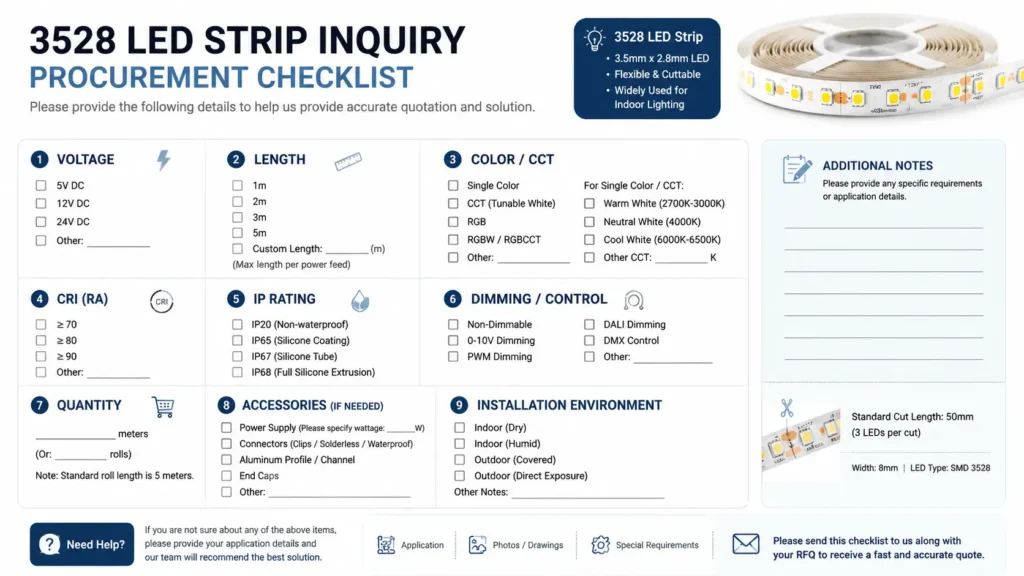
Share your use case, light goal, voltage, length, color or CCT, CRI, IP rating, dimming needs, quantity, accessories, and install site. Then ELSTARLED can review the details and help check whether a 3528 LED strip or another LED strip type is a better fit.

 English
  Spanish
  French
  Arabic