

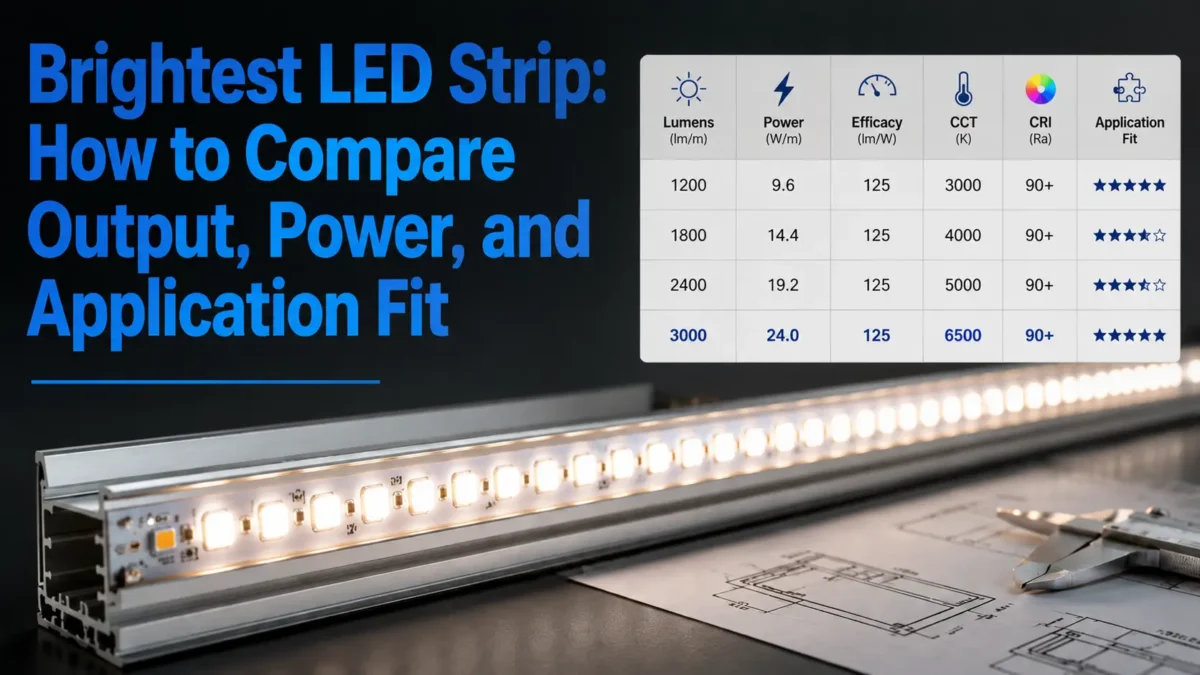
The brightest LED strip for a job is the strip with the highest checked lumen output per foot or meter for the needed color, voltage, and site. First, compare lumens per length. Then, check power, LED density, CCT/CRI, heat, voltage drop, diffuser loss, run length, and mounting. Also, do not compare by product title, watts, or LED count alone.
The word “brightest” sounds simple. However, LED strip light output is not one single number. Instead, it depends on light output, color, and use, plus power layout, heat, and how the strip is set up.
First, use lumens per foot or lumens per meter. Then, use watts, LED density, CCT, CRI, and mounting as support checks. As a result, you avoid judging a strip only by a reel label or sales name.
For example, use the LED strip lumens chart when you need a deeper check of LED strip output by length.
| Metric | What It Shows | What It Does Not Show | Buyer Note |
|---|---|---|---|
| Lumens per foot / meter | Light output by length | How the strip will work in every site | First, use this as the main check. |
| Total reel lumens | Total light from a full reel | A fair check between different lengths | So, do not use reel output alone. |
| Watts per foot / meter | Power use by length | Light output by itself | Also, more watts do not always mean more useful light. |
| Efficacy | Light made from the power used | The final result after setup | Then, compare light output and power use together. |
| LED density | How close the LEDs are | True lumen output or heat behavior | Also, dense strips can look smoother, but output still needs proof. |
| CCT | The color look of the light | True light output by itself | For example, cooler light can look sharper, but it is not a lumen test. |
| CRI / color fidelity | How colors look under the light | Which strip is brightest | Still, color quality can matter as much as raw output. |
| Diffuser / profile | How the light is shaped | Bare strip output | Also, a cover can make light smoother but may cut visible output. |
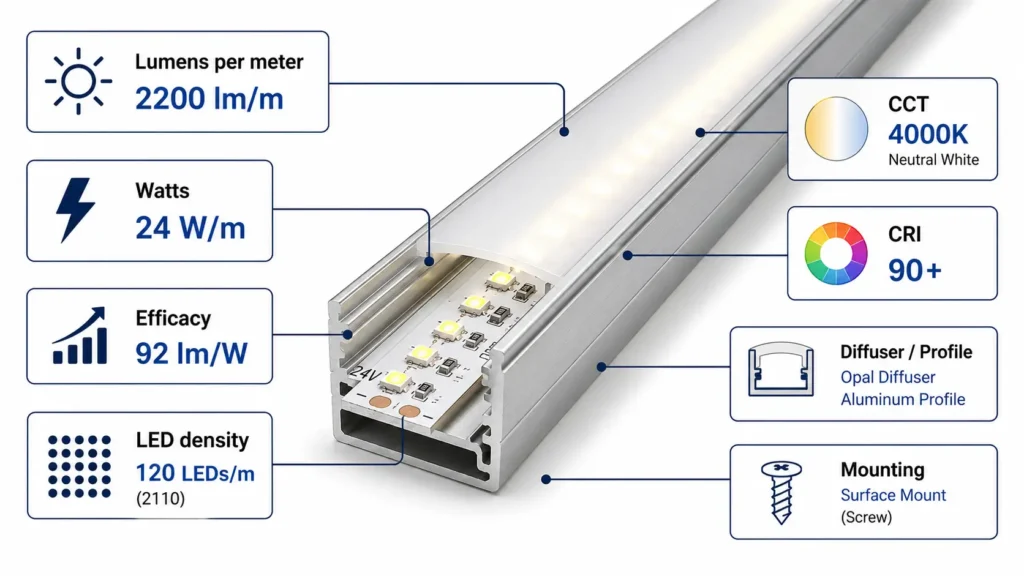
Lumens per foot or meter shows light output by length. Therefore, it helps buyers compare LED strips without being misled by reel length, pack words, or LED count.
Also, ask for the lumen output for the color and setup you plan to use. A strip can look strong on paper but still be a poor fit if the color, profile, or site is different.
Wattage matters because bright LED strips need enough power. However, watts alone do not prove light output. One strip may use more power but give less useful light than another strip.
Also, driving LEDs harder can raise output, but it may lower light per watt and add more heat. So, the right strip is not always the one with the highest power draw.
LED density affects spacing and how smooth the light looks. Even so, density alone does not prove light output. Buyers should still check lumen output and power needs.
CCT affects color look, while CRI or color fidelity affects how colors look under the light. For example, 6000K may look cooler than 3000K, but CCT alone does not prove more lumens.
A bright LED strip does not work alone. As a result, installed light output depends on the full system: strip, driver, wire, mounting face, heat path, diffuser, controls, and site.
Also, long runs, tight spaces, covers, and wet-location needs can change the final result. So, buyers should check the full setup before they choose the highest-output strip.
| System Factor | Why It Matters | What to Check Before Buying |
|---|---|---|
| Heat and mounting | Bright strips often need heat planning. | First, check the mount face, aluminum profile, air flow, closed space, and run time. |
| Power supply sizing | The strip needs the right driver or power supply. | Then, check voltage, total watts, dimming fit, and supplier guidance. |
| Voltage drop | Long runs can get dim near the end. | Also, check run length, feed points, wire size, voltage, and power feed needs. |
| Diffuser or cover | Covers can change visible output. | So, check cover type, profile depth, finish, and desired light look. |
| Controls | Dimming or color control can change the real output. | Next, check controller type, channel load, dim range, and wire plan. |
| Site | Heat, moisture, dust, or outdoor use can affect the choice. | Finally, check IP needs, site temperature, mount point, and service access. |
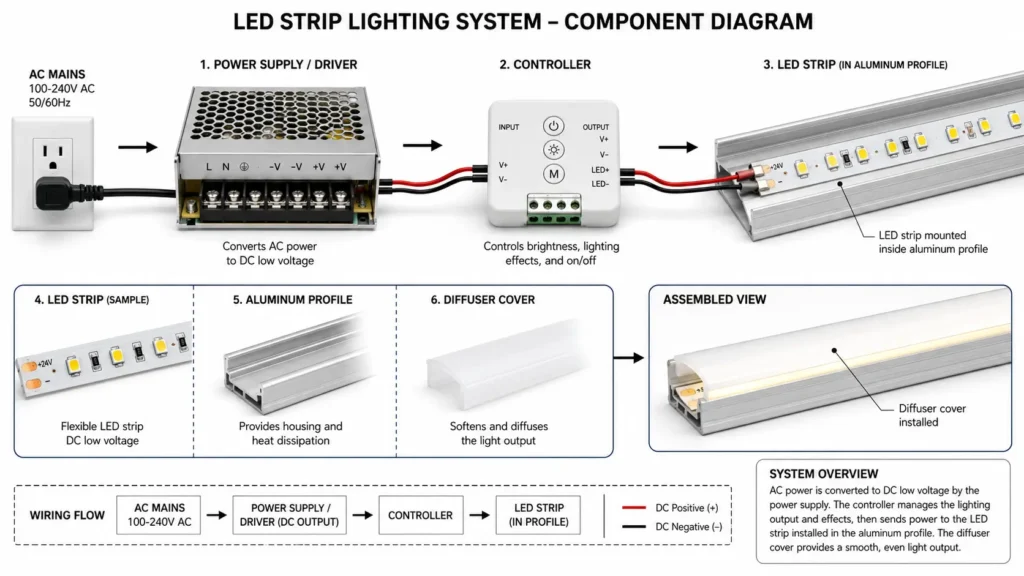
Bright LED strip setups often need heat planning. However, the exact need depends on the strip, power level, mount material, run time, and site.
For example, an aluminum channel or a good mount face may help in many jobs. Still, do not assume every bright strip needs the same heat path. Check the product guide before you order.
A bright strip needs a suitable power layout. In addition, long runs may need shorter sections, extra feed points, higher-voltage strip options, or a different wire plan.
So, do not plan the strip by length alone. First, check the voltage, total power, run length, control type, and where power will enter the strip.
A diffuser, cover, lens, or profile can make the light look cleaner. Meanwhile, it can also change how much light reaches the visible face.
Therefore, review the final setup, not only the bare strip. Check profile depth, cover type, distance to the lit face, surface color, and view angle.
The brightest LED strip is not always the right LED strip. Therefore, retail shelves, signs, cove lights, outdoor lines, and OEM builds may need different output levels, color needs, site protection, and mount styles.
Also, the right choice depends on the distance to the lit face, the surface color, the cover, the run length, and the light goal.
| Use | Light Priority | Key Checks | Risk If Ignored | RFQ Note |
|---|---|---|---|---|
| Task, cabinet, and work light | Medium to high | Lumens, CCT, CRI, cover, glare | Too much glare or uneven light | First, share mount distance, surface color, and desired look. |
| Retail display | High light plus good color | CRI, CCT, cover, heat, product distance | Products may look dull or wrong | Also, share product type, display distance, and color needs. |
| Signs and light boxes | Even light across the face | LED density, spacing, depth, power layout | Hot spots or dark zones | Then, share sign size, depth, material, and output goal. |
| Cove and line light | Smooth and steady line | Density, profile, cover, run length, dimming | Dots, dim ends, or uneven lines | Also, share run length, profile type, and control method. |
| Outdoor or wet area | Light plus site protection | IP rating, seal type, heat, mount, exposure | Wrong protection or poor heat path | Next, share site exposure, mount face, and service access. |
| OEM or custom build | Output matched to the product | Voltage, space, connector, CCT/CRI, tests | Poor fit or redesign | Finally, share drawings, target output, site needs, and sample needs. |
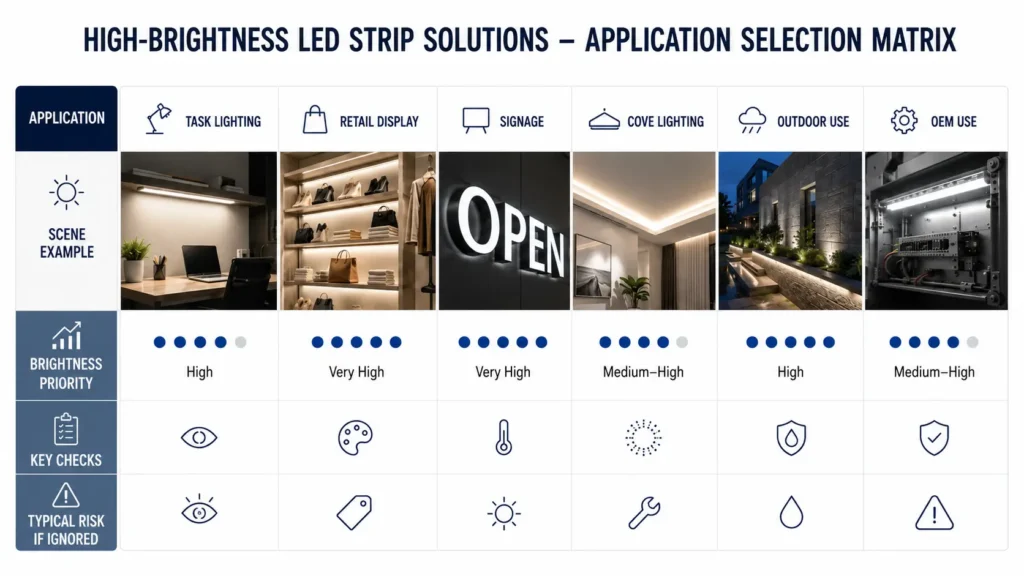
For example, close-range lighting does not always need the highest output. Instead, balance output with cover choice, color temperature, color quality, and eye comfort.
Retail and sign uses often need strong light. However, even light and good color are also important. Also, cove lighting needs a clean line and steady output across the run.
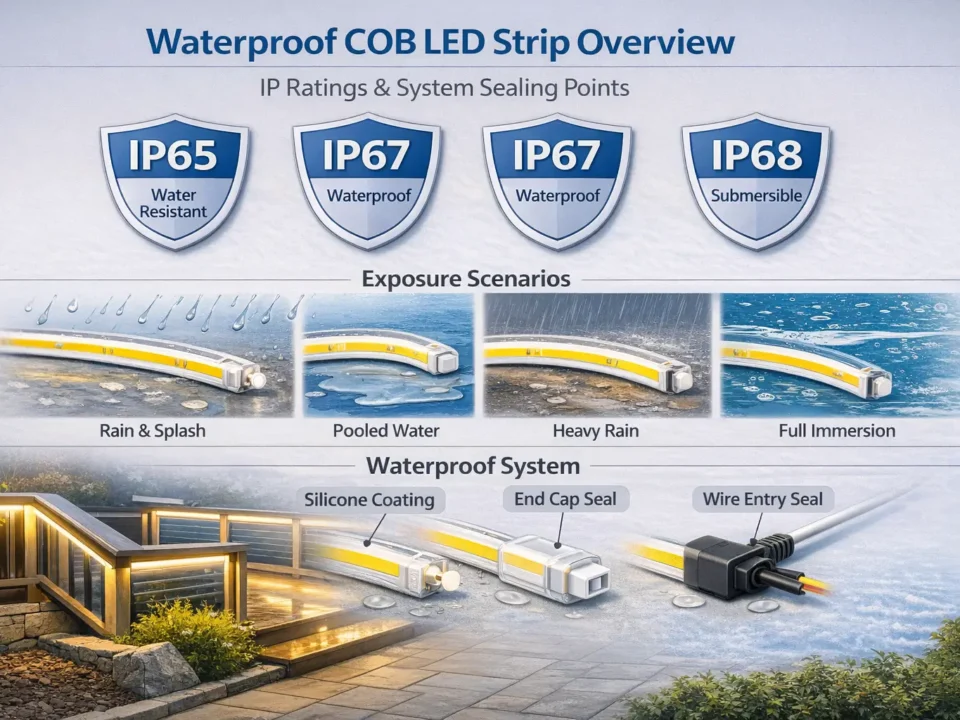
In addition, outdoor or wet-location work needs checks for IP rating, seal type, mount face, heat path, exposure, and service access. So, do not choose by raw output alone.
For OEM or custom work, turn “brightest” into clear needs. For example, share drawings, voltage limits, space, target output, CCT, CRI, connectors, controls, site needs, and test needs.
Many buying mistakes happen because the buyer compares the wrong metric. So, compare output, power, color, heat, and site fit together.
| Do Not Compare Only By | Why It Can Mislead | Better Check |
|---|---|---|
| Product title | “Ultra bright” or “brightest” is sales wording unless specs back it up. | First, ask for lumen output per foot or meter. |
| Total reel output | Longer reels can look stronger on paper. | So, compare by foot or meter. |
| Wattage | More power does not always mean more useful light. | Also, compare lumens, watts, and light per watt. |
| LED count | More LEDs can help smoothness, but not always output. | Then, check density with lumen output and power. |
| CCT | Cooler color may look brighter, but it is not a lumen test. | Next, compare lumen output for the needed CCT. |
| Bare strip output | The final setup may change with cover, heat, and wire layout. | Finally, review the whole light system. |
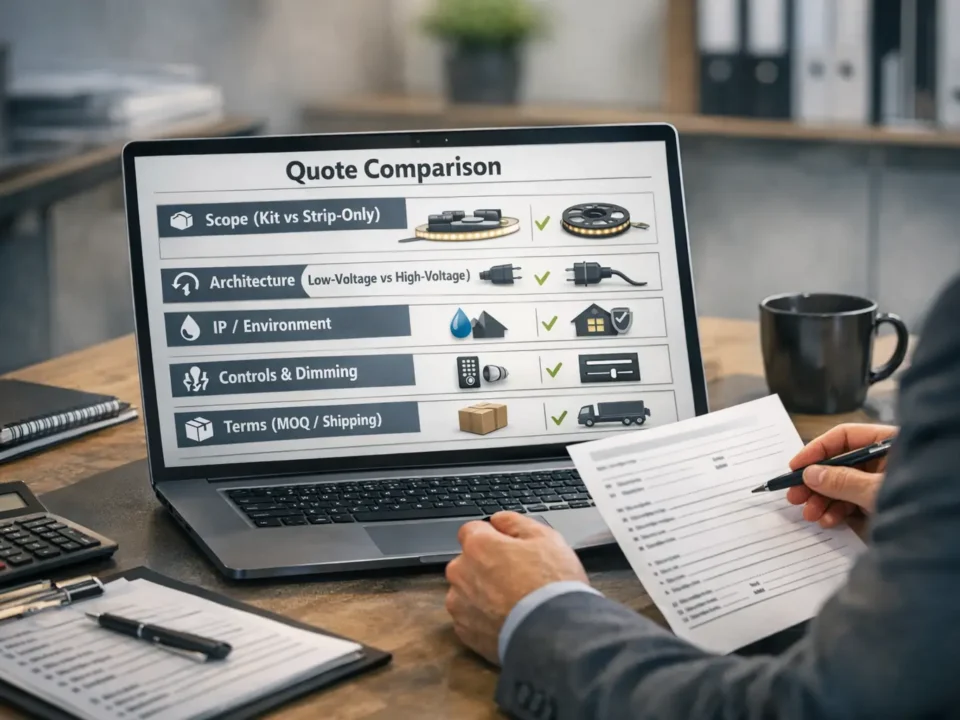
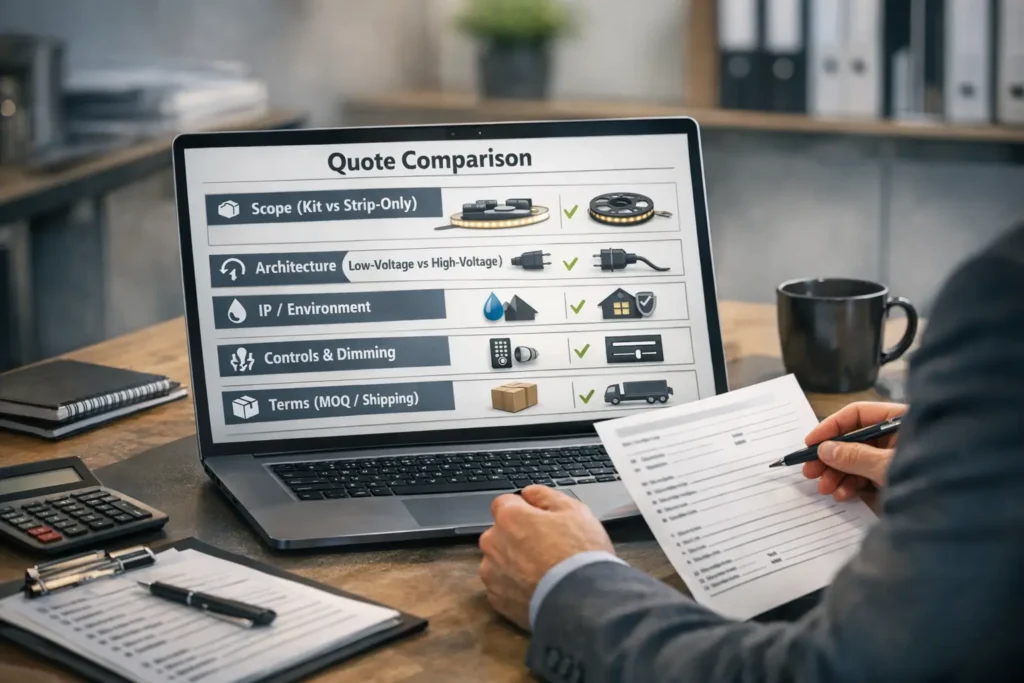
A better RFQ leads to better advice. Instead of asking only “What is your brightest LED strip?”, send the job details that define the right strip.
| RFQ Item | What to Provide |
|---|---|
| Use case | Cabinet, sign, retail display, cove, outdoor, OEM, or other use. |
| Length | Total length, section lengths, and any long runs. |
| Voltage | 12V, 24V, or another need if known. |
| Light target | Target lumen output, sample to match, or desired look. |
| CCT | Warm white, neutral white, cool white, tunable white, or set color. |
| CRI / color quality | Color needs for retail, display, work, or visual tasks. |
| IP rating / site | Indoor, outdoor, wet area, dusty area, closed space, or warm site. |
| Mounting | Profile, channel, surface mount, cabinet, sign box, or OEM case. |
| Controls | On/off, dimming, RGB/RGBW, DMX, smart control, or other control. |
| Quantity | Sample count, batch count, or project volume. |
| Documents needed | Datasheet, test data, certificates, mount guide, or sample needs. |
| Drawings or photos | Layout drawings, product photos, site photos, or fixture drawings. |
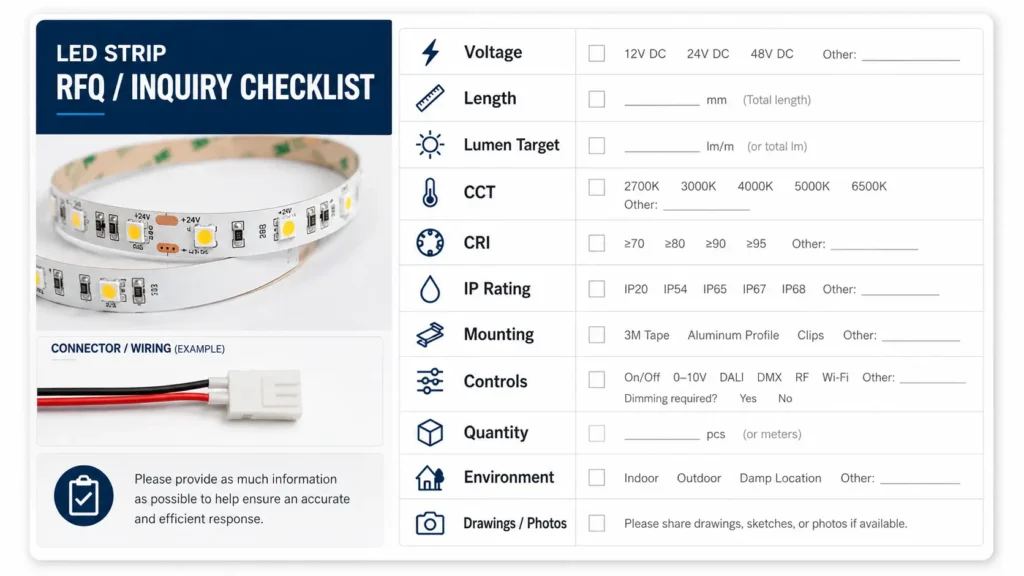
After that, buyers can review relevant LED strip product categories or send the RFQ details for a recommendation.
The brightest LED strip should be compared by checked lumen output per foot or meter for the needed setup. After that, check power, CCT, CRI, LED density, heat, voltage drop, diffuser, mount method, and use needs. Also, avoid choosing only by product title or LED count.
The brightest option for a project is the strip that gives the needed output under real site conditions. However, a strip with high output may still be a poor fit if the job has heat limits, long runs, tight profiles, cover loss, wet-location needs, or strict color needs.
Start with lumens per foot or meter. Then, use watts, light per watt, and LED density as support. Wattage shows power demand, density affects smoothness, and light per watt helps compare output against power use. Still, none of these should be used alone.
CCT describes color look, not brightness by itself. For example, 6000K may look cooler or sharper in some sites, while 3000K looks warmer. To compare true output, check the lumen output for each CCT option.
Installed light can be affected by voltage drop, power supply size, heat, cover loss, profile design, mount distance, surface color, and control settings. Therefore, review the strip as part of the full light system, not only as a bare product.
Bright setups often need heat planning, and an aluminum channel or good mount face may help in many jobs. Even so, the exact need depends on the strip, power level, mount method, run time, and site. Check the product guide before ordering.
Send the use case, total length, voltage, light target, CCT, CRI, IP rating, mount method, cover or profile needs, control method, quantity, site needs, and any drawings or photos. As a result, the supplier can suggest a suitable bright strip without vague “brightest” wording.
The brightest LED strip is not always the strip with the boldest product title, highest watts, or most LEDs. Therefore, compare lumen output per foot or meter first. Then, check the full system: power, heat, voltage drop, run length, color needs, cover, mounting, and site.
Next, define the use case clearly before asking for advice. Then, prepare the RFQ details before contacting a supplier.
Need help reviewing a bright LED strip need? Share your voltage, strip length, light target, CCT/CRI, IP rating, mount method, control method, quantity, and site needs. Then, the supplier can review the job and suggest a suitable direction.
 English
  Spanish
  French
  Arabic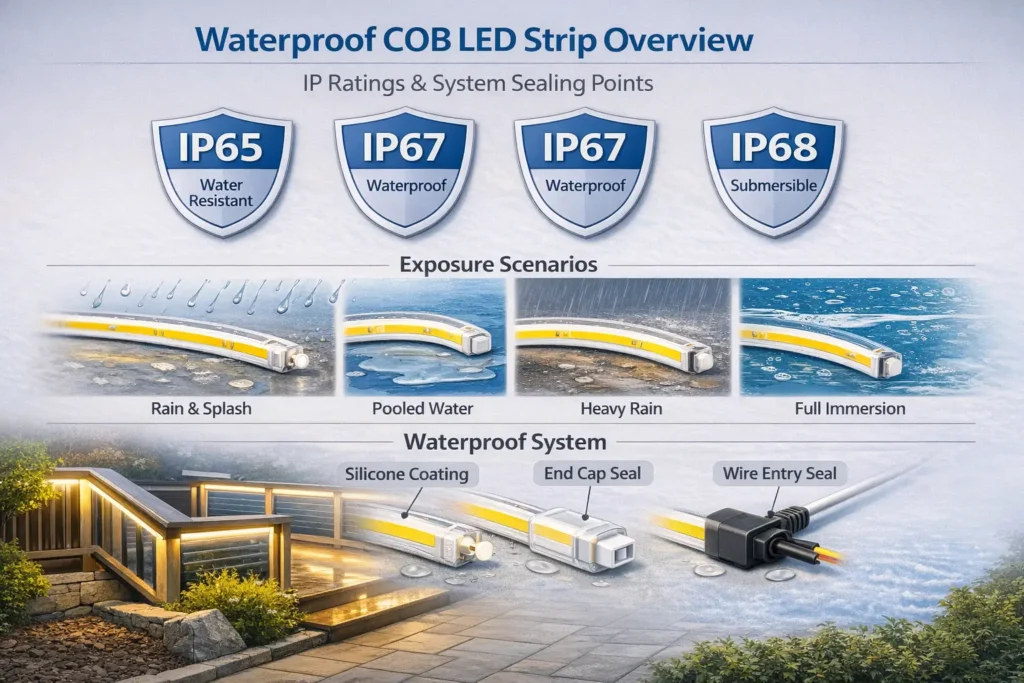
2 Comments
Want to run under soffit to light up signs below on building face..which rope light would you recommend to be the brightest per foot?
Maybe a high density strip, like the SMD 5730. Or perhaps you might find an article that explains led strips, the different factors in measuring brightness, and considerations when applying this knowledge…
That would be handy