“LED strip lights are generally safe but can pose fire hazards if improperly installed or used incorrectly. Clearly identify potential risks and follow practical prevention measures to ensure safe, reliable lighting.
Introduction to LED Strip Fire Hazards
Having personally installed and maintained many LED strip lighting systems, I clearly understand the importance of addressing potential fire hazards. While LED strips are generally safe, certain factors like improper installation, faulty components, or overheating can lead to serious safety risks.
Can LED Strip Lights Really Cause Fires?
Yes, while uncommon, LED strips can cause fires if installed improperly or used with incompatible components. Clearly understanding these risks and preventive measures helps you maintain safe, reliable lighting.
Why is Addressing LED Strip Fire Safety Important?
Quickly identifying and addressing potential fire hazards associated with LED strips ensures your home or property remains safe and protected. Proper preventive steps and careful installation clearly reduce risks, ensuring your lighting remains effective and secure.
Clients often ask me, “Are LED strips safe to use?” Clearly, when installed correctly and maintained properly, LED strips are very safe, but awareness and preventive measures are essential for long-term reliability and safety.

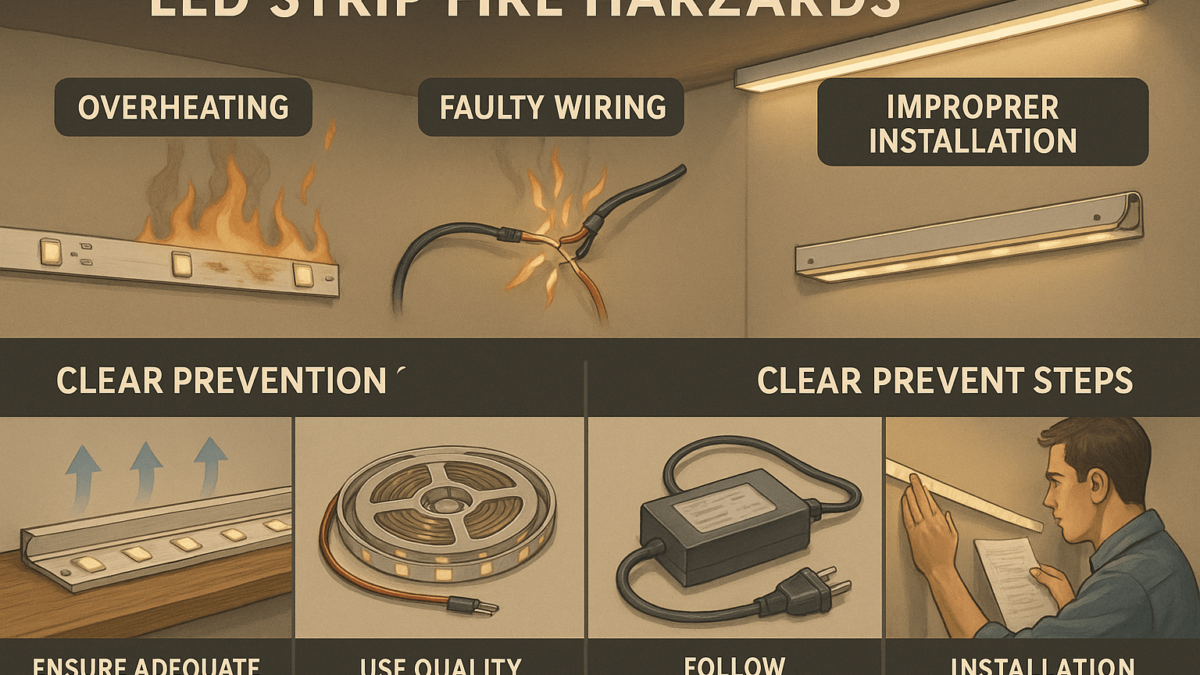
Common Causes of LED Strip Fires
From my hands-on experience installing and maintaining LED strips, I clearly understand common reasons that could cause LED strips to become a fire hazard. Here’s straightforward information to quickly identify and prevent these issues:
Overheating Due to Poor Heat Management
- Issue Explained:
Improper heat dissipation or inadequate ventilation can cause LED strips to overheat, potentially leading to fires.
- Signs to Look For:
Excessive heat, discoloration, or unusual odors near your LED strips.
Low-Quality or Faulty Components
- Issue Explained:
Inferior-quality LED strips, controllers, or power supplies may malfunction and create fire risks.
- Signs to Look For:
Flickering, inconsistent brightness, or overheating components.
Incorrect Voltage or Improper Wiring
- Issue Explained:
Using incorrect voltage or improper wiring techniques can lead to short circuits, overheating, or electrical fires.
- Signs to Look For:
Frequent flickering, burning smells, or clearly visible discoloration around wiring connections.
Poor Installation Techniques
- Issue Explained:
Incorrect installation methods can cause stress on components, leading to potential electrical faults or overheating.
- Signs to Look For:
Loose connections, sagging strips, or visible damage after installation.
Comparison Table:
| Cause |
Signs & Symptoms |
Quick Preventive Solutions |
| Poor Heat Management |
Overheating, discoloration |
Use aluminum channels for cooling |
| Low-Quality Components |
Flickering, overheating |
Choose certified, quality parts |
| Incorrect Voltage/Wiring |
Flickering, burning smells |
Verify correct voltage and wiring |
| Poor Installation |
Loose connections, sagging strips |
Follow proper installation methods |

Step-by-Step Safety Measures and Preventive Actions
Drawing from extensive personal experience installing and maintaining LED strip lighting, here’s a clear, step-by-step guide to ensure safety and prevent potential fire hazards:
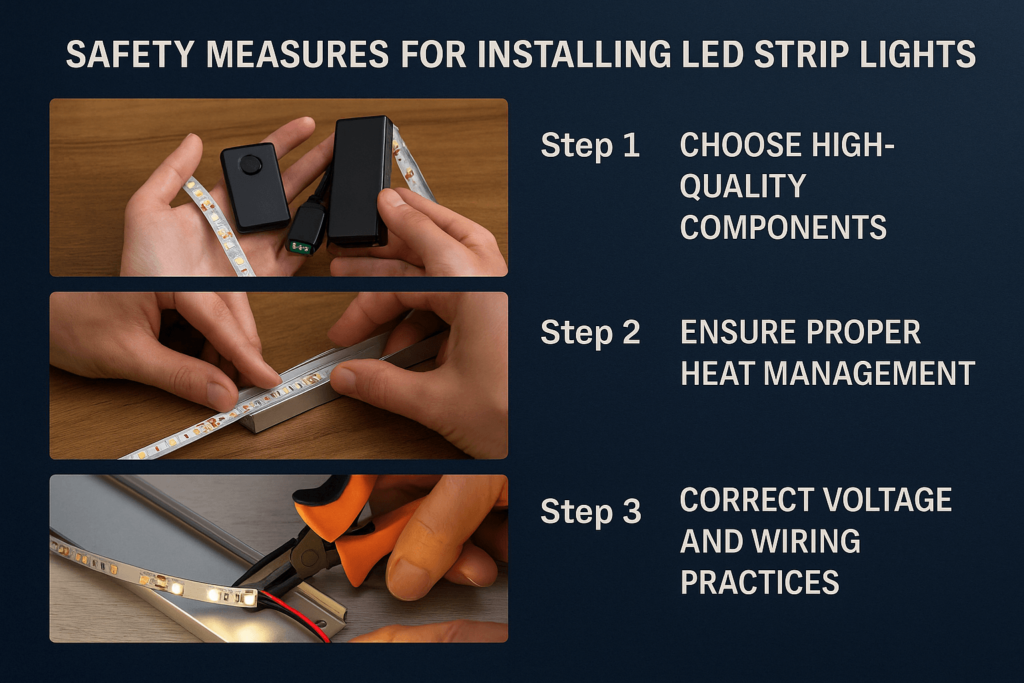
Step 1: Choose High-Quality Components
- Clearly select LED strips, power supplies, and controllers from reputable manufacturers that meet relevant safety standards and certifications (e.g., UL-listed).
Step 2: Ensure Proper Heat Management
- Clearly install LED strips using aluminum channels or heat sinks to dissipate heat effectively.
- Maintain proper spacing and ventilation to prevent overheating.
Step 3: Correct Voltage and Wiring Practices
- Clearly verify your LED strip voltage requirements and match them precisely with appropriate power supplies.
- Use clearly labeled, high-quality wiring and connectors specifically designed for LED strips to prevent short circuits.
Step 4: Follow Recommended Installation Techniques
- Clearly adhere to recommended installation procedures, securely mounting LED strips to prevent stress and damage.
- Regularly inspect and promptly secure any loose or problematic connections.
Clients frequently ask me, “How can I ensure my LED strips are safely installed?” Clearly, following these straightforward safety measures—quality components, proper heat management, correct wiring, and recommended installation practices—will effectively prevent potential fire hazards.
Best Practices for Safe LED Strip Installation
From my extensive personal experience installing and maintaining LED strips, I clearly understand that adhering to best practices is essential for safe, reliable performance. Here’s straightforward guidance for safely installing LED strip lighting:
Use Certified Components
- Clearly select LED strips, power supplies, and controllers certified by recognized safety standards (such as UL or CE).
- Clearly ensure components match your LED strip specifications precisely.
Proper Heat Management Techniques
- Clearly install aluminum mounting channels or heat sinks to dissipate heat effectively and prevent overheating.
- Clearly maintain adequate spacing and ventilation to ensure proper airflow and cooling.
Secure and Correct Wiring
- Clearly use appropriate gauge wires and reliable connectors specifically designed for LED strips.
- Clearly avoid loose connections and regularly inspect wiring to ensure stability and safety.
Professional Installation Methods
- Clearly follow manufacturer guidelines for secure and stable installation.
- Clearly reinforce critical points (ends, corners, connectors) with mounting clips or additional adhesive as necessary.
Regular Safety Inspections
- Clearly schedule routine inspections of LED strip installations, ensuring all connections and components remain secure and stable.
- Quickly address any issues clearly identified during inspections to maintain overall safety.
Clients often ask me, “What’s the best way to safely install LED strips?” Clearly, following these straightforward best practices—using certified components, proper heat management, secure wiring, professional installation methods, and regular inspections—ensures safe, long-lasting LED strip performance.

Recommended Components and Safety Equipment
Based on my practical experience installing LED strip lighting, I clearly understand how critical it is to select high-quality components and safety equipment. Here’s clear guidance on recommended items to ensure a safe and reliable LED strip installation:
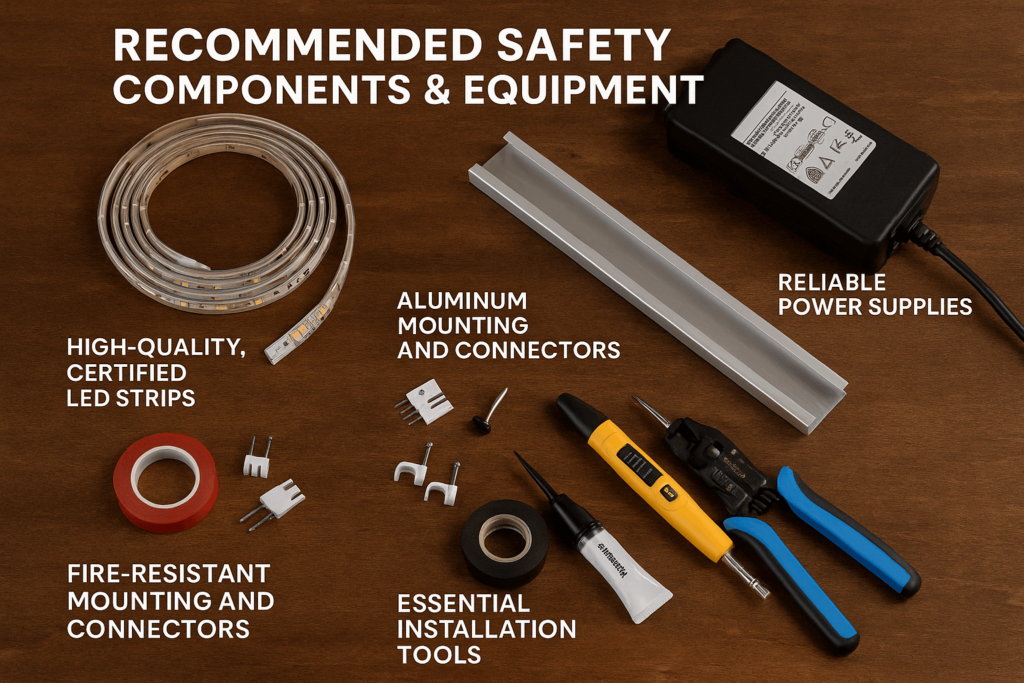
High-Quality, Certified LED Strips
- Choose LED strips clearly labeled with reputable safety certifications (UL, CE, ETL).
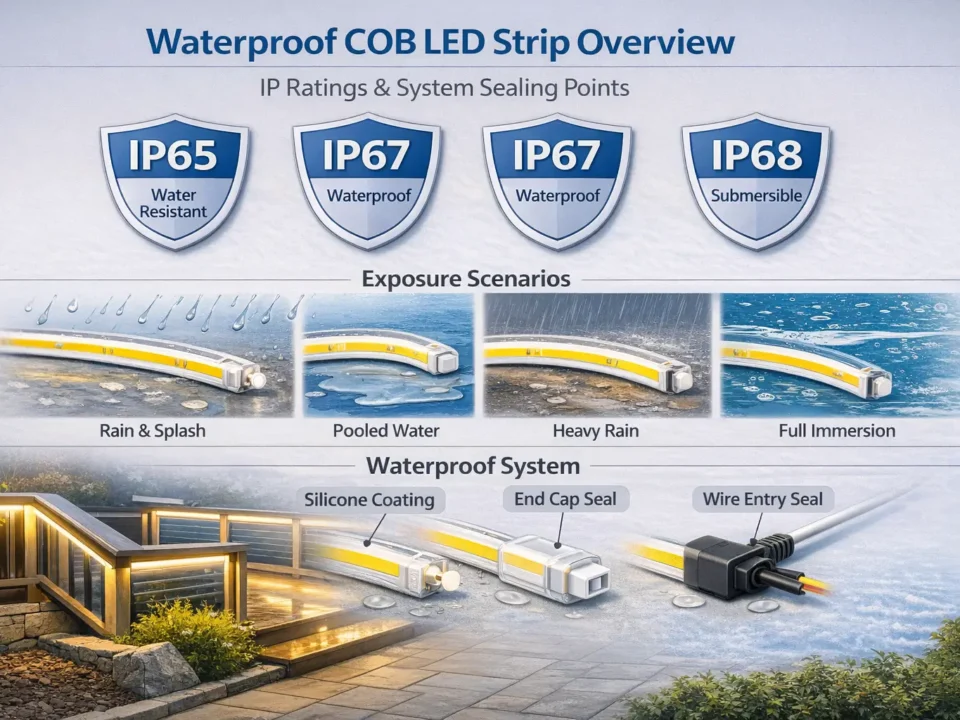
- Clearly opt for strips specifically rated for your installation environment (indoor/outdoor).
Reliable Power Supplies
- Clearly select certified, high-quality power supplies specifically matched to your LED strip voltage and wattage requirements.
- Prefer power supplies clearly featuring built-in safety mechanisms such as short-circuit protection and overload protection.
Aluminum Mounting Channels
- Use aluminum channels clearly designed to securely mount LED strips, improve heat dissipation, and reduce fire risk.
Fire-Resistant Mounting and Connectors
- Clearly choose connectors, clips, and mounting tapes specifically rated as fire-resistant or heat-resistant for added safety.
Essential Installation Tools
- Clearly have essential safety and installation tools, including voltage testers, wire strippers, insulating tape, and heat-resistant adhesives.
Clients frequently ask me, “What components ensure safe LED strip installation?” Clearly, using high-quality certified LED strips, reliable power supplies, aluminum mounting channels, fire-resistant connectors, and essential safety tools ensures safe, durable LED strip lighting.
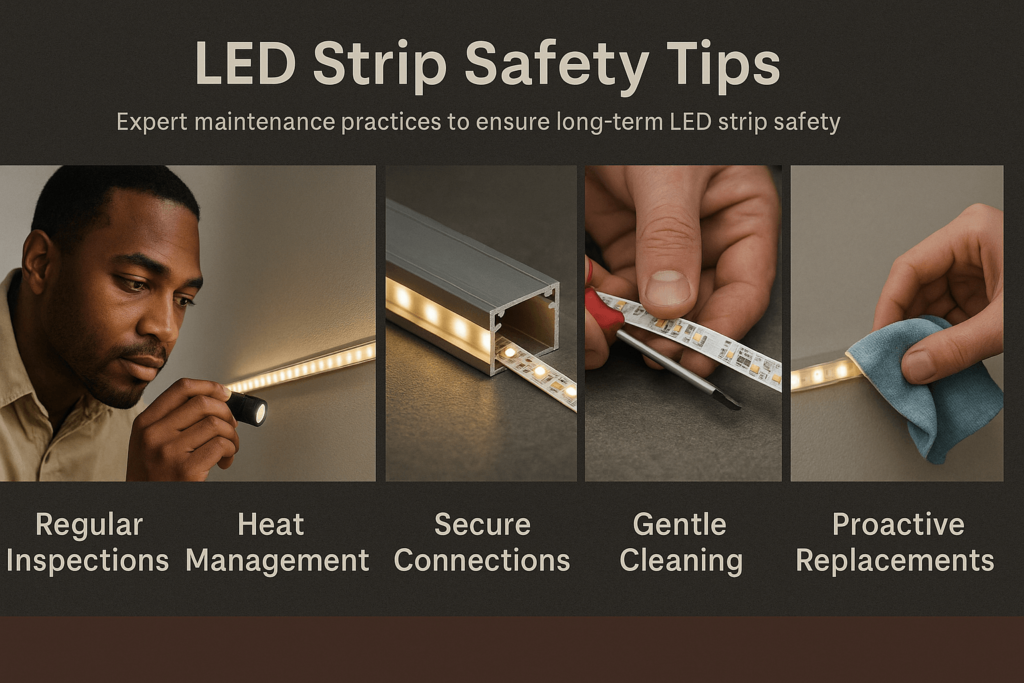
Expert Maintenance & Long-term Safety Recommendations
Based on extensive personal experience installing and maintaining LED strip lighting, I clearly recognize how important regular care is for ensuring safe, reliable long-term performance. Here’s clear, practical guidance on maintaining your LED strips to prevent fire hazards and ensure safety:
Regular Safety Inspections
- Clearly schedule routine visual inspections of LED strips, power supplies, controllers, and wiring.
- Quickly identify and repair any signs of wear, overheating, or damage clearly visible during inspections.
Proper Heat Management
- Clearly ensure LED strips are installed in aluminum mounting channels or heat sinks to manage heat effectively.
- Regularly check for overheating clearly by observing discoloration, warping, or unusual odors around LED strips and power components.
Maintain Secure and Proper Connections
- Clearly inspect wiring and connectors regularly to ensure they remain secure, intact, and free from damage or corrosion.
- Promptly address clearly any loose or problematic connections to reduce electrical risks.
Routine Cleaning and Care
- Gently clean LED strips periodically using a soft cloth clearly to remove dust and debris, which can cause overheating.
- Clearly avoid harsh cleaning agents or excessive moisture, which could degrade strip integrity and electrical components.
Proactive Component Replacement
- Clearly replace aging power supplies, controllers, or wiring proactively before they pose safety risks.
- Choose clearly certified, reliable replacements to ensure continued safe operation.
Clients frequently ask me, “How often should LED strips be maintained for optimal safety?” Clearly, routine inspections every few months, regular cleaning, heat management, and proactive component replacements significantly enhance safety and long-term performance.
Expert Maintenance & Long-term Safety Recommendations
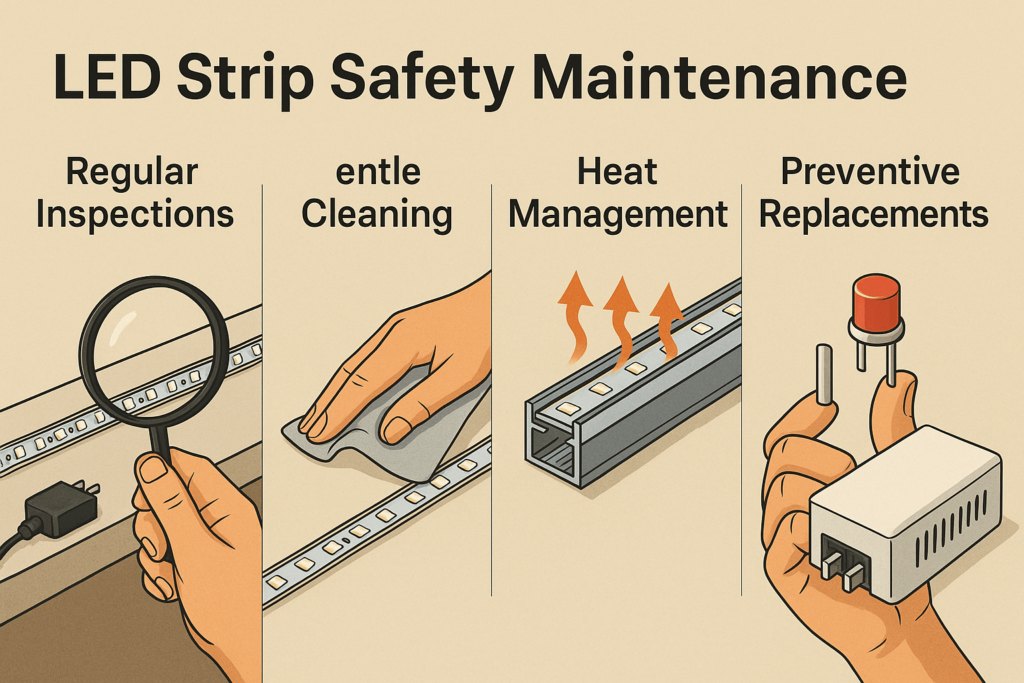
From extensive hands-on experience installing and maintaining LED strips, I clearly understand the importance of proactive care to ensure long-term safety. Here’s clear, practical guidance on how to maintain your LED strip installations safely over time:
Regular Visual Inspections
- Clearly schedule routine checks to inspect LED strips, wiring, connectors, and power supplies.
- Promptly tighten loose connections or replace components clearly identified as damaged or worn during inspections.
Monitor Heat and Ventilation
- Clearly ensure adequate heat dissipation with aluminum mounting channels and proper spacing.
- Regularly verify that strips and power supplies remain cool during operation to prevent overheating and reduce fire risk.
Gentle Cleaning Practices
- Gently clean LED strips periodically with a soft cloth clearly to remove dust and debris.
- Clearly avoid using harsh cleaning agents or excessive moisture that might damage wiring or adhesive backing.
Preventive Component Replacements
- Clearly replace batteries, controllers, or power supplies proactively before complete failure.
- Promptly upgrade any components clearly showing signs of overheating or wear.
Clients frequently ask me, “How often should I perform maintenance to keep my LED strips safe?” Clearly, performing regular visual inspections every 3–6 months, gentle cleaning every 6 months, and proactive replacements as needed ensures safe, reliable LED strip operation.
Common FAQs About LED Strip Fire Hazards
Drawing from my extensive hands-on experience installing and troubleshooting LED strips, here are clear, practical answers to common questions about fire hazards related to LED strip lights, ensuring you maintain a safe installation:
Can LED strip lights actually cause fires?
While rare, LED strip lights can potentially cause fires if installed improperly, using poor-quality components, incorrect wiring, or inadequate heat dissipation. Proper installation and regular maintenance clearly minimize this risk.
What causes LED strip lights to catch fire?
Common causes include overheating, using incorrect voltage or power supplies, faulty wiring, poor-quality components, or improper installation techniques. Clearly addressing these factors greatly reduces fire risk.
How can I prevent LED strip fires?
Clearly follow best practices—use certified high-quality components, maintain proper heat management, ensure correct wiring, conduct regular inspections, and follow recommended installation guidelines.
Are LED strips safe to leave on continuously?
High-quality LED strips properly installed with suitable heat management are clearly safe for continuous operation. Regular inspections and preventive maintenance further ensure safety over long-term use.
Conclusion & Next Steps
Clearly understanding potential fire hazards associated with LED strip lighting—and knowing how to effectively prevent them—is crucial for safe, reliable, and long-term installations. From my practical experience, quickly addressing overheating, ensuring correct voltage, selecting certified components, and adhering to proper installation methods significantly reduces any fire risk.
By following these straightforward guidelines, regular inspections, and proactive maintenance practices, you can confidently enjoy safe and reliable LED lighting.
Ready to enhance your lighting safely and securely?
Explore Elstar’s Safe LED Lighting Solutions →



 English
  Spanish
  French
  Arabic