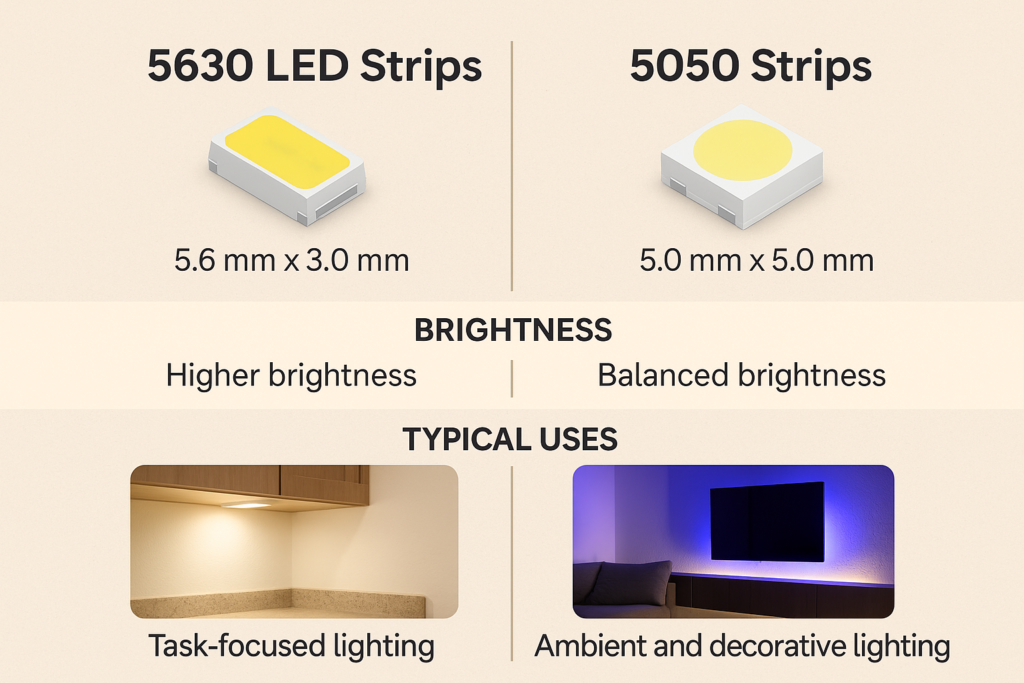
5630 vs 5050 LED strips is mainly a choice between stronger white-light output and flexible RGB use. 5630 LED strips usually give higher brightness and better output for task lighting. 5050 LED strips usually offer balanced brightness, color options, and easier use for decor.
Therefore, choose 5630 when the project needs strong light for work areas, display cases, retail shelves, or professional spaces. However, choose 5050 when the project needs RGB color, ambient light, accent lighting, or a lower-cost strip.
Introduction to 5630 and 5050 LED Strips
Before choosing an LED strip, it helps to know what the number means. In most cases, the number refers to the LED package size. As a result, the package affects brightness, heat, power needs, and common use.
What is a 5630 LED strip?
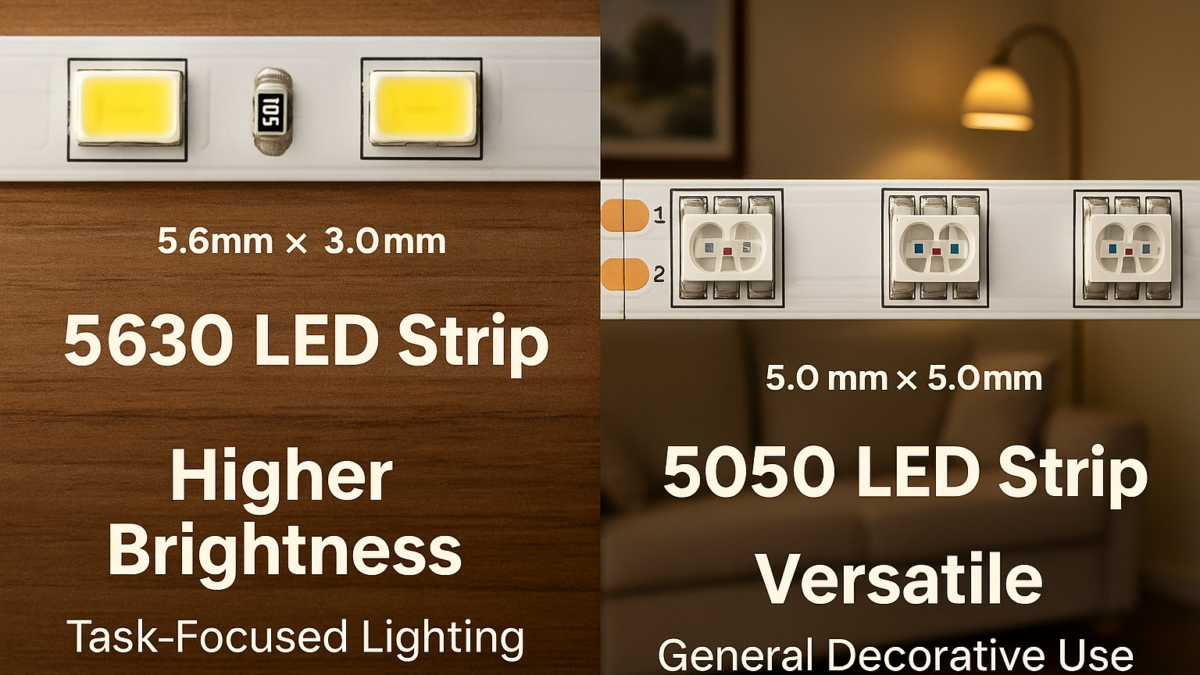
A 5630 LED strip uses LEDs that measure about 5.6 mm by 3.0 mm. These LEDs are often bright and efficient. Also, they work well in areas that need clear light, such as kitchens, worktops, offices, and display spaces.
What is a 5050 LED strip?
A 5050 LED strip uses LEDs that measure about 5.0 mm by 5.0 mm. This package is common in RGB strips and decorative lighting. Therefore, it is often used in homes, bars, restaurants, shelves, coves, and color-effect projects.
Quick answer
5630 LED strips are usually brighter than 5050 LED strips. Meanwhile, 5050 LED strips are often more flexible for RGB color and general accent lighting.
Technical Differences Between 5630 and 5050 LED Strips
The main differences are brightness, color use, power draw, heat, and best application. Also, final performance depends on LED density, driver size, profile, and installation quality.
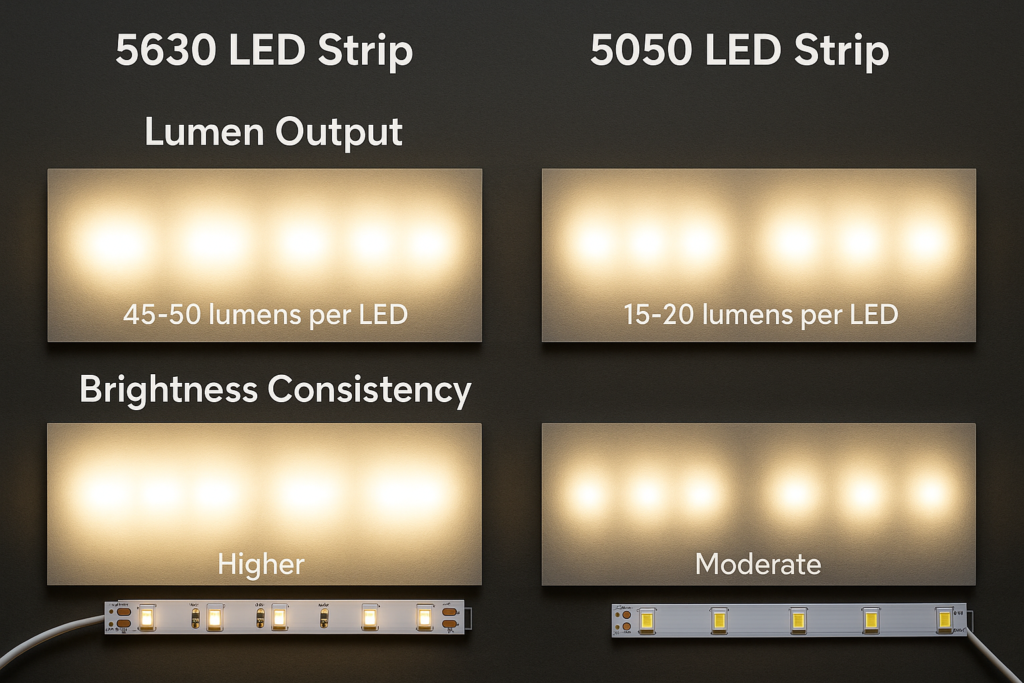
Brightness and light output
5630 LED strips: usually deliver higher output. As a result, they fit task lighting, retail displays, and high-visibility spaces.
5050 LED strips: usually deliver moderate output. However, they are useful when RGB color or decorative light matters more than peak brightness.
Power use and efficiency
5630 LED strips: can give more light per LED, so they can be efficient in bright projects.
5050 LED strips: use moderate power and are easier to plan in many simple accent projects.
Heat and driver planning
5630 strips may create more heat when used at high output.
Therefore, bright 5630 runs often need aluminum channels or better airflow.
5050 strips are often easier to handle for lower-output decorative layouts.
5630 LED strips are a good choice when brightness is the main goal. However, they may need better heat control and stronger power planning than some lower-output strips.
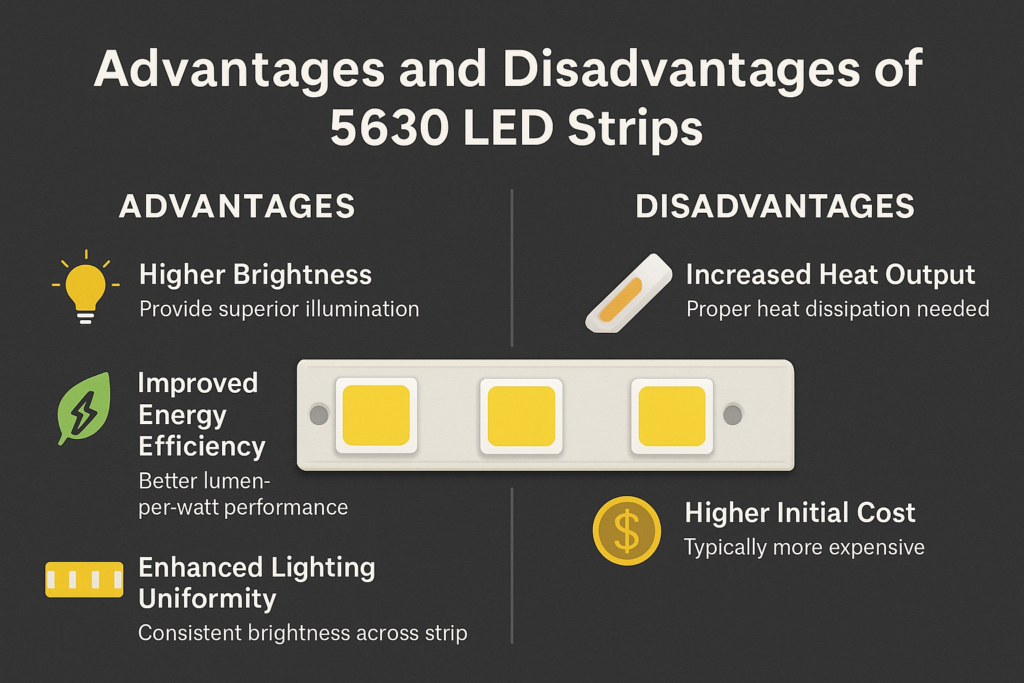
Advantages of 5630 LED strips
Higher brightness: useful for task lighting, work areas, counters, and displays.
Good efficiency: more light can be produced from each LED package.
Strong white-light output: useful when color effects are less important.
Professional look: works well in retail, office, and display projects.
Disadvantages of 5630 LED strips
More heat: high output can raise strip temperature.
Higher starting cost: 5630 strips can cost more than common 5050 strips.
More setup care: bright runs may need better drivers and profiles.
Best fit summary
Choose 5630 LED strips when the project needs strong light and clear visibility. Also, use them when the strip must support task lighting or high-output display lighting.
Advantages and Disadvantages of 5050 LED Strips
5050 LED strips are popular because they offer a useful balance of brightness, color options, and cost. In addition, they are widely used in RGB lighting projects.
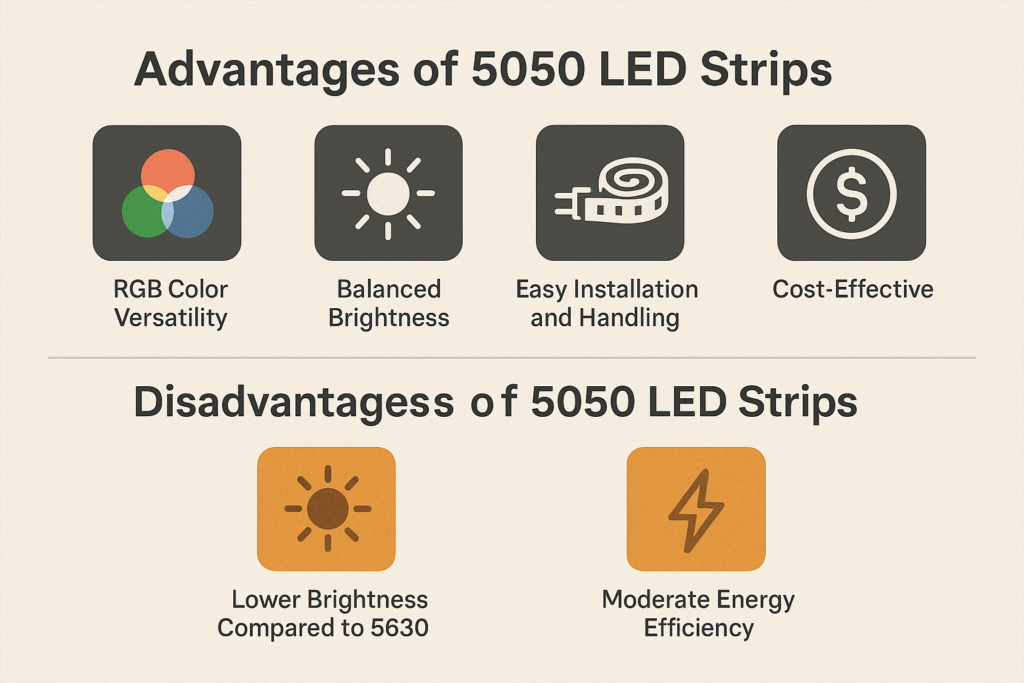
Advantages of 5050 LED strips
RGB color options: useful for mood lighting, events, bars, and room effects.
Balanced brightness: enough for many home and accent lighting projects.
Easy handling: often simple to install in DIY and general-use layouts.
Lower cost: often more affordable than high-output strip types.
Disadvantages of 5050 LED strips
Lower brightness than 5630: not ideal for strong task lighting.
Less efficient for high-output white light: may need more strip length for the same task.
Not always dot-free: a diffuser or profile may be needed for a smoother line.
Best fit summary
Choose 5050 LED strips for decorative lighting, RGB color, shelves, coves, and simple room effects. However, choose 5630 if the area needs stronger white light.
Best Applications for 5630 vs 5050 LED Strips
Use the project goal first. Then, match the strip type to the brightness, color, and budget needs.
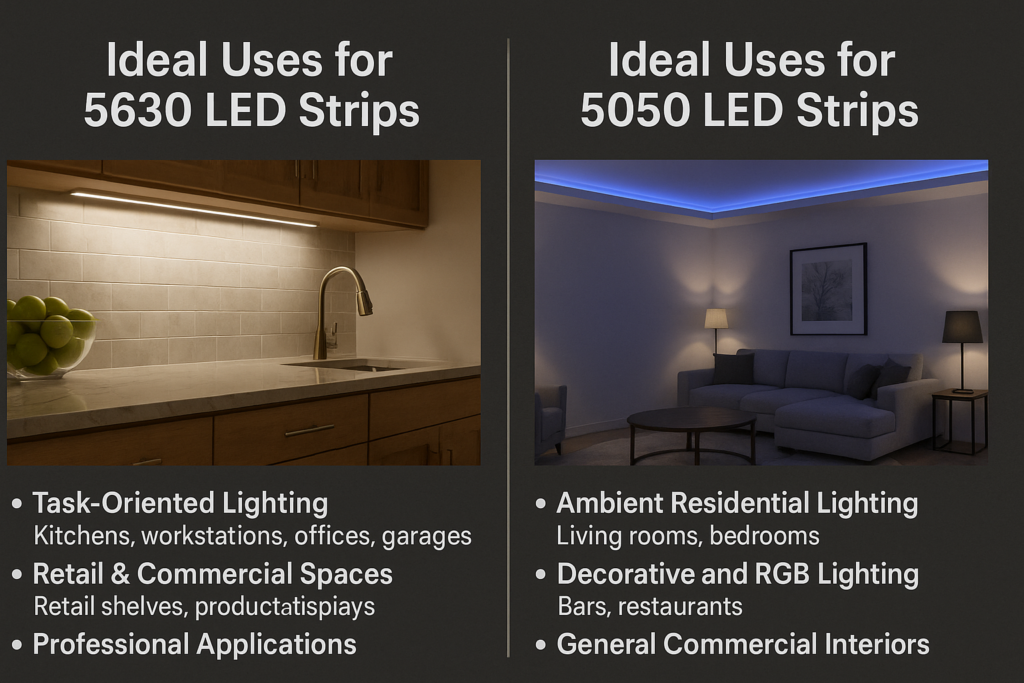
Ideal uses for 5630 LED strips
Task lighting: use 5630 for kitchens, workstations, garages, and offices.
Retail displays: use 5630 for shelves, product displays, and bright showcases.
Professional spaces: use 5630 where clear, steady brightness matters.
High-output accents: use 5630 when a feature needs stronger light.
Ideal uses for 5050 LED strips
Ambient home lighting: use 5050 for bedrooms, living rooms, and light accents.
Decorative RGB lighting: use 5050 for color scenes and mood effects.
Bars and restaurants: use 5050 for flexible color lighting.
General accents: use 5050 when balanced brightness is enough.
Home example
For a kitchen counter, 5630 is often better because brightness matters. Meanwhile, for a living room color accent, 5050 may be the better fit.
How to Choose Between 5630 and 5050 LED Strips
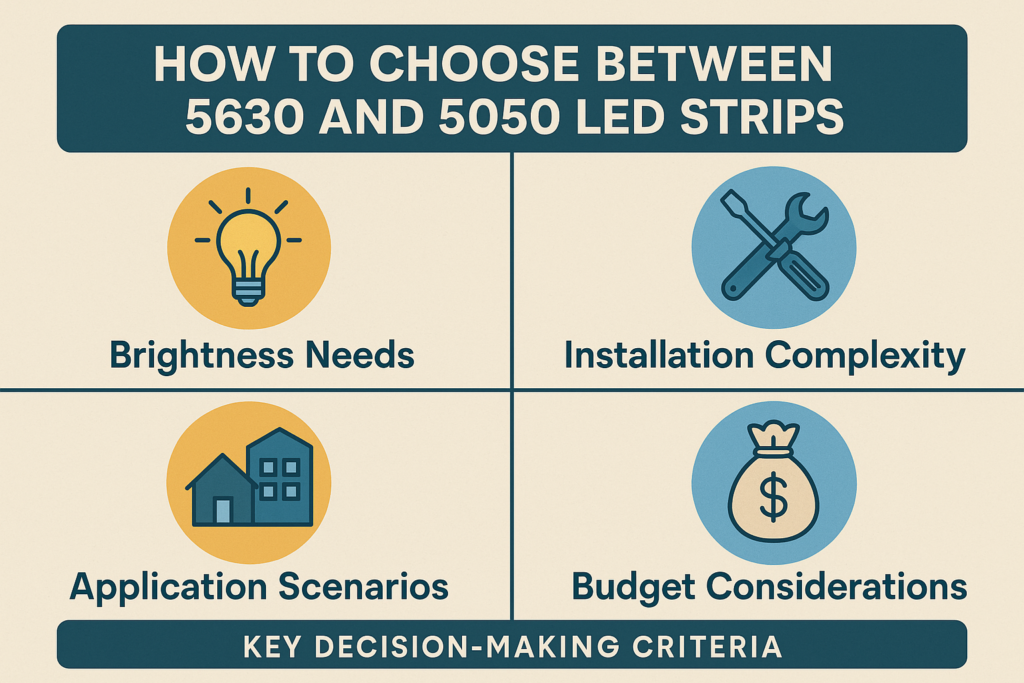
To choose well, compare brightness, color needs, cost, heat, and installation skill. Also, think about whether the strip is used for work light or decoration.
Key factors to consider
Brillo: choose 5630 for high output and 5050 for moderate light.
Color effects: choose 5050 when RGB color is the main goal.
Application: choose 5630 for task areas and 5050 for ambient areas.
Budget: choose 5050 when lower starting cost matters.
Heat: use channels or heat paths for bright 5630 installs.
Common mistakes
Do not choose 5050 for a task area that needs strong light.
Also, do not choose 5630 only because it is brighter.
Instead, match the strip to the use case.
Finally, check power supply size before installing bright strips.
Is 5630 always better?
No. 5630 is better for brightness, while 5050 is often better for RGB effects, cost, and simple accent lighting. Therefore, the best strip depends on the project.
Installation and Maintenance Tips
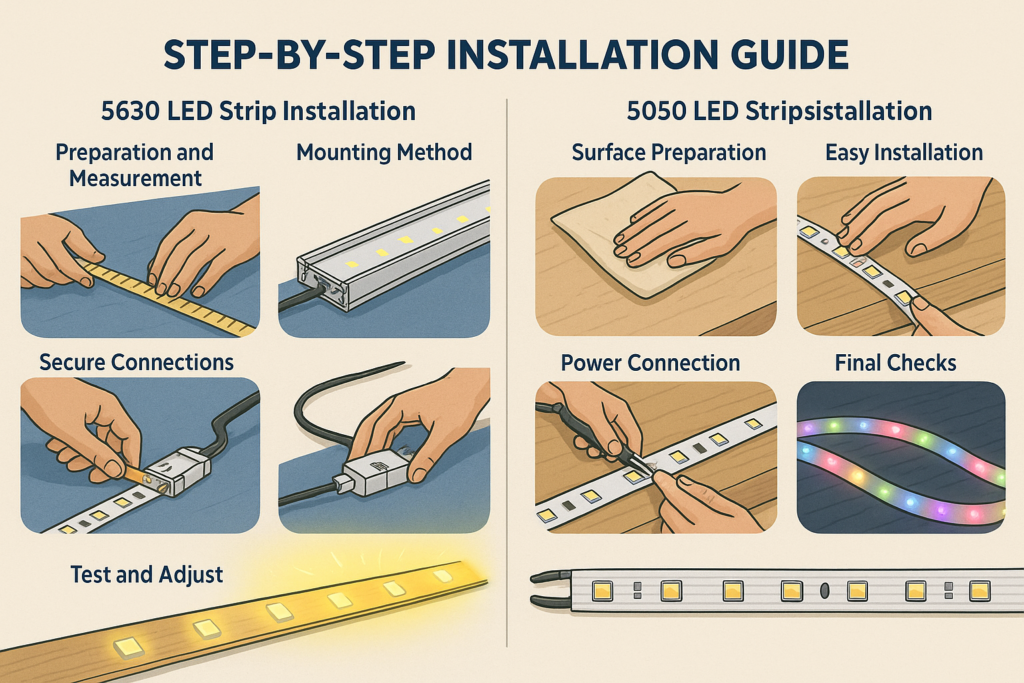
Good installation improves brightness and lifespan. Therefore, plan layout, power, heat, and mounting before final setup.
Installing 5630 LED strips
Plan the layout: measure the run and check brightness needs.
Prepare the surface: clean and dry the mounting area.
Manage heat: use aluminum channels for high-output runs.
Connect and test: check polarity, driver size, and light output.
Installing 5050 LED strips
Plan placement: choose the area for accent or color light.
Mount the strip: use adhesive, clips, or channels.
Connect power: match voltage and polarity.
Test color and brightness: check the strip before final cleanup.
Maintenance tips
Inspect strips for dim areas, loose parts, and heat marks.
Also, clean dust with a soft dry cloth.
For 5630 bright runs, check airflow and aluminum channels.
Then, replace weak connectors or damaged sections early.
Troubleshooting quick checks
Uneven brightness: check voltage drop and power feed points.
No light: check polarity, driver, and connections.
Overheating: add heat paths or reduce load.
Weak RGB color: check controller match and wiring order.
FAQs About 5630 and 5050 LED Strips
Are 5630 LEDs brighter than 5050 LEDs?
Yes. 5630 LEDs are usually brighter than 5050 LEDs. As a result, they are often better for task lighting and high-output use.
Which LED type is more energy-efficient?
5630 LEDs often give more light per watt. However, 5050 LEDs can still be efficient for moderate accent and RGB lighting.
Can I use 5050 LED strips for detailed task lighting?
Usually, 5050 strips are better for decorative and ambient light. For detailed task lighting, 5630 strips are often the better choice.
Which is better for home lighting?
Use 5050 for mood, RGB, and accent lighting. Use 5630 for kitchen counters, offices, and other task areas.
Conclusion and Next Steps
The choice between 5630 and 5050 LED strips depends on brightness, color, heat, and budget. First, decide whether the project needs strong white light or flexible color effects.
Choose 5630 for high-output task lighting and professional use. In contrast, choose 5050 for RGB effects, ambient lighting, and budget-friendly decorative projects.


 English
  Spanish
  French
  Arabic