Vous avez besoin d'un produit de qualité en peu de temps ? Nous avons un plan pour vous.


Choosing between RGB and RGBW LED strips is not just a question of which option is “better.” The right choice depends on what the lighting needs to do.
For some projects, color effects are the main goal. For others, the lighting also needs to provide usable white light for display, ambience, signage, furniture, hospitality, or architectural accent lighting. The control system matters too, because RGB and RGBW do not use the same channel setup.
This guide compares RGB and RGBW LED strips from a practical B2B selection point of view: color use, white-light expectations, controller compatibility, application fit, and the information you should prepare before requesting a quote.
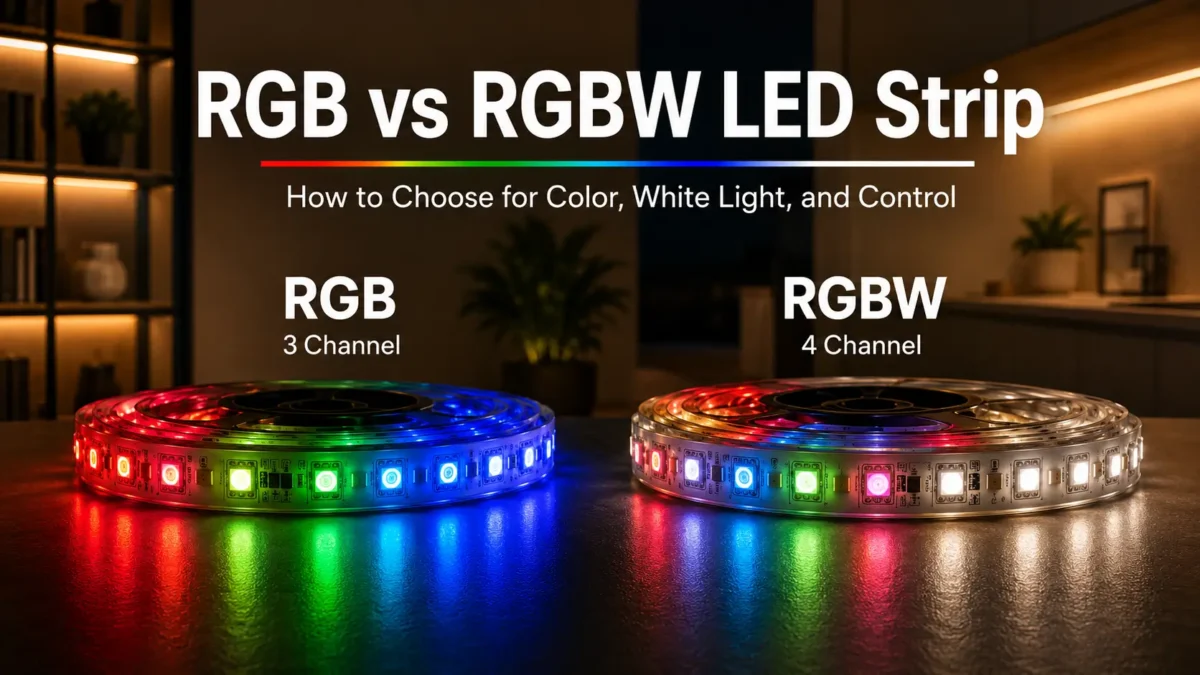
RGB LED strips use red, green, and blue channels to create color effects. RGBW LED strips add a dedicated white channel. Choose RGB when the main goal is decorative color. Choose RGBW when the project needs both color effects and a dedicated white-channel option. Before ordering RGBW, confirm that the controller or decoder supports the white channel.
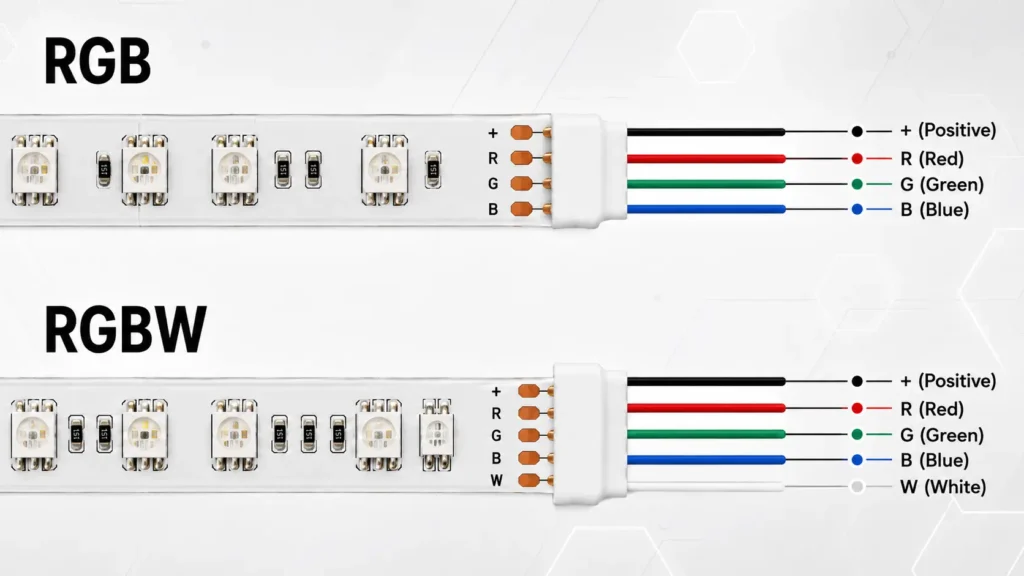
RGB stands for red, green, and blue. An RGB LED strip mixes these three channels to create different colors. It can also mix a white-like output, but that white is created by combining color channels.
RGBW adds a separate white channel to the RGB channels. This makes RGBW a more appropriate option when the project needs color effects and a dedicated white-channel option from the same strip.
The key difference is not only the LED strip itself. The control setup also changes. RGB uses three color channels. RGBW adds a white channel, so the controller or decoder must support RGBW or four-channel RGB plus white control.
| Item | RGB LED Strip | RGBW LED Strip |
|---|---|---|
| Channel setup | Red, green, blue | Red, green, blue, white |
| Main purpose | Color effects | Color effects plus dedicated white channel |
| White-light behavior | White-like output from color mixing | White channel available |
| Control requirement | RGB controller/control output | RGBW or 4-channel RGB+White control |
| Typical fit | Decorative color-focused projects | Projects needing both color and usable white |
| Buyer caution | Do not expect dedicated white output | Confirm white-channel control compatibility |
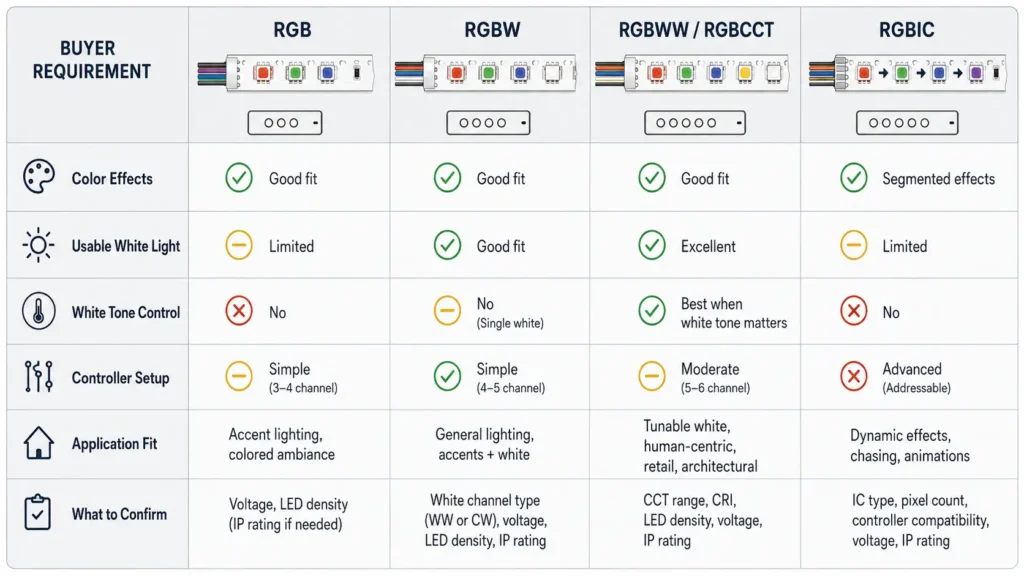
The table below gives a quick selection view. It should not replace actual product specifications, because performance depends on strip design, LED density, power, control method, installation conditions, and test data.
| Selection Factor | RVB | RGBW | What to Confirm |
|---|---|---|---|
| Color effects | Good fit | Good fit | Required effect style and control method |
| Usable white light | Limited by color mixing | Better fit when a white channel is needed | White CCT requirement and expected use |
| Controller setup | RGB control | RGBW / 4-channel control | Controller or decoder compatibility |
| Project simplicity | Usually simpler channel setup | More control requirements | Wiring/control plan before purchase |
| Decorative-only use | Often enough | May be more than needed | Whether white light is actually required |
| Mixed color + white use | May not meet expectations | Usually more suitable | White-light need, application, and budget |
| Procurement risk | Assuming RGB white will be enough | Assuming any controller will work | Confirm specs before quote/order |
Use the project requirement as the starting point.
| Project Requirement | More Likely Option | Reason | What to Check Before Ordering |
|---|---|---|---|
| Decorative color only | RVB | The project mainly needs red/green/blue color effects. | Voltage, length, controller, installation environment |
| Color effects plus usable white | RGBW | The white channel gives a dedicated white-light option. | RGBW controller/decoder support and white CCT |
| Main requirement is white light | White-only, CCT, RGBWW, or RGBCCT may be better | RGBW is not always the best choice if white performance or white-tone control is the main goal. | Required CCT range, brightness target, dimming/control |
| Warm and cool white adjustment | RGBWW or RGBCCT may be relevant | These options are more focused on white tone flexibility. | Control system and white-temperature requirements |
| Dynamic segmented effects | RGBIC may be relevant | RGBIC is often considered when separate segment control is needed. | Controller ecosystem and effect requirements |
| Distributor or OEM selection | Depends on target use case | The right option depends on how end users will use the product. | Market need, control accessories, packaging/spec data |
RGB is a practical choice when the customer mainly wants color effects. RGBW is usually more suitable when the customer wants both color effects and a dedicated white channel. If the project mainly needs white-light performance or white-tone control, do not choose only by the RGB/RGBW label. Compare the actual product specifications and the required white-light function.
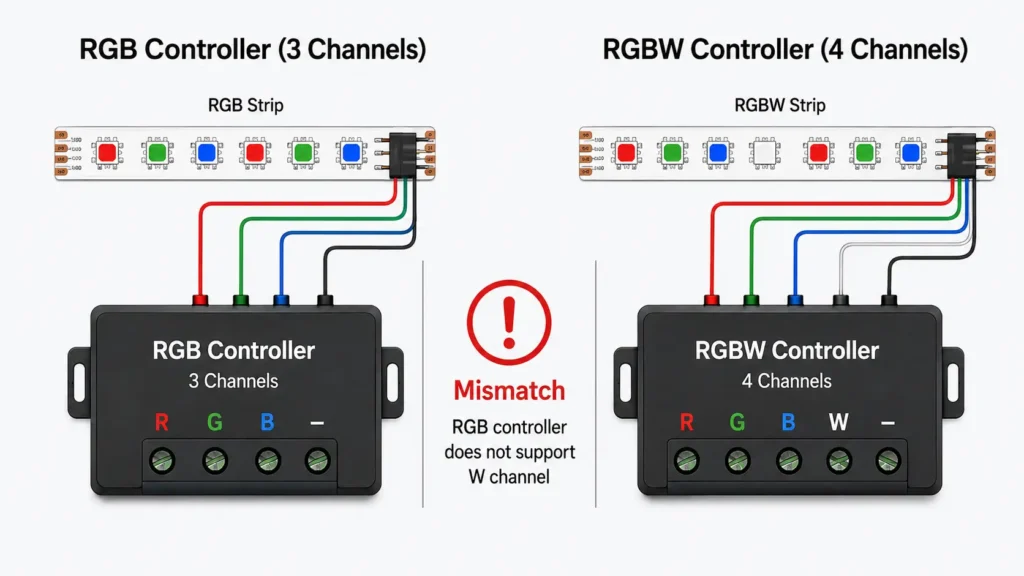
A common selection mistake is choosing an RGBW strip but pairing it with a controller that only supports RGB control.
Before ordering, check the control path:
| Check Item | Why It Matters |
|---|---|
| Strip type | RGB and RGBW do not use the same channel setup. |
| Controller type | RGBW needs control support for the white channel. |
| Channel count | RGB uses three color channels; RGBW adds a white channel. |
| Tension | The strip, controller, and power supply need to match the project design. |
| Control method | Remote, app, DMX, PWM, smart control, or other systems may affect selection. |
| Decoder/amplifier need | Longer or more complex projects may require additional control planning. |
| Wiring plan | The installer or engineer should confirm the connection method before purchase. |
For simple projects, a complete matched strip-and-controller setup may reduce selection risk. For custom, OEM, or project-based installations, confirm controller compatibility before the quote is finalized.
Important: This article does not confirm compatibility for any specific product model. Always check the actual strip, controller, decoder, and power supply specifications.
RGB and RGBW are often compared with other LED strip types. Keep the choice tied to the project requirement.
| Application Scenario | Possible Fit | Why |
|---|---|---|
| Retail display accent lighting | RGBW or RGB | RGBW helps when both color effects and white-light scenes are needed. |
| Signage or visual branding | RGB or RGBW | RGB may be enough for color effects; RGBW helps when white scenes are part of the design. |
| Hospitality ambience | RGBW, RGBWW, or RGBCCT | White tone and mood control may matter more than color effects alone. |
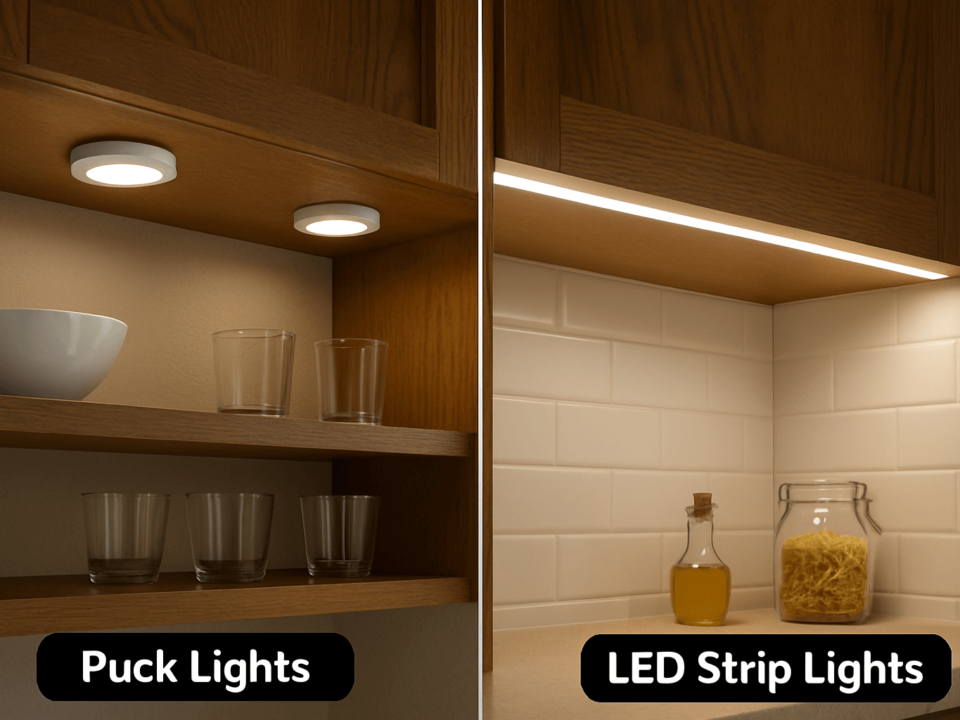
| Furniture or cabinet accent lighting | RGBW or CCT | Dedicated white light may be useful for daily use. |
| Stage, entertainment, or dynamic effects | RGB, RGBW, or RGBIC | Effects and control method should drive selection. |
| OEM lighting kit | Depends on end-user need | Confirm target application, controller, accessories, and validation requirements. |
| Projects focused mainly on white light | White-only, CCT, or RGBCCT | RGBW should not be assumed to replace a white-focused product. |
RGBW is useful when color and white light both matter. But if the project is mainly about adjustable white temperature, compare RGBW with RGBWW or RGBCCT. If the project is mainly about dynamic segmented effects, RGBIC may be relevant. These options should be evaluated by application, control method, and product specifications.
The RGB or RGBW label tells you the channel type. It does not prove overall performance.
Do not assume:
Brightness, color quality, heat behavior, durability, and white-light performance depend on the actual product design and test conditions. For procurement, request the relevant product specifications instead of relying only on the RGB/RGBW name.
A better inquiry helps the supplier or engineering team recommend the right strip, controller, and accessory setup.
Prepare these details before requesting a quote:
| RFQ Item | What to Provide |
|---|---|
| Application | Retail display, signage, cabinet, hospitality, architectural accent, OEM kit, or other use |
| Indoor/outdoor condition | Installation environment and exposure conditions |
| Required length | Total length and segment lengths |
| Voltage preference | Required or preferred system voltage, if known |
| Color requirement | Color effects only, color plus white, warm white, cool white, or tunable white |
| White-light need | Whether white light is occasional, decorative, or a main lighting function |
| Control method | Remote, wall controller, app, DMX, PWM, smart system, or other control method |
| Controller/accessories | Whether controller, decoder, amplifier, connector, or power supply support is needed |
| Quantity | Estimated order quantity or project quantity |
| Installation notes | Mounting surface, space limits, bending path, diffuser/channel needs |
| Documentation needs | Ask what product specs or documents are available for review |
This checklist does not imply that every supplier or product has every document or option available. It simply helps both sides discuss the project more clearly.
Neither is always better. RGB is usually enough when the project mainly needs color effects. RGBW is usually more suitable when the project needs both color effects and a dedicated white channel. The final choice should consider controller compatibility, white-light expectations, application conditions, and product specifications.
RGB uses red, green, and blue channels for color mixing. RGBW adds a white channel to the RGB channels. This makes RGBW useful when the project needs color effects and a separate white-channel option.
RGB can create a white-like output by mixing red, green, and blue. However, that is different from using a strip with a dedicated white channel. If usable white light is important, compare RGBW or white-focused strip options.
Usually, yes. RGBW needs control support for the added white channel. Before ordering, check that the controller or decoder supports RGBW or four-channel RGB plus white control. Exact compatibility depends on the product and control system.
Do not assume that from the label alone. Brightness depends on the actual strip design, LED density, power, optics, installation conditions, and test data. Compare product specifications rather than assuming RGBW is brighter.
RGBW adds one white channel to RGB. RGBWW or RGBCCT options are often considered when the project needs more white tone flexibility, such as warm and cool white control. The best option depends on the required white-light function and control setup.
Prepare the application, required length, voltage, quantity, installation environment, control method, white-light requirement, IP rating need if applicable, and accessory requirements. Also ask what product specifications or documents are available for review.
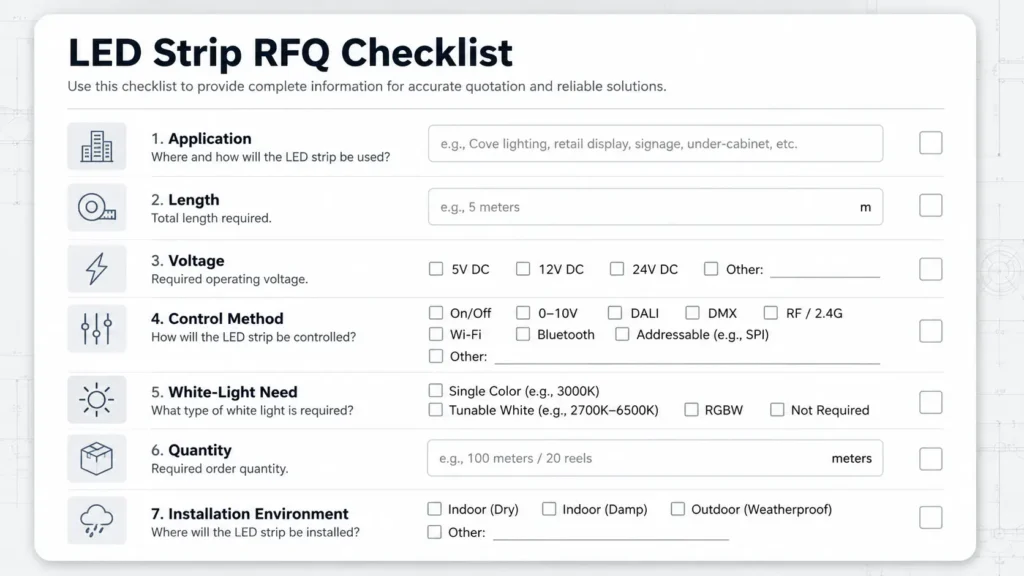
To compare RGB, RGBW, or another LED strip configuration, prepare your application details first. You can also use the contact page when you are ready to share the project brief. Share the required length, voltage, white-light requirement, control method, installation environment, accessory needs, and estimated quantity. With those details, a supplier can help review whether RGB, RGBW, RGBWW/RGBCCT, or another configuration is more suitable for the project.


 English
  Spanish
  French
  Arabic