Vous avez besoin d'un produit de qualité en peu de temps ? Nous avons un plan pour vous.


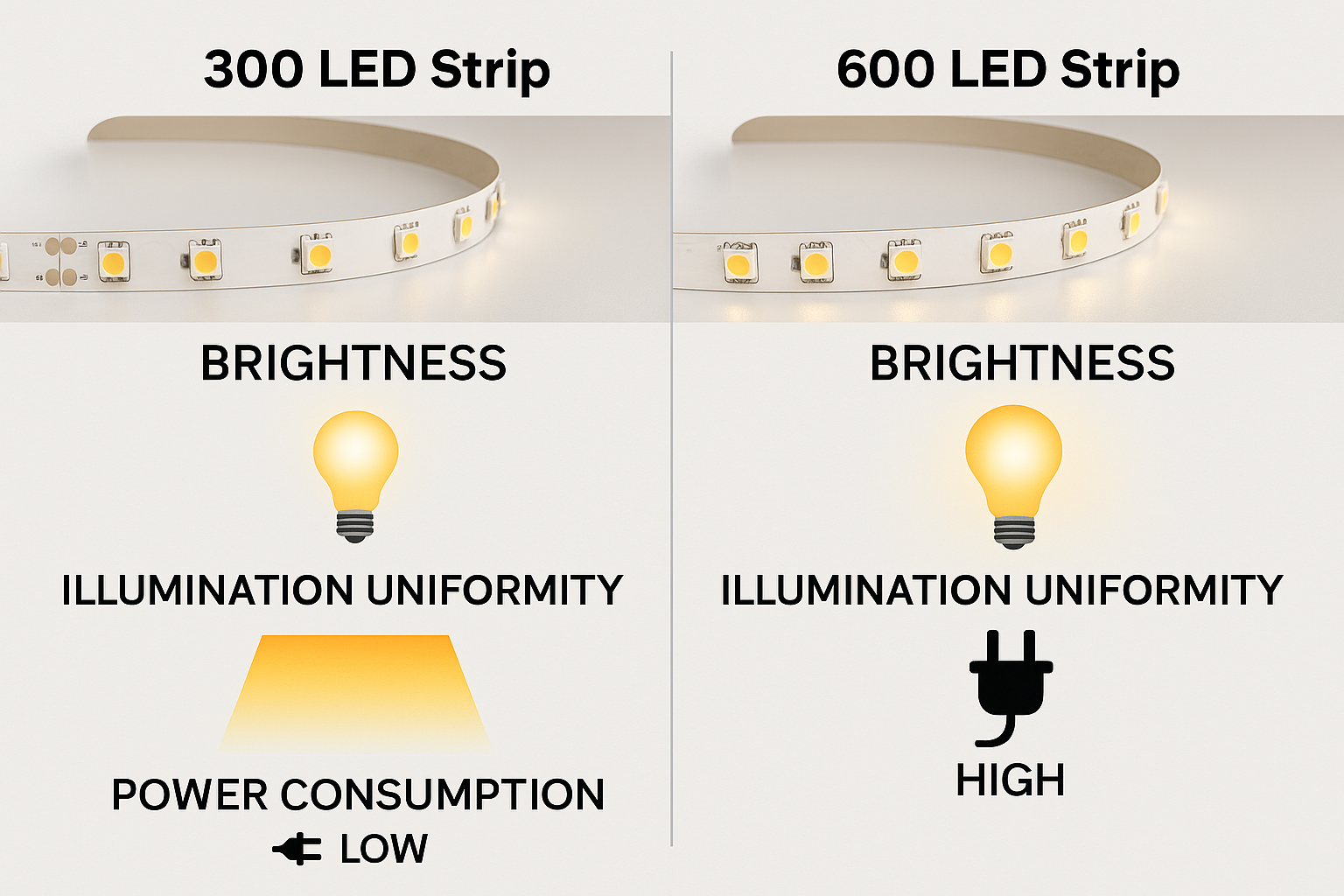
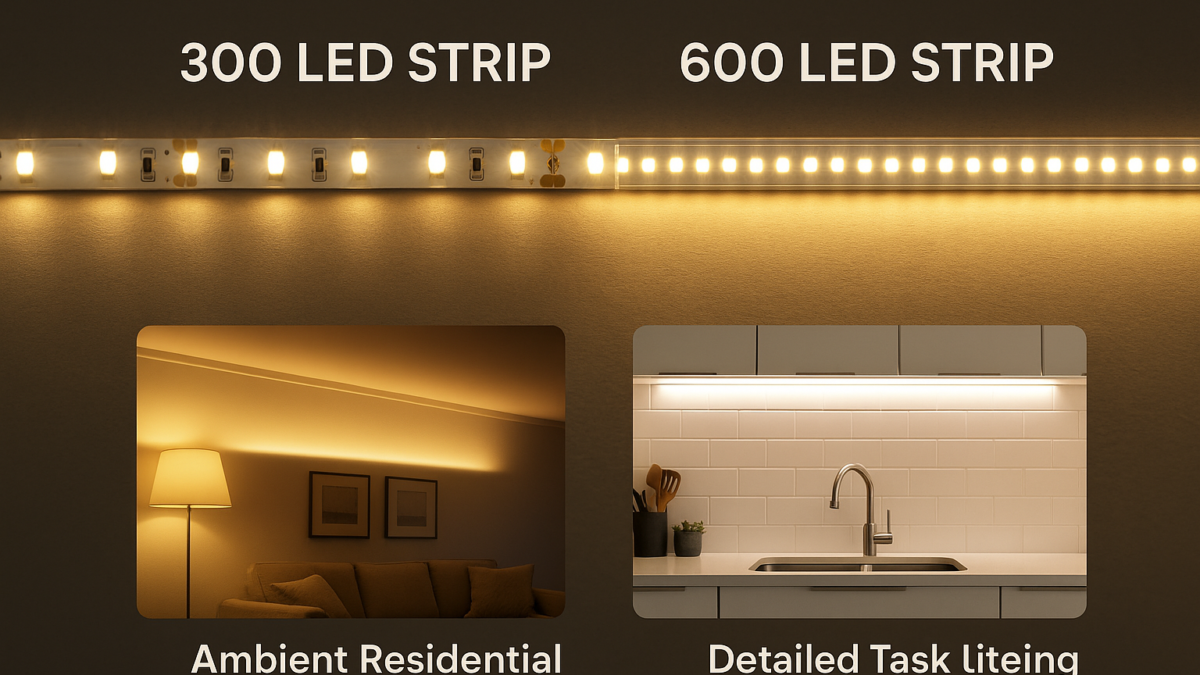
LED strip density means how many LEDs are placed on a strip, usually per meter or per 5-meter reel. In a 300 vs 600 LED strip comparison, 300 LEDs usually means about 60 LEDs per meter, while 600 LEDs usually means about 120 LEDs per meter.
Therefore, density affects brightness, smoothness, power use, heat, and cost. Choose 300 LED strips for soft ambient light and lower cost. However, choose 600 LED strips when the project needs brighter and more even task lighting.
For related internal resources, review Elstar’s Bande LED, Bandes LED COB, LED power supplieset Profilés LED en aluminium. For an outside reference, see HitLights’ high density vs regular density LED strip guide and the U.S. Department of Energy’s LED lighting overview.
When choosing a strip, start with density because it affects how bright and smooth the light looks. In general, more LEDs per meter create a smoother light line, but they also use more power.
A 300 LED strip usually means 300 LEDs on a 5-meter reel. This equals about 60 LEDs per meter. As a result, it works well for ambient, decorative, and lower-output accent lighting.
A 600 LED strip usually means 600 LEDs on a 5-meter reel. This equals about 120 LEDs per meter. Therefore, it gives higher brightness and a smoother line for task lighting and high-visibility areas.
For basic ambient lighting, 300 LED strips are often enough. Meanwhile, 600 LED strips are better when you need stronger, smoother, and more even light.
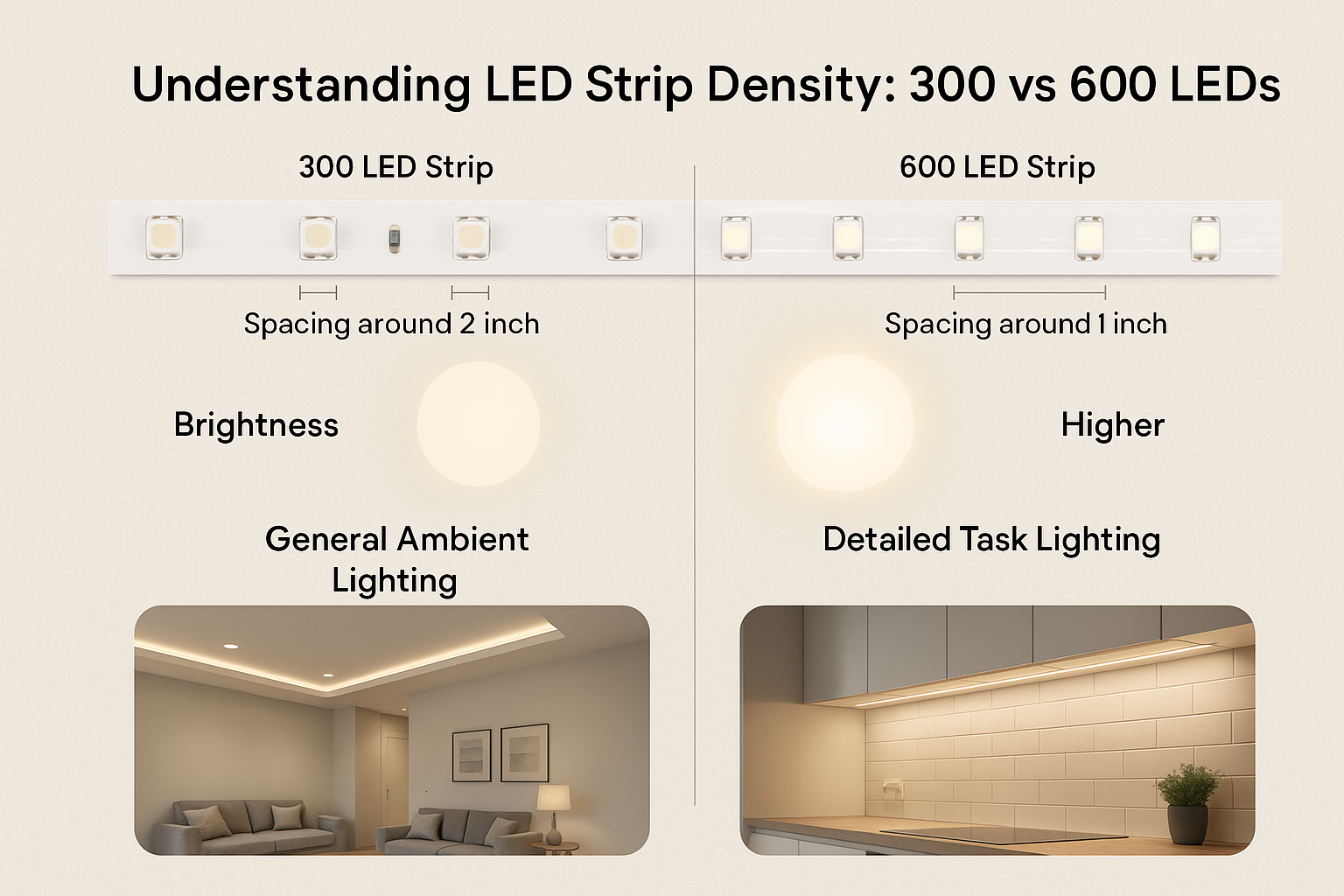
The main differences are brightness, light smoothness, power use, heat, and install needs. Also, the final result depends on LED type, voltage, diffuser, and power supply.
| Feature | 300 LED Strip | 600 LED Strip |
|---|---|---|
| Typical density | About 60 LEDs/m | About 120 LEDs/m |
| Luminosité | Moderate | Plus élevé |
| Light smoothness | Good for basic accents | Smoother and more even |
| Power use | Plus bas | Plus élevé |
| Heat | Easier to manage | Needs more planning |
| Best use | Ambient and decorative lighting | Task, retail, and high-visibility lighting |
A 600 LED strip can look much brighter than a 300 LED strip. However, actual brightness still depends on LED quality, wattage, voltage, and driver size.
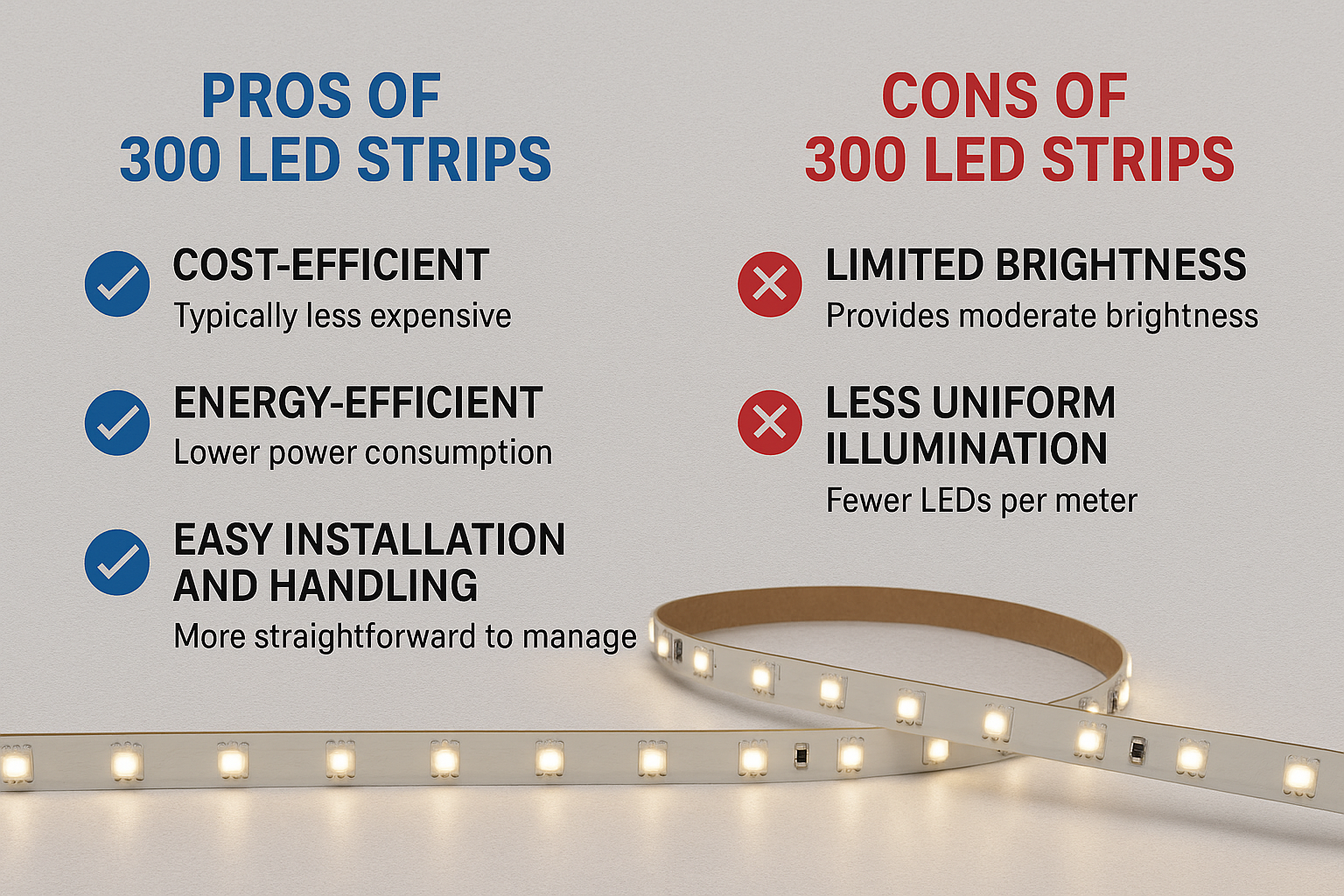
300 LED strips are useful when the project needs soft light and simple setup. Also, they often cost less than higher-density strips.
Choose 300 LED strips for ambient lighting, decorative lines, and lower-cost projects. However, avoid them when the project needs high brightness or a very smooth line.
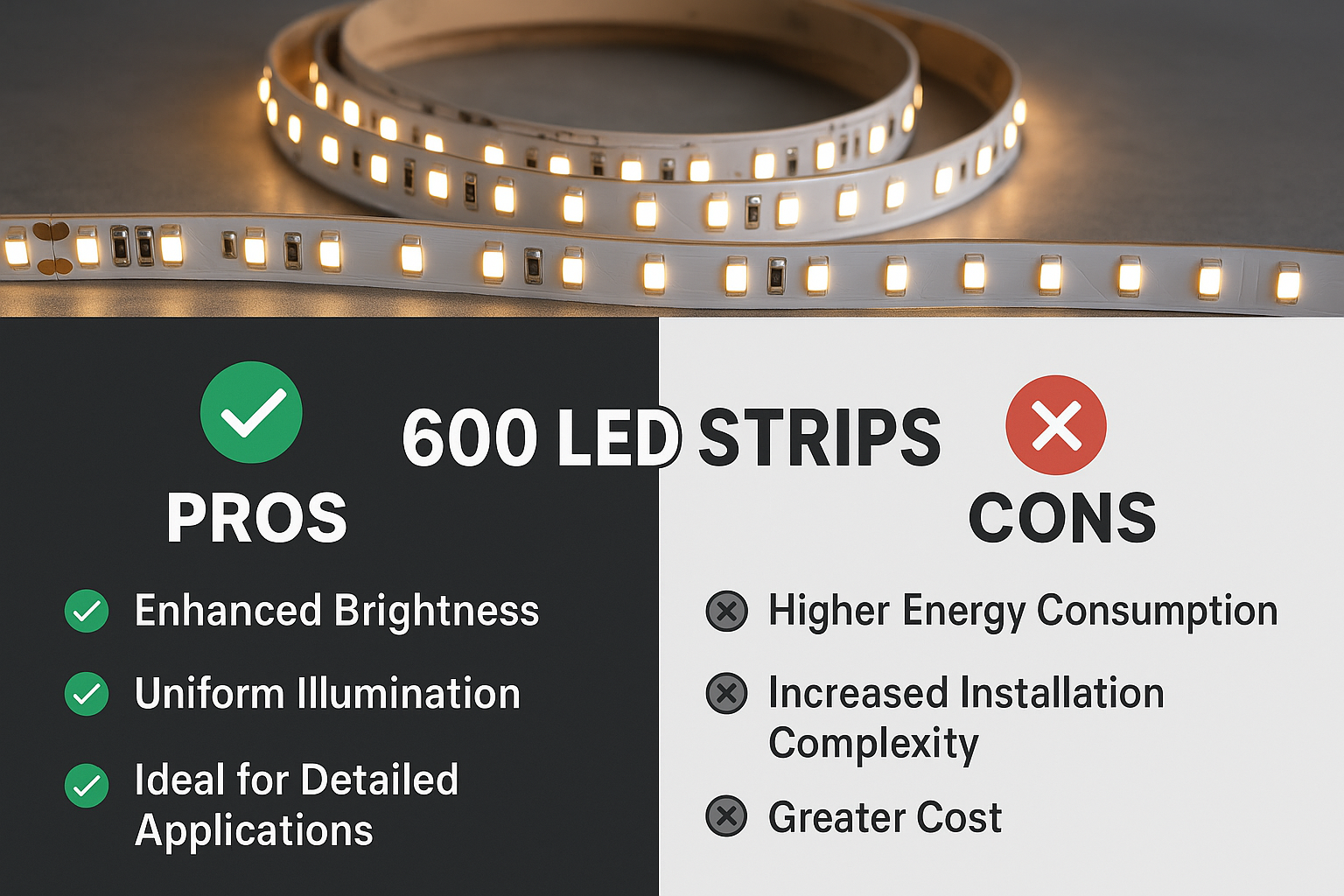
600 LED strips are useful when the project needs stronger and smoother light. As a result, they are often chosen for task and display lighting.
Choose 600 LED strips for detailed task lighting, retail displays, workstations, and high-visibility areas. However, for soft decor, 300 LED strips may be enough.
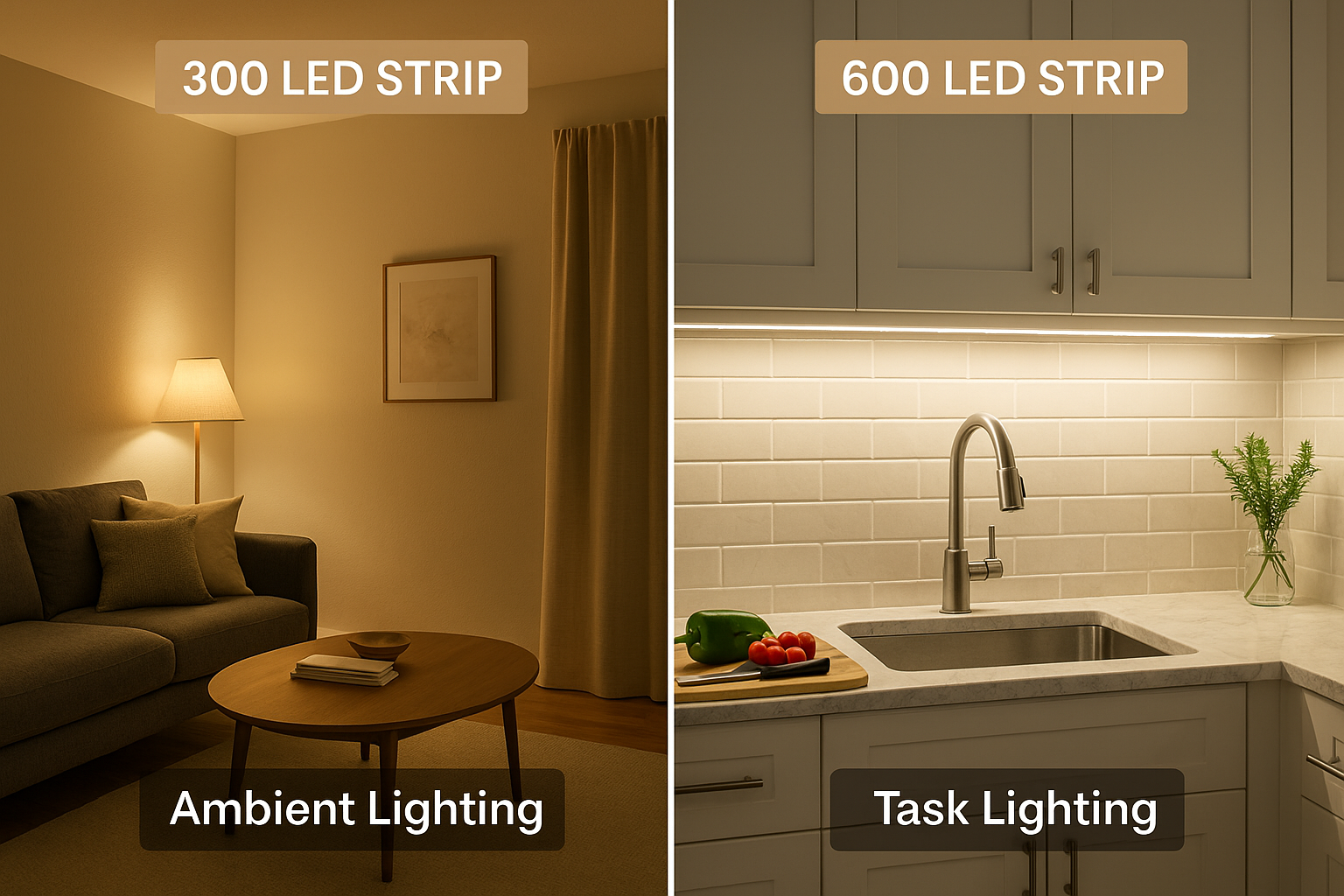
Use the lighting goal first. Then, match density to the room, task, and budget.
For a bedroom cove, 300 LED strips may provide enough glow. Meanwhile, for a kitchen counter, 600 LED strips usually give better task visibility.
To choose well, compare brightness, power, heat, budget, and application area. Also, think about whether the strip is meant to be soft background light or strong task light.
For general decor, 300 LED strips often work well. However, for detailed task areas, 600 LED strips are usually the better choice.

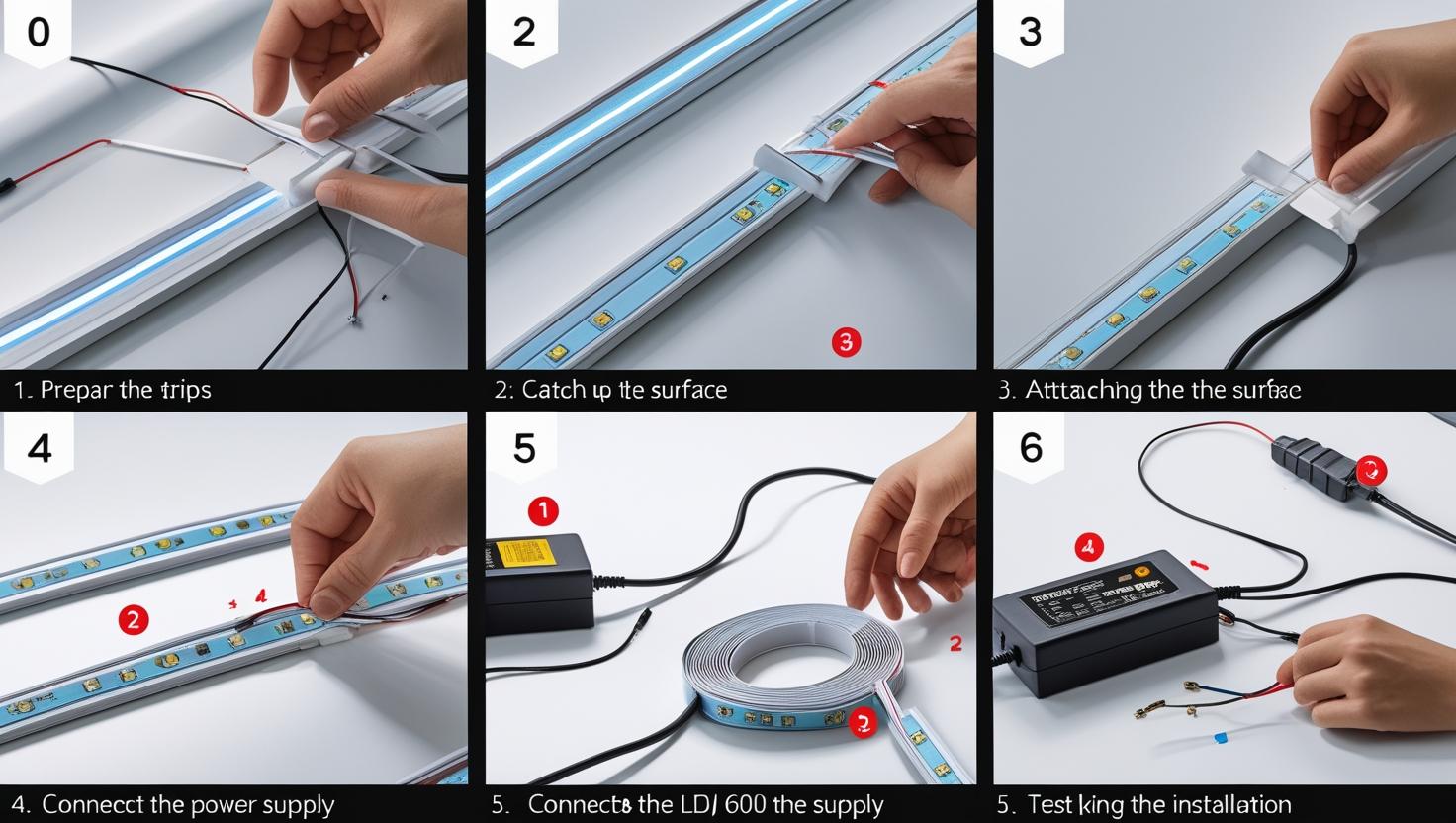
Good installation improves brightness and life. Therefore, plan the layout, surface, power supply, and heat path before final mounting.
Yes. A 600 LED strip usually has about twice the LED density of a 300 LED strip. As a result, it is often brighter and smoother.
Usually, yes. More LEDs often mean more wattage. Therefore, 600 LED strips may need a larger driver and better heat control.
For soft ambient light, 300 LED strips often work well. However, for kitchens, desks, or detailed task areas, 600 LED strips are usually better.
No. Higher density can improve brightness and smoothness, but it may also increase cost, power use, and heat. Therefore, match density to the actual project.
Choosing LED strip density depends on brightness, power, cost, and application. First, decide whether the project needs soft ambient light or strong task light.
Choose 300 LED strips for ambient, decorative, and budget-friendly use. In contrast, choose 600 LED strips for brighter, smoother, and more detailed lighting.
Ready to select the right LED strip? Browse Elstar’s Bande LED, LED power supplies, or contact Elstar for project support.
 English
  Spanish
  French
  Arabic