En LED driver regulates power for LED lighting, so the strip receives the correct voltage, current, or dimming signal. Some LED strip lights can use a basic compatible power supply, while higher-voltage, dimmable, or more controlled systems may need a dedicated LED driver.
Therefore, do not choose power parts by plug shape alone. First, check the strip voltage. Next, calculate total wattage. Then, choose the right driver or power supply with safe headroom.
For related internal resources, review Elstar’s Tiras de luces LED, LED power supplies, Controladores LEDy LED strip installation guide. For external guidance, see HitLights’ LED driver buyer guide and Mean Well’s LED power supply guide.
What Is an LED Driver?
An LED driver is the power device that controls how electricity reaches LED lights. It can convert mains power to low-voltage DC power, regulate current, support dimming, and protect the LED system from poor power conditions.
What an LED driver does
- It changes AC power into DC power when needed.
- It helps keep voltage or current within a safe range.
- It can support dimming when the model allows it.
- It helps reduce flicker, overload, and early LED failure.
Common LED driver types
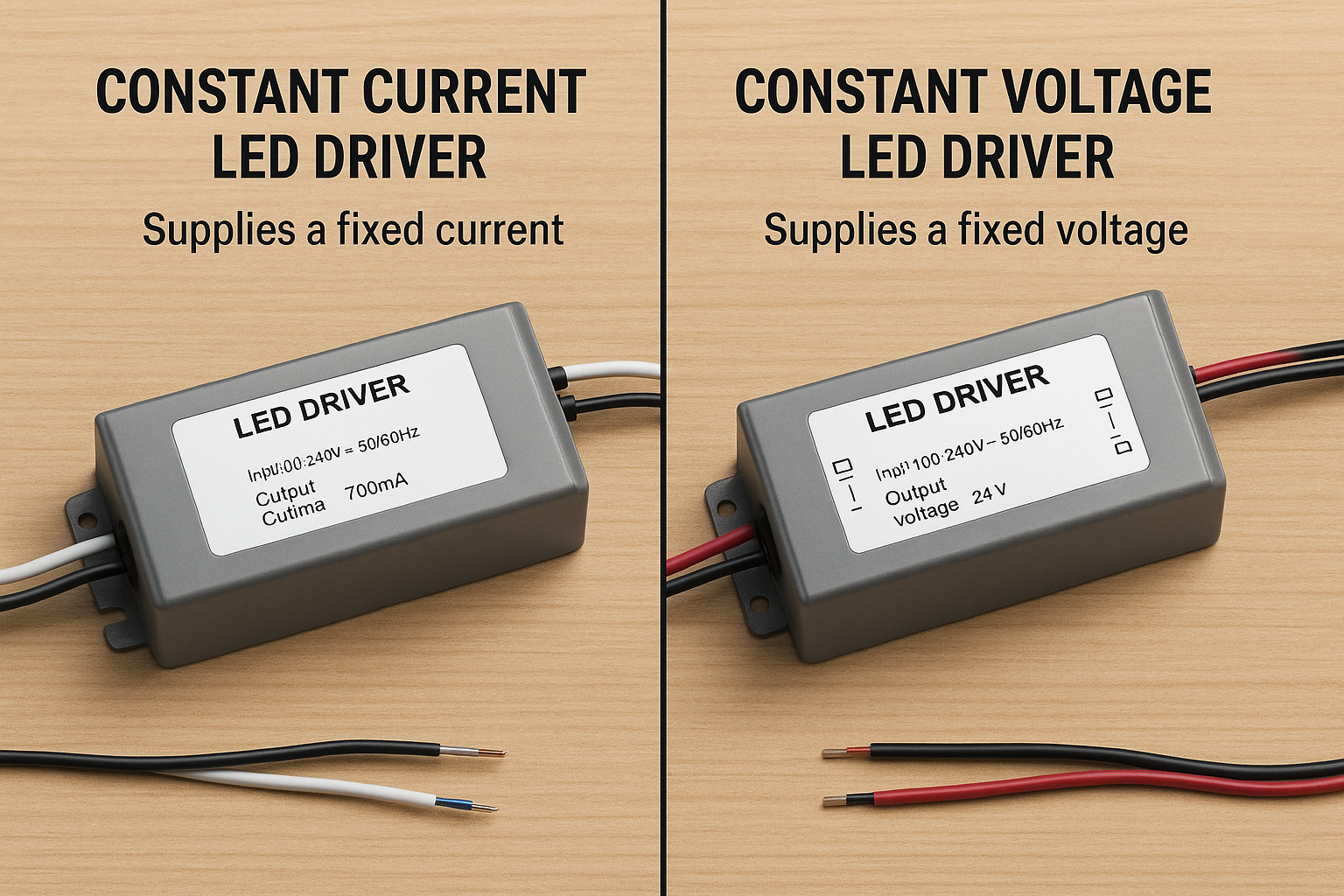
- Constant current driver: supplies a fixed current for LED fixtures that need tight current control.
- Constant voltage driver: supplies a fixed voltage, such as 12V or 24V, for many LED strip lights and parallel lighting layouts.
Quick answer
Most low-voltage LED strip lights use a constant voltage power supply or driver. However, some dimmable, high-control, or fixture-style systems may need a more specific LED driver.
Do LED Strip Lights Need an LED Driver?
Not every LED strip needs a separate driver box. In many simple 12V or 24V projects, a compatible DC power supply is enough. However, that power supply still performs the driver role by giving the strip the correct voltage.
When a simple power supply is enough
- The strip is a basic 12V or 24V low-voltage strip.
- The setup does not need advanced dimming.
- The total wattage is within the power supply rating.
- The power supply has enough headroom and ventilation.
When a dedicated LED driver is needed
- The project needs dimming, such as TRIAC, 0-10V, PWM, or DALI.
- The strip or fixture requires constant current control.
- The installation is higher voltage or more complex.
- The project needs more stable regulation for long-term use.
Simple check
If the strip label says 12V or 24V, choose a matching constant voltage driver or power supply. Then, confirm wattage, dimming support, and IP rating if needed.
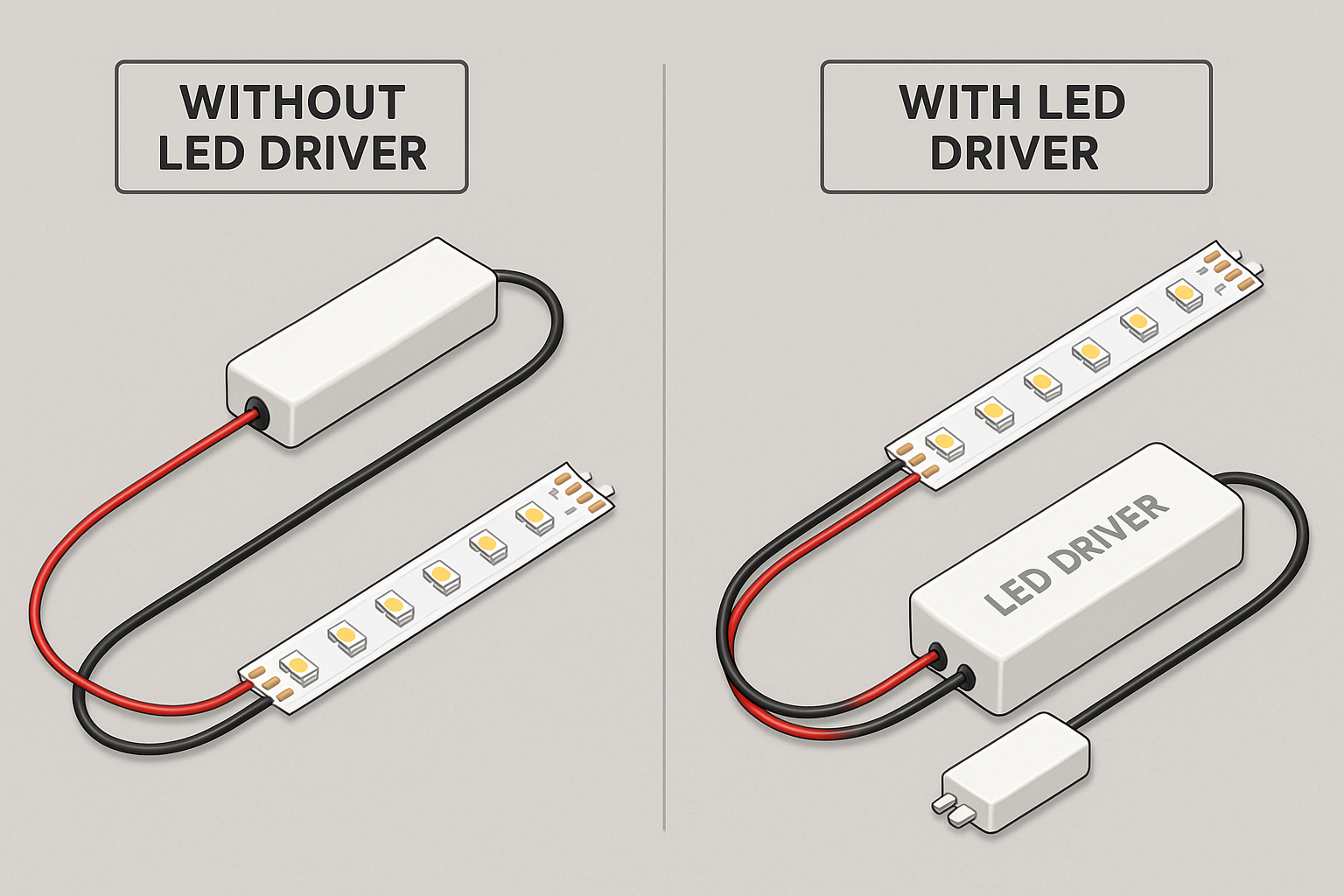
LED Driver vs LED Strip Lights
An LED driver is not the light source. Instead, it powers and protects the light source. LED strip lights are the flexible lighting product that creates the visible light.
Functional differences
- LED driver: regulates power and helps protect the LED system.
- LED strip lights: provide the actual light for accent, task, ambient, or display use.
Installation differences
- LED driver: must match voltage, current, wattage, dimming type, and environment.
- LED strip lights: must be mounted, wired, and supported correctly on the surface.
Practical takeaway
The strip and driver must work as a matched system. As a result, choosing the right LED driver is just as important as choosing the right strip.
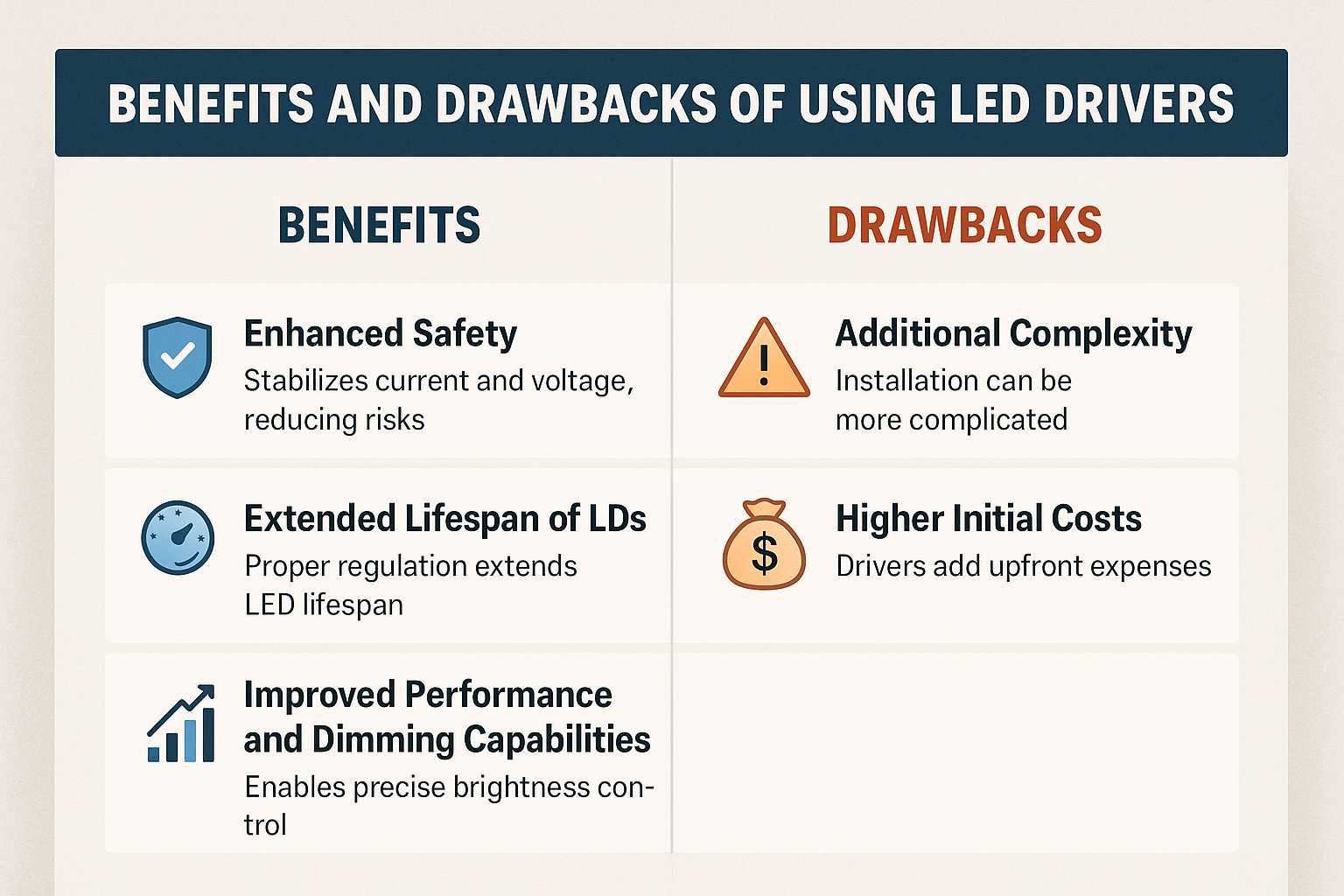
Benefits and Drawbacks of Using an LED Driver
A good LED driver can improve safety, life span, and dimming. However, it also adds cost and setup work.
Benefits of an LED driver
- Better safety: it helps regulate voltage or current.
- Longer LED life: stable power can reduce stress on the strip.
- Improved dimming: compatible drivers can make dimming smoother.
- Better performance: the strip can run more steadily when power is sized well.
Possible drawbacks
- More parts: the install needs extra planning.
- Higher cost: quality drivers add upfront cost.
- Ventilation needs: drivers create heat and need airflow.
- Compatibility checks: dimmers, controllers, and strips must match.
Ventilation note
LED drivers can get warm during use. Therefore, mount them where air can move and where service access is possible.
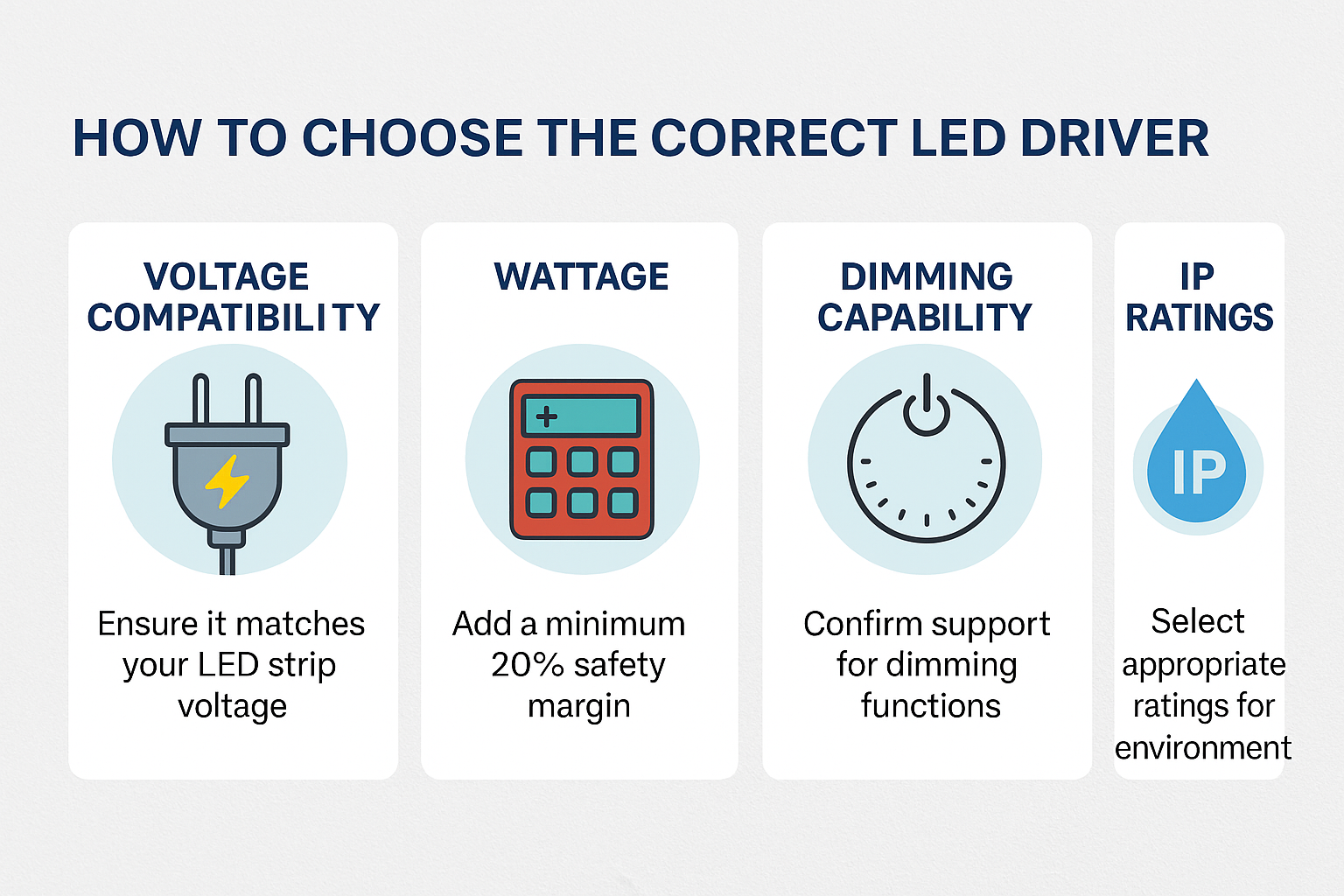
How to Choose the Right LED Driver
Choosing the right LED driver starts with the strip specifications. Then, compare voltage, wattage, dimming, IP rating, and installation location.
Key factors to check
- Tensión: match the driver to the strip voltage, usually 12V or 24V.
- Wattage: calculate total strip power and add safe headroom.
- Dimming: choose a driver that supports your dimming method.
- Environment: use the right IP rating for damp or outdoor areas.
- Ventilation: choose a location where the driver can release heat.
Common selection mistakes
- Choosing a driver with too little wattage.
- Using the wrong voltage.
- Forgetting dimmer compatibility.
- Putting the driver in a sealed space with no airflow.
- Ignoring IP rating in wet or outdoor areas.
Driver sizing rule
Add at least 20% headroom after calculating total strip wattage. For example, if the strip load is 80W, choose a driver rated above 100W when the product conditions allow it.
LED Driver Installation Tips
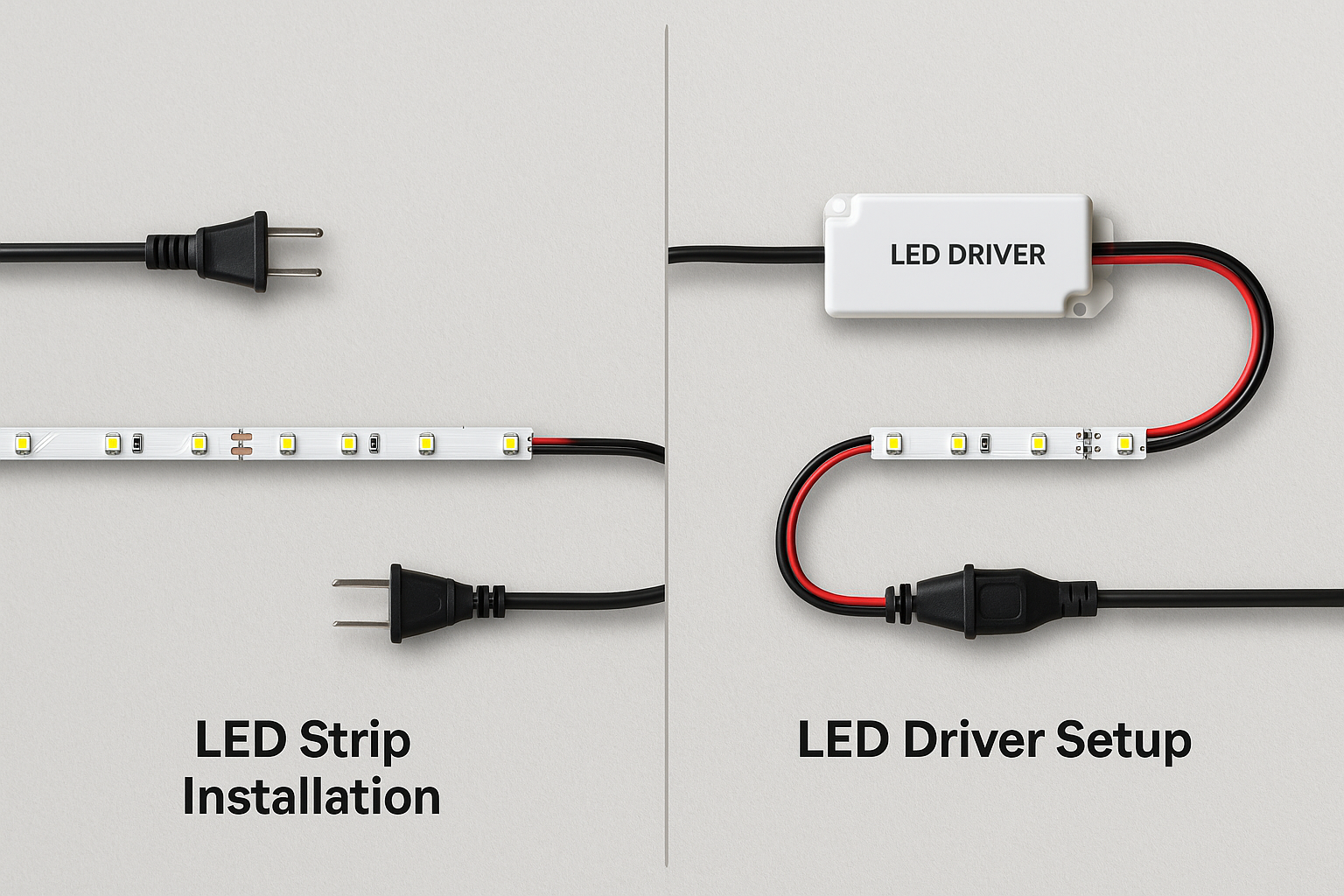
Good installation helps the driver and strip run safely. Therefore, plan wiring, polarity, airflow, and access before final mounting.
Step-by-step setup
- Choose the right driver: match voltage, wattage, and dimming needs.
- Plan the layout: choose a serviceable driver location with airflow.
- Prepare wiring: turn off power and mark positive and negative wires.
- Mount the driver: keep it secure and ventilated.
- Connect LED strips: check polarity before power-on.
- Test first: check brightness, dimming, heat, and flicker.
Practical tips
- Keep drivers accessible for repair or replacement.
- Also, use quality connectors and suitable wire size.
- Then, keep mains and low-voltage wiring organized.
- Finally, avoid overloading the driver.
Troubleshooting quick checks
- Flicker: check dimmer compatibility and wattage headroom.
- Overheating: improve airflow or reduce load.
- No light: check polarity, output voltage, and connections.
- Uneven brightness: check voltage drop and power feed layout.
FAQs About LED Drivers and LED Strip Lights
What is an LED driver used for?
An LED driver regulates power for LED lighting. It helps provide the correct voltage or current so the LEDs can run safely and steadily.
Do LED strip lights require special power supplies?
Some do, but many 12V or 24V LED strips only need a matching constant voltage power supply. However, dimmable or higher-control systems may need a dedicated driver.
How can I ensure my LED driver is safe?
Choose the correct voltage, enough wattage, proper ventilation, and the right IP rating. Also, follow the product guide and local electrical rules.
How do I know if I need an LED driver?
If your strip needs dimming, regulated output, or special current control, you likely need a driver. For basic low-voltage strips, a suitable DC power supply may be enough.
Conclusion: Choosing an LED Driver
The right LED driver depends on the LED strip type, voltage, wattage, dimming needs, and installation area. Most simple low-voltage strips use a constant voltage power supply, while more controlled setups may need a dedicated driver.
First, check the strip label. Next, calculate total wattage. Then, choose a driver or power supply with the correct output and enough headroom.
Ready to choose the right power setup? Browse Elstar’s LED power supplies, Tiras de luces LED, or contact Elstar for project help.


 English
  Spanish
  French
  Arabic