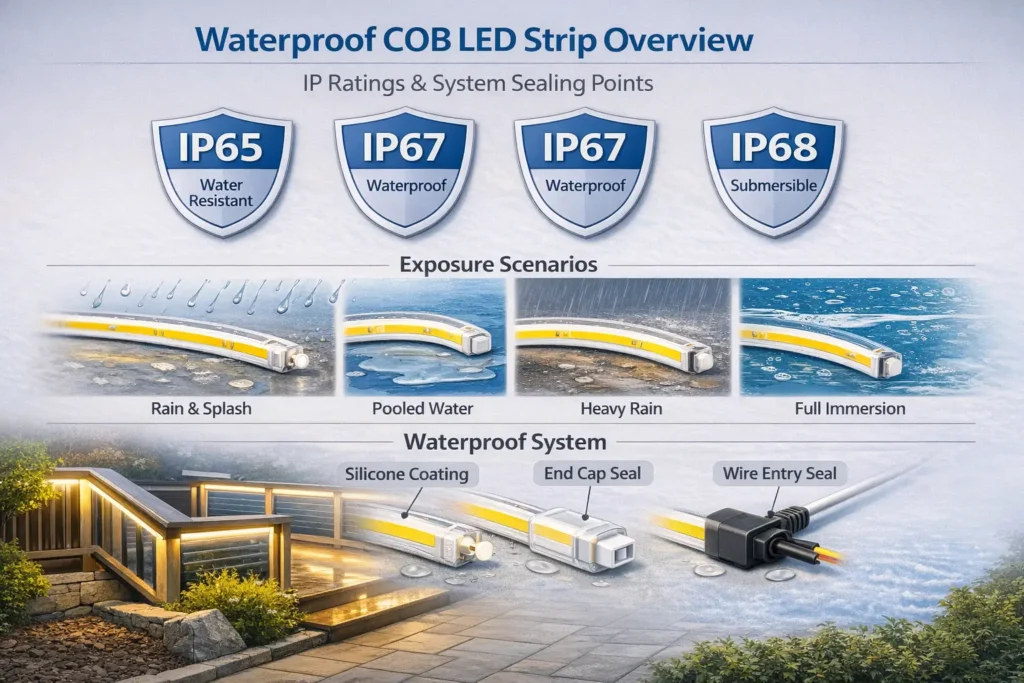
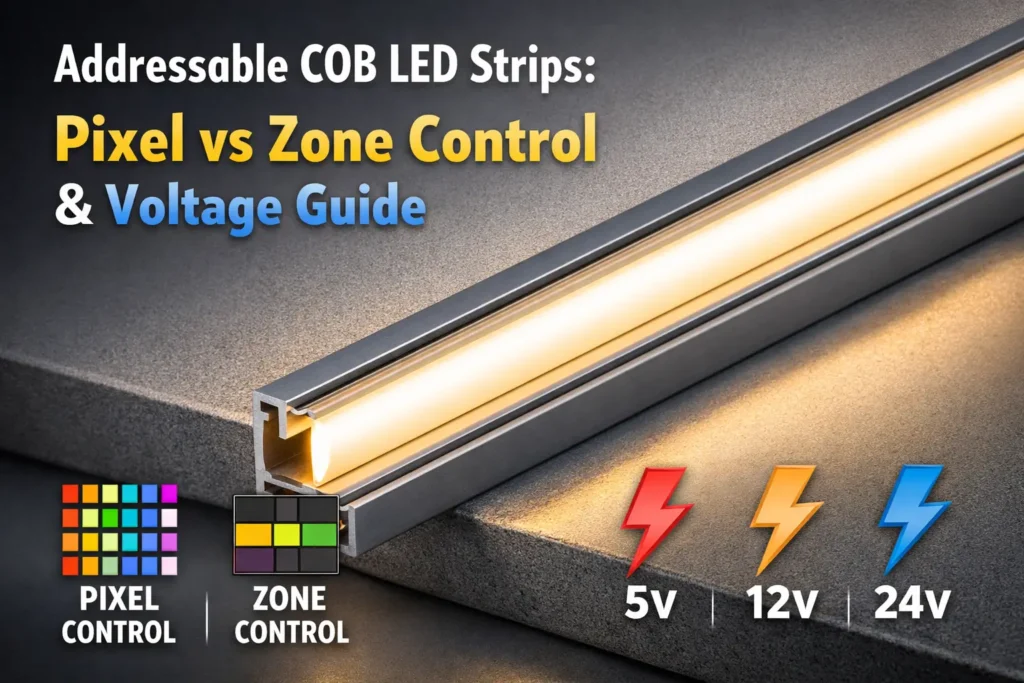
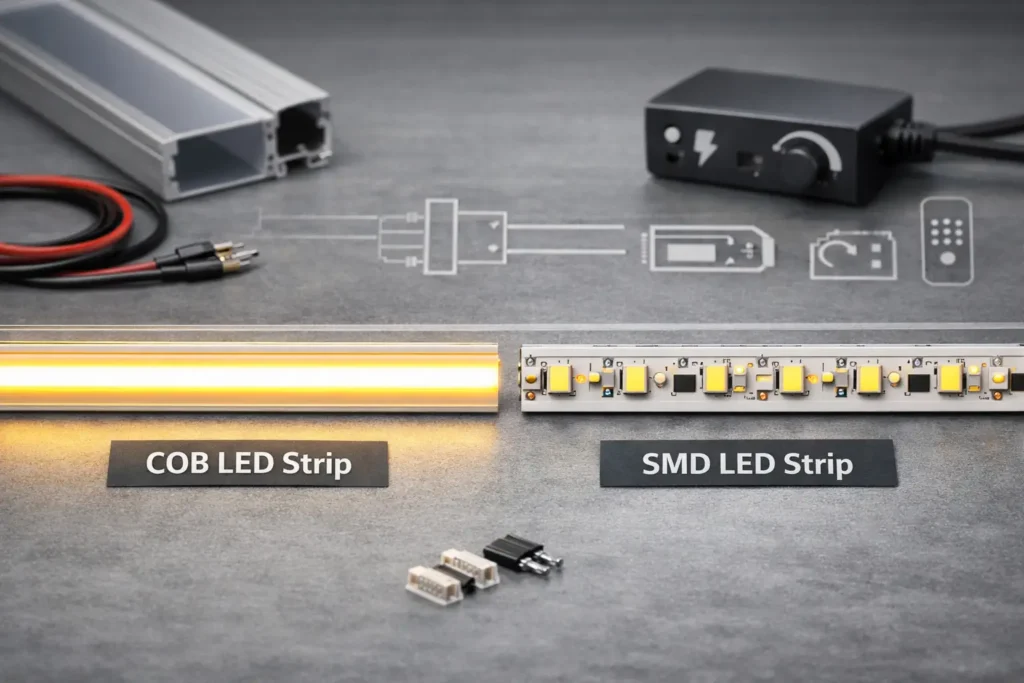
Before choosing, start with the lighting goal. Some projects need a hidden bright strip. Others need a visible glowing line.
What are LED strip lights?
LED strip lights are flexible boards with many small LEDs. They are easy to place under cabinets, inside shelves, along coves, or around displays. Also, they can offer dimming, color control, and strong brightness.
What are LED neon lights?
LED neon lights are LED strips inside a silicone or similar jacket. As a result, they create a soft, smooth, neon-like line without visible LED dots. They are often used for signs, outlines, events, and outdoor decor.
Quick answer
Use LED strip lights when you need detailed light, strong output, or hidden placement. Use LED neon when you want a visible, smooth, and bold glowing line.
Technical Differences Between LED Strip and LED Neon
The main differences are light style, housing, brightness, mounting, and outdoor strength. Also, each type handles curves and visible runs in a different way.
Brightness and light quality
LED strip lights: offer bright, focused, and adjustable light for task and accent work.
LED neon lights: create a smooth and even glow for decor, signs, and outlines.
Flexibility and installation
LED strip lights: bend easily and fit small spaces. However, they need planning for wiring, profiles, and power.
LED neon lights: bend well, but the silicone body is larger and needs stronger clips or channels.
Energy use and cost
LED strip lights: can be very efficient and cost-friendly for many indoor projects.
LED neon lights: can cost more at the start because the build is stronger and the glow is more finished.
Comparison table
Feature
أضواء شريطية LED
أضواء نيون LED
السطوع
High and adjustable
Moderate and smooth
Light style
Focused or hidden light
Visible neon-style glow
المرونة
Very flexible
Flexible but larger
التركيب
Needs wiring and mounting planning
Needs clips, brackets, or tracks
Energy use
Efficient
Efficient but often higher cost
Best use
Task, accent, shelves, cabinets
Signs, outlines, events, outdoor decor
المتانة
Depends on coating and mounting
Often stronger and more protected
Simple takeaway
Choose LED strips for detail and brightness. Choose LED neon for smooth visible glow and stronger finished lines.
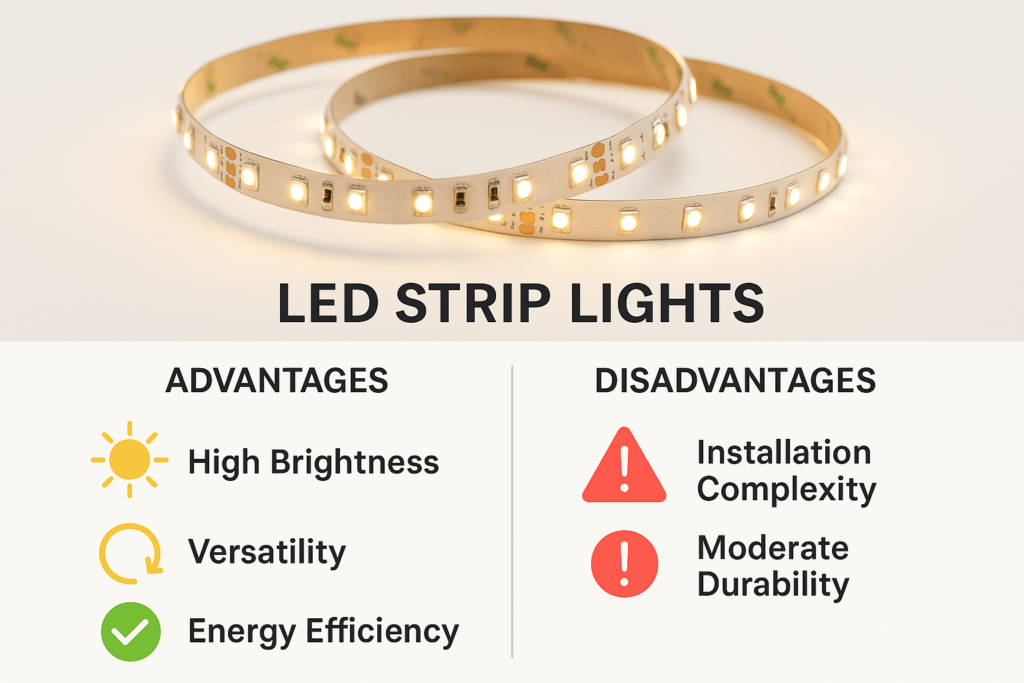
Advantages and Disadvantages of LED Strip Lights
LED strips are useful when a project needs a slim and bright light source. However, they need careful mounting and power planning.
Advantages of LED strip lights
High brightness: strips can provide strong light for task areas.
Custom layout: they can fit coves, shelves, cabinets, signs, and small spaces.
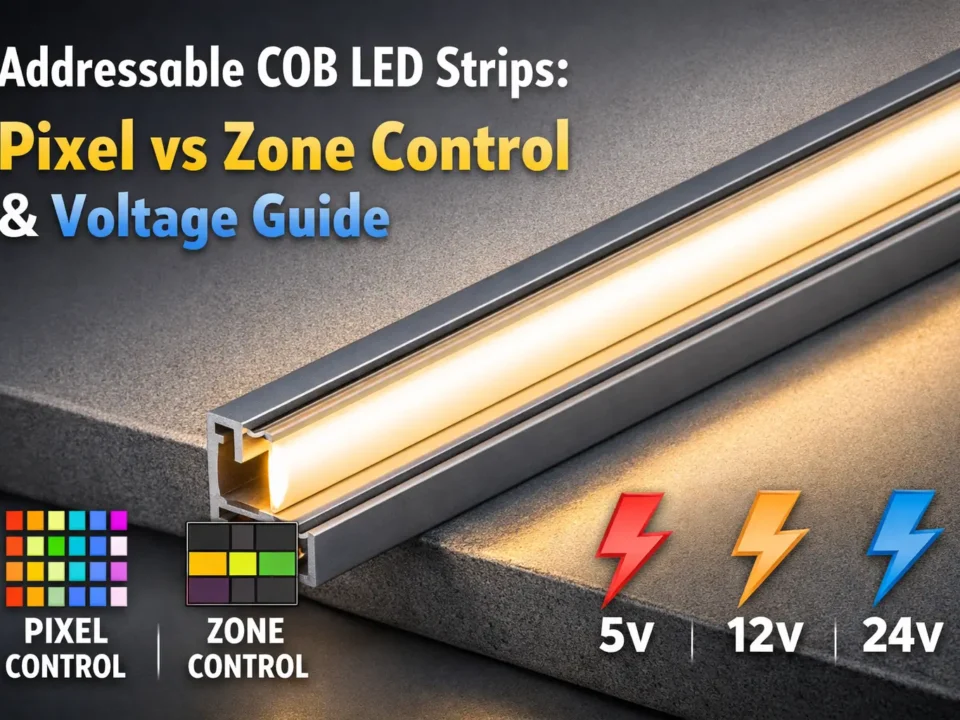
Color and dimming: many models support dimming, RGB, RGBW, or CCT control.
Good value: many strip systems are cost-friendly for indoor work.
Disadvantages of LED strip lights
More planning: strips need power supplies, wiring, profiles, and controllers.
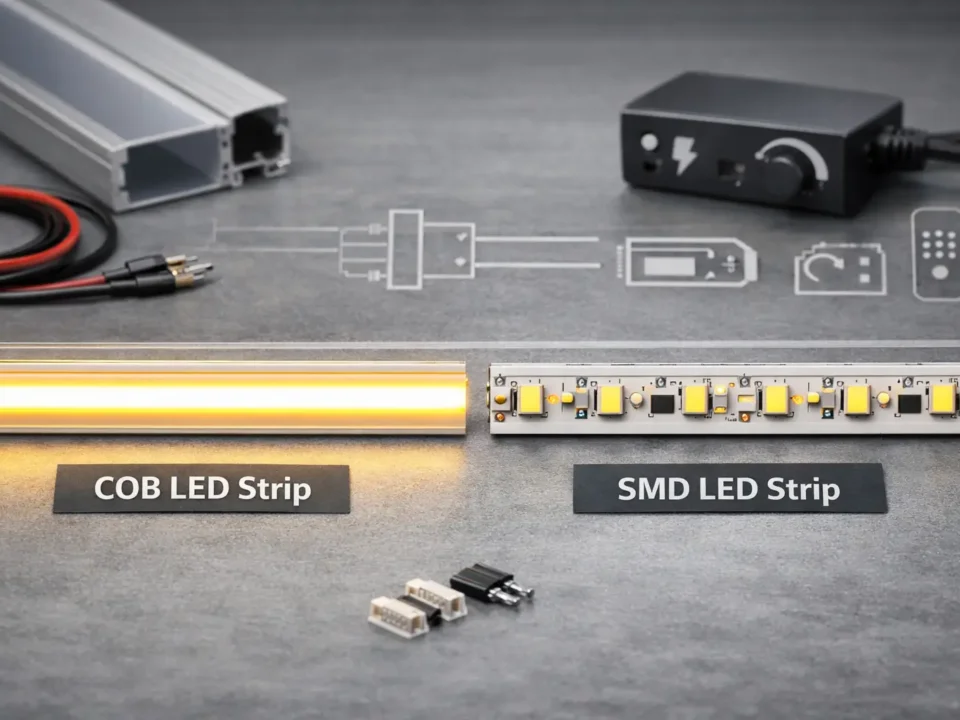
Visible dots: LEDs can show unless you use a diffuser or COB strip.
Lower protection: bare strips are not ideal for harsh outdoor areas.
Adhesive limits: weak backing or poor surface prep can cause peeling.
Best fit summary
LED strips are best for task light, accent light, and custom indoor layouts. Therefore, they fit kitchens, shelves, coves, displays, and furniture lighting.
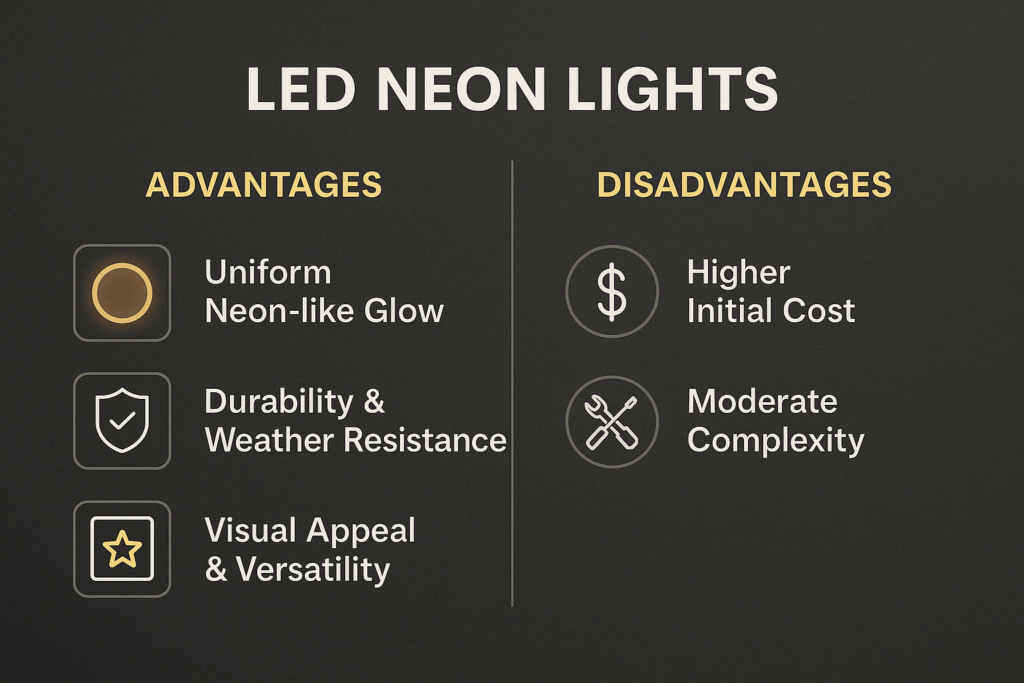
Advantages and Disadvantages of LED Neon Lights
LED neon lights are made for visible glowing lines. As a result, they often look more finished than bare strip lights in signs and decor.
Advantages of LED neon lights
Smooth glow: the silicone body hides LED dots and creates a neon-like line.
Strong visual style: it works well for signs, outlines, logos, and bold decor.
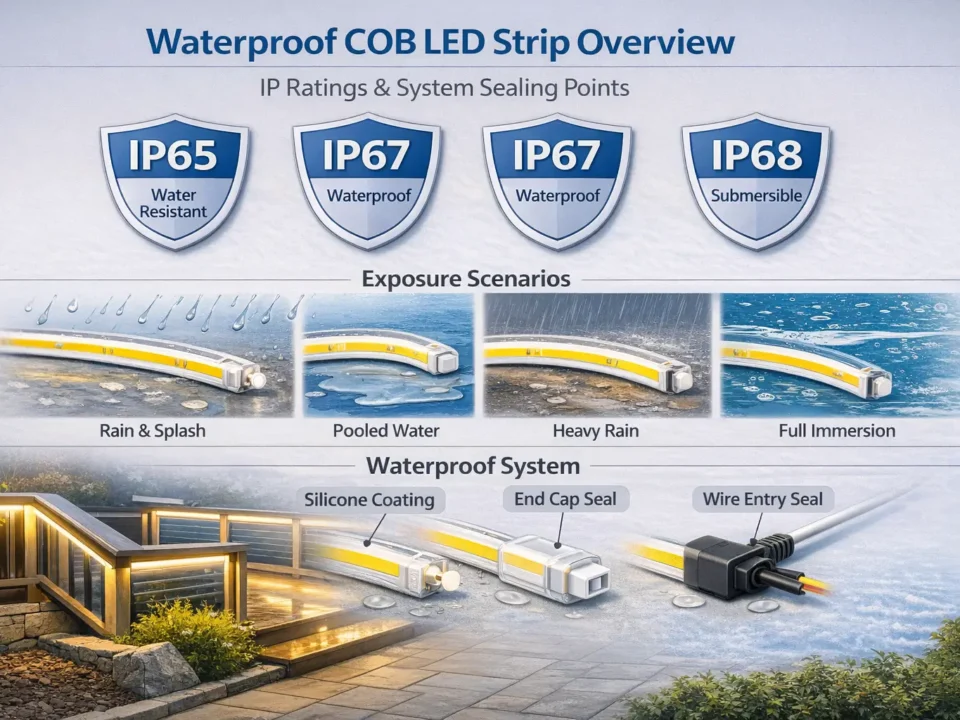
Better protection: many neon flex products are more durable than bare strips.
Outdoor use: some models are built for wet or outdoor areas.
Disadvantages of LED neon lights
Higher cost: the finished body and stronger build can cost more.
Bulkier shape: neon flex may not fit very tight spaces.
Less task light: the soft glow may not be ideal for detailed work.
More structured mounting: clips, channels, or tracks are often needed.
Best fit summary
LED neon works best when the light itself is meant to be seen. Also, it is useful when the project needs a clean outline or sign-style effect.
Best Applications for LED Strip vs LED Neon
Use the project goal first. Then, match the product to the surface, viewing distance, and environment.
Ideal uses for LED strip lights
Under-cabinet lighting: useful for kitchens, work areas, and counters.
إضاءة مميزة: good for shelves, furniture, coves, and displays.
Task lighting: useful for desks, retail cases, and work surfaces.
Hidden lighting: works well where the strip is not directly seen.
Ideal uses for LED neon lights
Signage: good for logos, words, outlines, and store signs.
Event lighting: useful for photo walls, stages, and venue decor.
Outdoor accents: good when the product is rated for the environment.
Architectural outlines: useful for visible edge lines and shapes.
Home decoration example
For hidden shelf or cabinet glow, LED strips often work better. Meanwhile, for a visible wall sign or glowing outline, LED neon usually looks cleaner.
How to Choose Between LED Strip and LED Neon
To choose well, compare the lighting effect, brightness need, install space, budget, and environment. Also, think about whether the light source will be hidden or visible.
Key decision factors
Lighting effect: choose strips for hidden or focused light, and neon for visible glow.
Brightness need: choose strips for stronger task light and neon for softer lines.
Install space: choose strips for tight spaces and neon for larger visible lines.
Outdoor needs: choose a rated neon flex or protected strip system.
Budget: compare the full system cost, not just the light price.
Common mistakes
Do not choose bare strips when you want a smooth neon-style line.
Also, do not choose neon flex when you need strong focused task light.
Finally, do not ignore mounting, wiring, IP rating, and power supply needs.
Practical recommendation
If the strip will be hidden, LED strip lights are often enough. However, if the light line will be visible, LED neon may give a cleaner final look.
Good installation improves the look and the life of both products. Therefore, plan the surface, mounting method, power route, and service access first.
Installation tips for LED strip lights
Measure the run before cutting.
Clean and dry the surface before mounting.
Use a matching power supply and controller.
Also, use aluminum channels for heat control and a cleaner line.
Installation tips for LED neon lights
Use clips, brackets, or tracks to support the silicone body.
Plan bends based on the product’s bend direction.
Then, protect cut ends and cable exits in wet areas.
Finally, test the full line before final mounting.
Maintenance tips
Inspect the light line for flicker, cracks, loose clips, or dim areas.
Also, clean with a soft dry cloth when dust builds up.
For outdoor use, check seals, cable exits, and connectors.
Troubleshooting quick checks
Uneven brightness: check voltage drop and power feed points.
Flicker: check driver fit, wiring, and loose joints.
Adhesion issues: clean the surface and add clips or channels.
Weather damage: check IP rating, sealing, and cable exits.
FAQs About LED Strip and LED Neon Lights
What is the main difference between LED strip and LED neon?
LED strips are thin, bright, and easy to hide. LED neon is thicker and creates a smooth visible glow. Therefore, strips fit detailed lighting, while neon fits signs and outlines.
Which is better, LED strip lights or LED neon?
It depends on the goal. Choose LED strips for task light, accent light, and tight spaces. Choose LED neon for bold visible lines, signs, and outdoor decor.
Are LED neon lights better for outdoors?
Often, yes, if the neon flex is rated for outdoor use. However, the full install still needs sealed ends, protected cables, and correct mounting.
Are LED strips brighter than LED neon?
LED strips often provide stronger focused brightness. Meanwhile, LED neon spreads light through a diffuser, so it looks smoother but usually softer.
Conclusion and Next Steps
LED strip lights and LED neon lights both have strong uses. LED strips offer bright, flexible, and detailed lighting. In contrast, LED neon gives a smooth, durable, and bold visible glow.
Start with the lighting effect you want. Then, choose the product that matches the space, budget, outdoor needs, and install method. If needed, use both in one project for the best result.




 English
  Spanish
  French
  Arabic