Vous avez besoin d'un produit de qualité en peu de temps ? Nous avons un plan pour vous.


LED strip lights can make a room, shelf, stairway, display, or shop space feel more finished. However, the best idea is not always the brightest one. First, choose an idea that fits the space, the surface, the power point, and the glow you want.
Next, use this guide to compare LED strip light ideas by space. Then, check the main buying points before you order, set up, or ask for a quote.
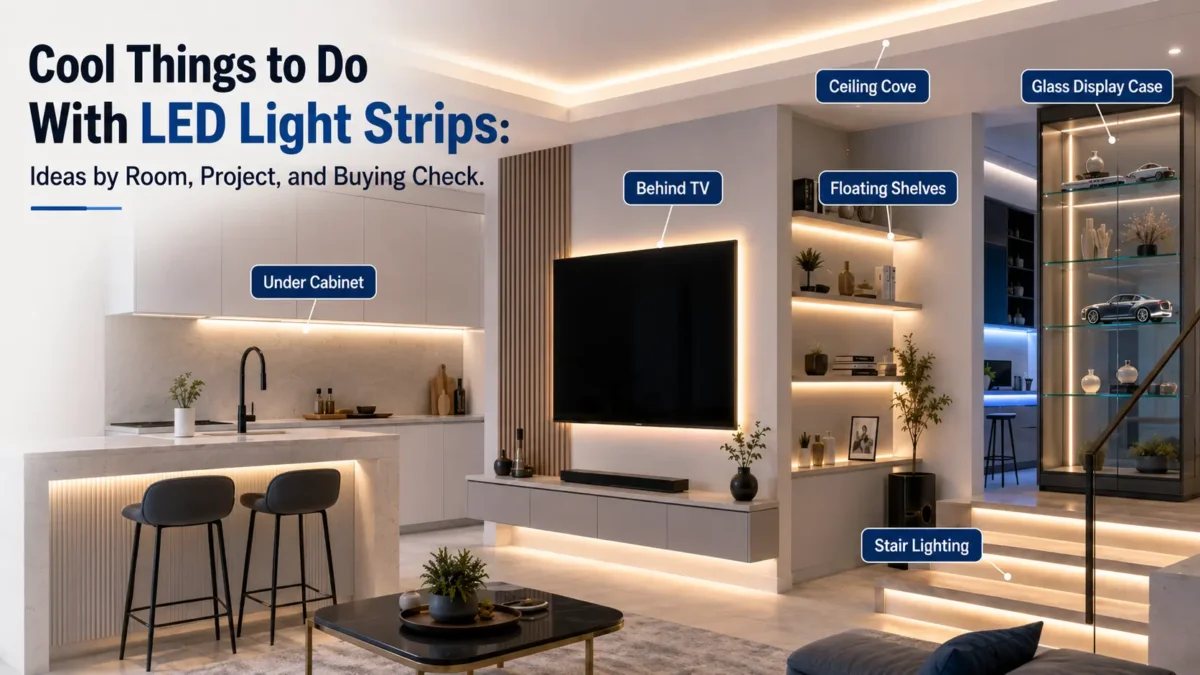
Cool things to do with LED light strips include under-cabinet lighting, TV backlighting, stair accents, shelf lighting, bed-frame glow, ceiling coves, gaming desks, closet lighting, display cases, sign backlighting, patio accents, and shop displays. First, match the idea to the room or work area. Next, check the length, voltage, power supply, brightness, color temp, control type, mount surface, diffuser need, and IP rating if the area is damp or outdoors.
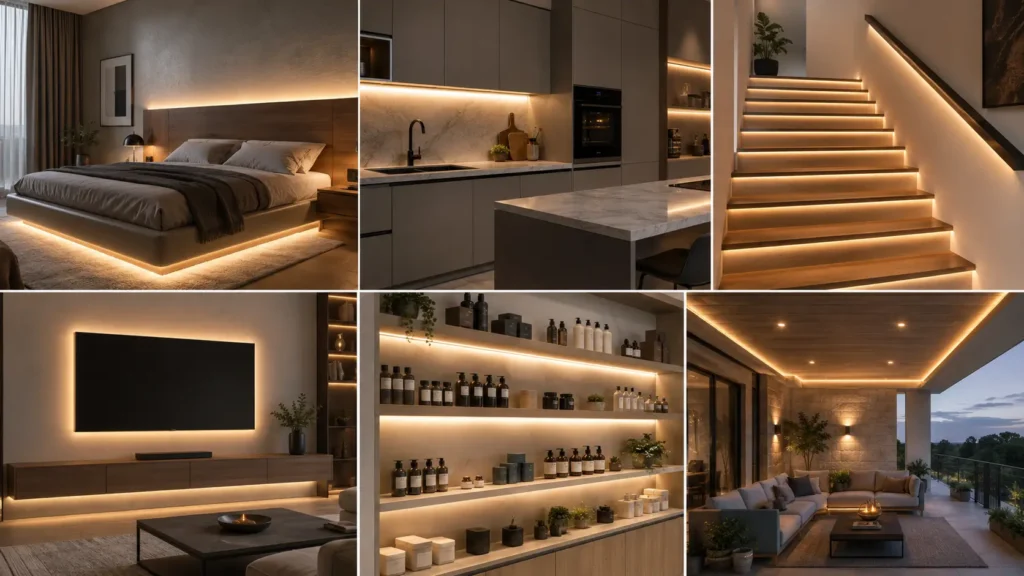
Start with the effect you want. Some ideas are mainly for style. Others help people see better, show products, or mark a path. Therefore, the same LED strip may not suit every space. So, match the idea to the area before you compare products.
| LED Strip Idea | Best-Fit Space | Visual Effect | What to Check | Project / Bulk Use |
|---|---|---|---|---|
| Éclairage sous l'armoire | Kitchen, pantry, workbench | Brighter counter or task area | Brightness, mount surface, power access | Apartments, showrooms, food prep counters |
| TV backlighting | Living room, media wall | Softer contrast behind the screen | Strip length, control type, hidden spot | Hotel rooms, lounges, display areas |
| Stair lighting | Indoor stairs, step edges | Accent light and path cue | Mounting, glare control, power route | Hotels, shop stairs, home projects |
| Shelf lighting | Bookshelves, product shelves | Highlighted objects or products | LED density, diffuser, color temp | Shop shelves, display walls |
| Bed-frame glow | Bedroom, hotel room | Soft, low-level mood light | Hidden spot, control access | Hotels and home interiors |
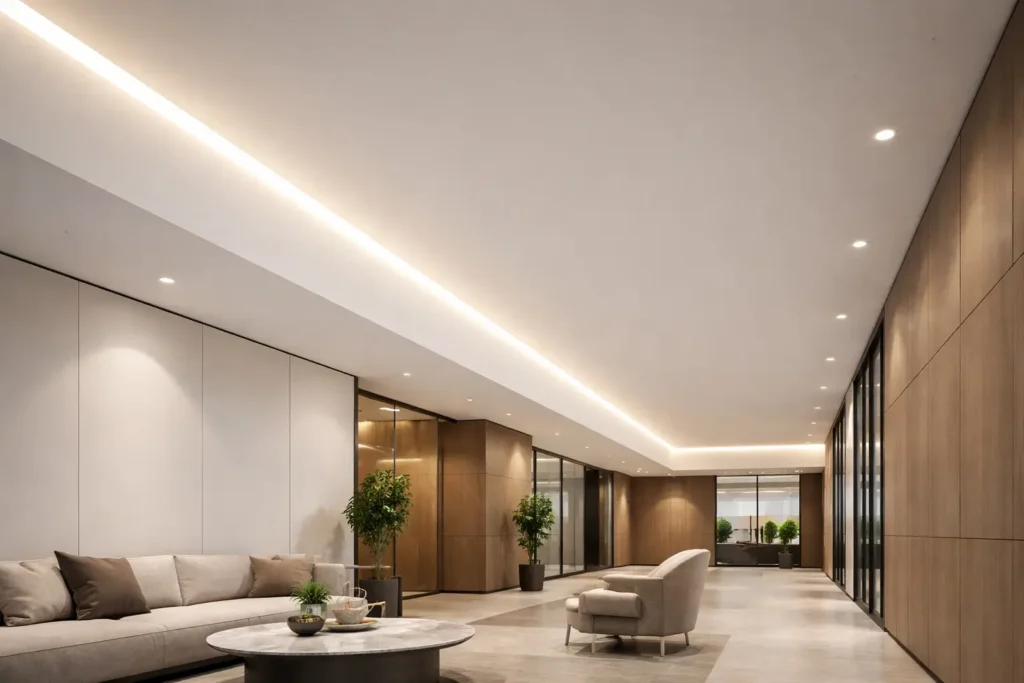
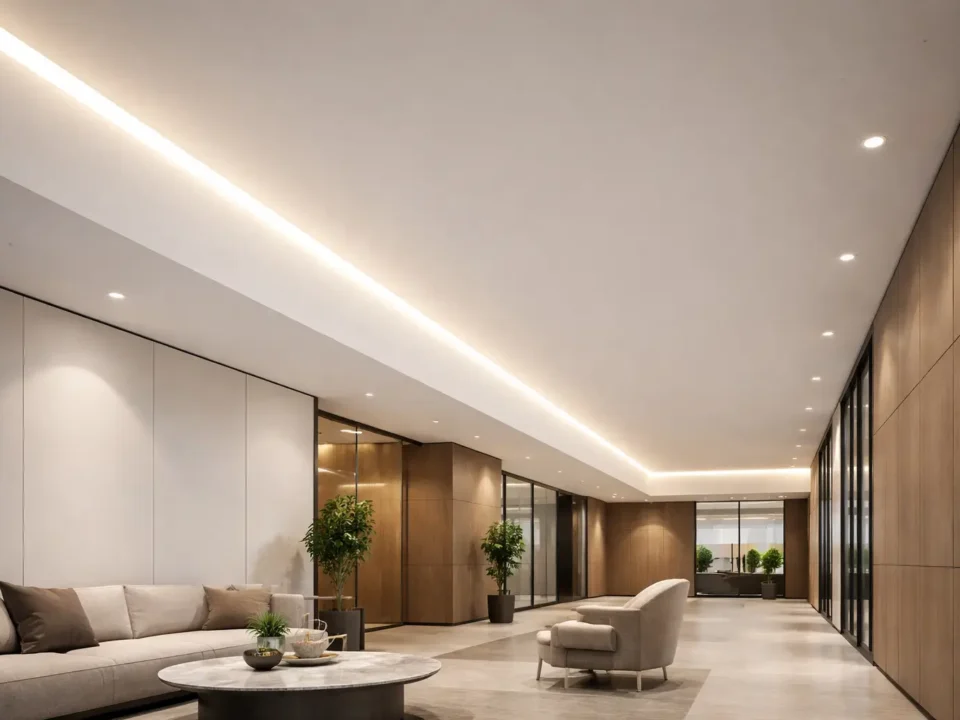
| Ceiling cove lighting | Living room, lobby, corridor | Indirect edge glow | Long-run plan, brightness, power supply | Interior design and contractor jobs |
| Gaming desk lighting | Desk, monitor wall, studio | Color accent lighting | Control type, cable route | Game rooms, content studios |
| Closet lighting | Wardrobe, storage area | Better view inside storage | Sensor or switch, mount surface | Home storage, hotel wardrobes |
| Éclairage des vitrines | Jewelry, collectibles, product displays | Focused product highlight | Brightness, CRI, heat, diffuser | Shops, museums, showrooms |
| Sign backlighting | Logo wall, reception, menu board | Edge glow or lit outline | Color, brightness, mount, power access | Shops, hotels, office branding |
| Patio or balcony accents | Covered outdoor areas | Decorative outdoor glow | IP rating, exposure, power point | Cafés, patios, outdoor seats |
| Event booth accents | Temporary display areas | Color or edge accent | Power source, mount, cable route, service access | Events, pop-up displays, trade shows |
First, choose the space. Next, decide whether the light should be decorative, useful, or both. After that, compare strip length, brightness, power access, and mount needs. Finally, choose a strip that fits the real site, not just the look you like.
LED strips often look better when the glow is visible but the strip itself is hidden. For example, bare LED dots can feel harsh in bedrooms, living rooms, and shops. Therefore, hidden or indirect light is often the safer choice.
For a cleaner look, place the strip behind an edge, inside a channel, under a shelf, behind a headboard, or along a cove. Then, let the light bounce off a wall or surface. Also, use a diffuser when the strip can be seen from the side or from a low angle.
Color also changes the result. Warm or neutral white can feel calmer in bedrooms, shelves, and hotel spaces. Meanwhile, color-changing strips may work well in game rooms, bars, event sets, or themed displays. However, strong color can feel too busy if it is used everywhere.
In short, use visible color effects where the goal is mood. But use clean white or soft indirect light where the goal is comfort, product display, or task support.
LED strip lights are not only for bedrooms and game rooms. They can also help in shops, cafés, hotels, offices, and display areas when the layout is planned well.
For shop shelves, strips can help draw eyes to products. In display cases, they can make small items easier to see. Also, these lights can show product details better when the brightness and color are chosen with care.
For cafés, bars, and hotel spaces, indirect strip lighting can help define counters, seats, and wall features. For signs, strips can create a backlit or edge-lit look when the sign frame supports it.
For these uses, avoid choosing only by color or price. Instead, check brightness, color temp, color rendering, mount method, control access, power supply spot, and service access. As a result, the strip is more likely to match the site and last use.
A good LED strip idea can fail if the strip does not match the space. Therefore, connect the idea to the real site before you choose a product.
| Choice Check | Why It Matters | When to Check | Safe Example |
|---|---|---|---|
| Strip length | Affects power and layout | Any long run, cove, shelf row, or sign outline | First, measure the full path before you choose strips or power supply. |
| Tension | Must match the power supply | Any setup with a separate power supply | Next, confirm strip voltage before choosing drivers or add-ons. |
| Power draw | Affects power supply size | Long runs, bright strips, or multi-strip layouts | Then, estimate total watts before choosing a power supply. |
| Brightness / lumens | Shows if the strip is for mood or task light | Task lighting, displays, counters, work areas | Use brighter strips for sight and softer light for mood. |
| Color temp | Changes the feel of the space | Bedrooms, kitchens, shops, hotels | Often, warm or neutral white feels calmer than very cool white. |
| CRI / color rendering | Affects how objects and products look | Shop displays, food, materials, artwork | Also, higher color accuracy may matter when products must look natural. |
| Control type | Affects dimming, color change, and user control | RGB, RGBW, smart control, remote control, dimming | Decide whether you need on/off, dimming, or color control. |
| Mount surface | Affects grip and setup method | Painted walls, metal, wood, glass, rough surfaces | Check whether the surface is clean, flat, and fit for mounting. |
| Diffuser or channel | Softens dots and improves the finish | Visible strips, shelves, stairs, cabinets | Use a channel where bare LED points would look harsh. |
| IP rating | Shows resistance to dust or liquid ingress | Outdoor, damp, kitchen, or bathroom-like areas | Finally, check the product rating and the site before use. |
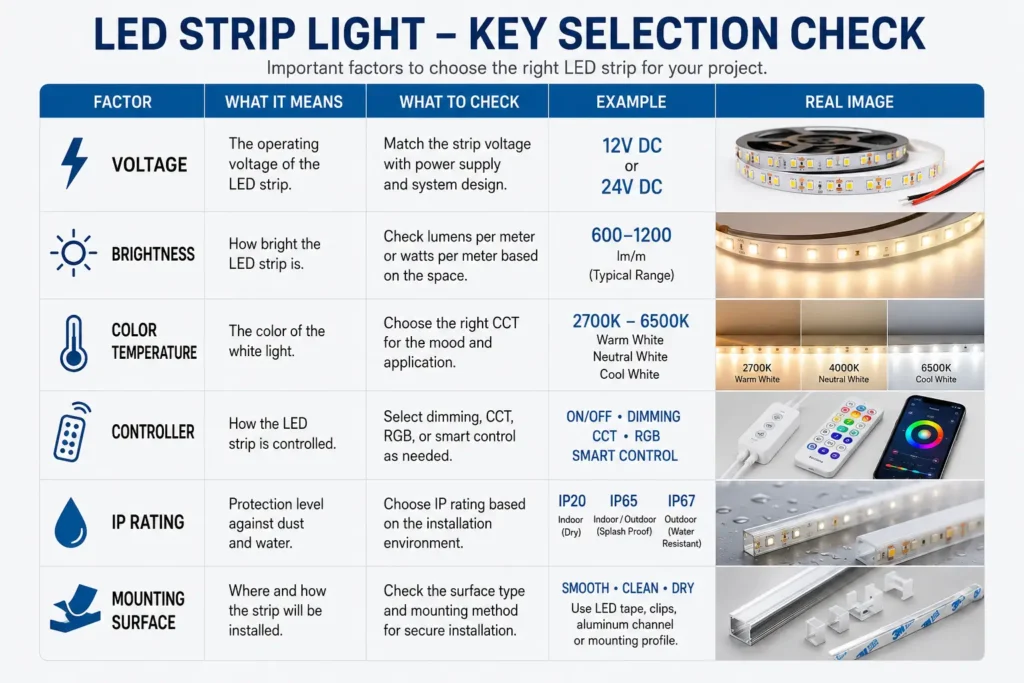
First, define the use. Then, measure the path and check the power spot. Finally, choose the strip, power supply, control type, and mount method that match the space.
Outdoor and damp-area ideas need extra care. A patio, balcony, bar counter, or outside sign may look simple. However, the strip, power supply, connectors, and mount method all need to fit the site.
Before choosing an outdoor or damp-area LED strip idea, check these points:
| Use Area | Exposure Risk | What to Check | Planning Note |
|---|---|---|---|
| Dry indoor room | Low moisture exposure | Mount surface, control type, brightness | Usually simple; however, still check voltage and power needs. |
| Kitchen or utility area | Possible steam, cleaning, or splashes | Product rating, mount surface, power spot | Do not assume every strip is safe near moisture. |
| Covered patio | Outdoor air, temperature change, possible dampness | IP rating, power supply spot, mount | Check the whole system, not only the strip. |
| Outdoor sign or feature | Weather exposure | IP rating, enclosure, cable route, service access | Plan around the site before setup. |
| Long ceiling cove or long shelf run | Uneven light or voltage drop risk | Strip length, power supply, feed points | Long runs may need more power planning. |
Do not assume that “outdoor” and “waterproof” mean the same thing. The right choice depends on exposure, set-up spot, product rating, and how the power system is kept safe. If the project has wet areas, outside wiring, or a complex layout, get the site details checked before you order.
Leftover LED strips can be useful for small shelves, closets, display boxes, desk edges, or sample mockups. However, reuse depends on fit. Do not assume a leftover strip will work with any power supply or control type.
Before reusing a strip, check these points:
For simple decor reuse, small hidden areas are usually better than high-risk spots. Therefore, avoid using unknown leftover strips in wet, outdoor, enclosed, high-heat, or hard-to-service areas.
A short planning check can prevent common LED strip problems. For example, it can help you avoid the wrong length, uneven light, bare LED dots, poor grip, hard-to-reach power, or a strip that does not fit the site.
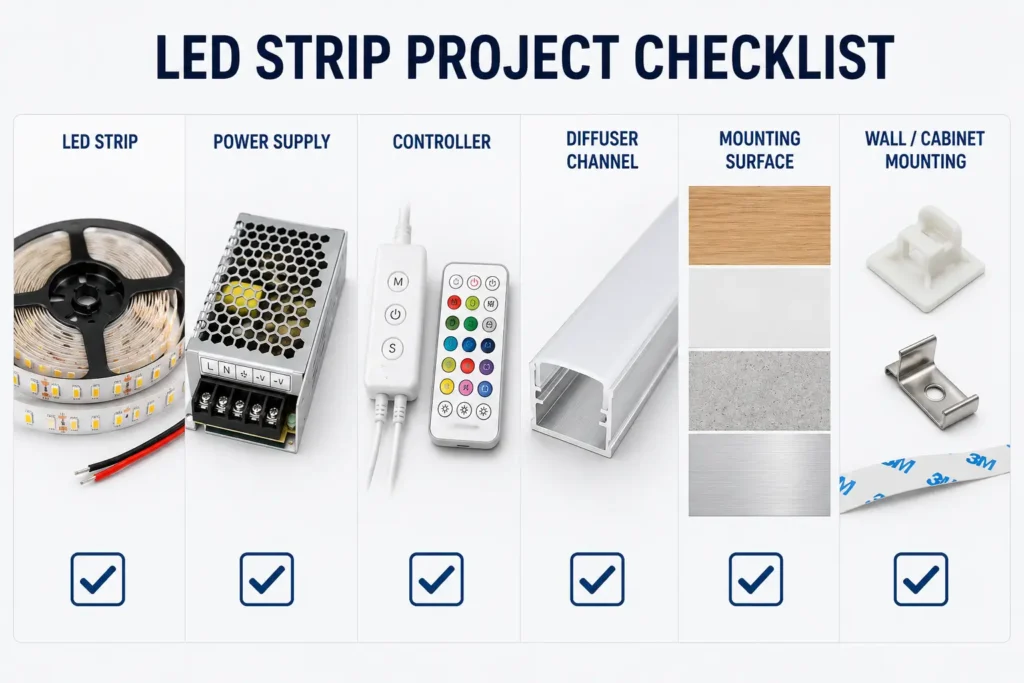
If the project is more than a simple room decor job, prepare the main details before you contact a supplier. As a result, the supplier or sales team can understand the job with less guesswork.
| Quote Detail | Why It Helps |
|---|---|
| Use | Shows whether the strip is for mood, display, task, sign, or project light. |
| Set-up location | Helps separate indoor, damp, outdoor, display, or sign areas. |
| Estimated length | Supports strip length and power planning. |
| Quantity | Shows whether the request is for a sample, room, project, or bulk order. |
| Voltage preference | Helps match the power supply and system design. |
| Color or CCT preference | Shows whether the project needs warm white, neutral white, cool white, RGB, or another option. |
| Brightness expectation | Helps separate soft glow from useful work light. |
| Control method | Clarifies simple switch, dimming, remote, app, DMX, or other control needs. |
| Mount surface | Helps show whether channels, clips, or other mount parts may be needed. |
| Site conditions | Flags indoor, damp, outdoor, heat, cold, or cleaning exposure. |
| Ship-to market | Helps guide plug, shipping, document, or market notes later. |
| Photos, drawings, or sketches | Reduce mix-ups when the layout is custom or hard to explain. |
This information does not replace a technical review. However, it gives the supplier a clear starting point. In addition, it helps both sides ask better follow-up questions before the order is placed.
Cool ideas include TV backlighting, under-cabinet lighting, shelf lighting, stair accents, bed-frame glow, closet lighting, ceiling coves, gaming desks, display cases, sign lighting, patio accents, and shop shelf lighting. First, match the idea to the spot. Then, check power access, mount surface, brightness, color, and exposure.
Good room spots include behind a TV, under a bed frame, under shelves, along a desk edge, inside a closet, behind a headboard, under cabinets, or along a ceiling cove. In most rooms, hidden or indirect placement gives a cleaner look than bare strips.
Use indirect light where possible. First, hide the strip behind an edge. Next, use a diffuser or channel if the LEDs are visible. Also, choose a suitable color temp and avoid bright exposed dots in the line of sight. For bedrooms and living rooms, soft white or warm light often feels calmer than strong color effects.
Sometimes. However, reuse depends on the strip voltage, cut marks, connector type, controller fit, power supply, remaining length, and condition. Therefore, avoid using unknown or damaged strips in outdoor, wet, enclosed, or hard-to-service areas.
Check the purpose, length, voltage, total power draw, power supply, control type, mount surface, brightness, color temp, diffuser need, cable route, and site. Also, for outdoor or damp areas, check the product IP rating and the setup conditions.
Outdoor or damp-area ideas need products and setup methods that fit the exposure. Therefore, check the IP rating, power supply spot, connectors, mount, and service access. Do not assume every LED strip is fit for outdoor or wet-area use.
For display, shop, or task lighting, compare brightness, color temp, color rendering, voltage, power draw, LED density, diffuser options, and control needs. Then, choose based on whether the light is decorative, useful, or meant to show product colors clearly.
Prepare the use, set-up location, estimated length, quantity, voltage preference, color or CCT, brightness goal, control method, mount surface, site conditions, ship-to market, and photos or drawings if available. In short, avoid relying on a vague line such as “I need LED strips for a project.”
For a project or bulk request, prepare your use, estimated length, quantity, site conditions, voltage preference, color or CCT, control method, mount surface, and ship-to market. Also, include photos, drawings, or sketches when the layout is custom or hard to describe.
The more clearly you describe the project, the easier it is to narrow the LED strip type, add-ons, and next questions before ordering. As a result, both the buyer and the supplier can move faster with fewer mix-ups.
 English
  Spanish
  French
  Arabic