20m COB LED Strip Price Drivers + How to Compare Quotes
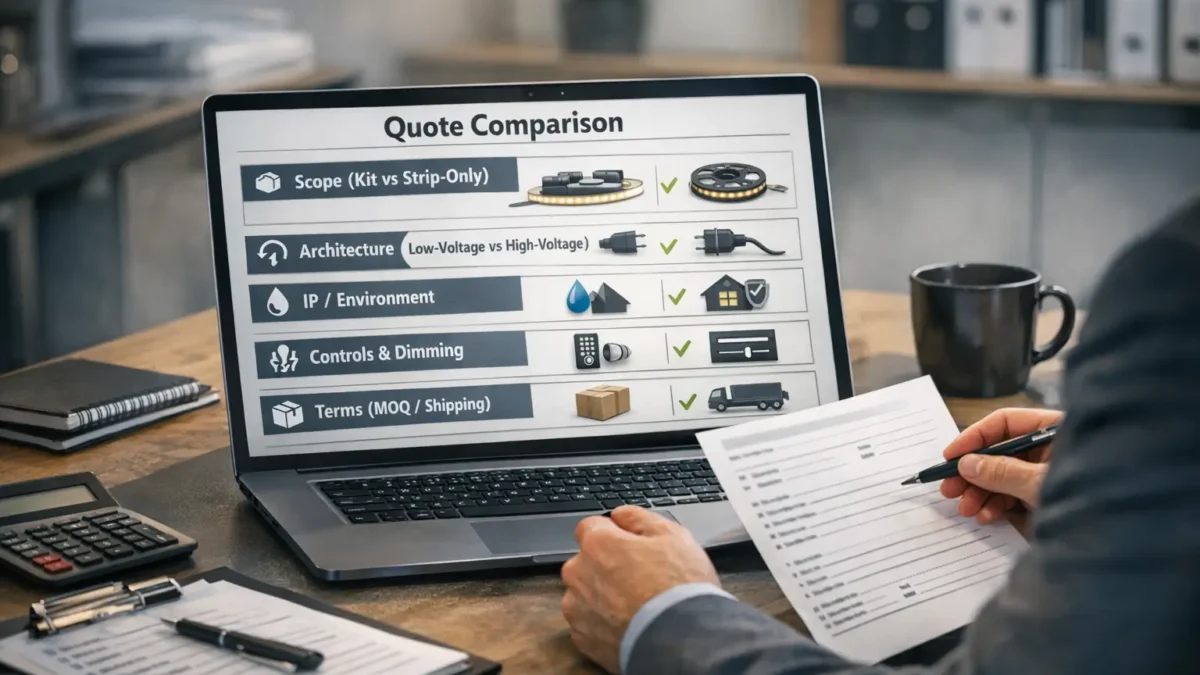
A “20m COB LED strip price” varies mainly because different listings include different BOM scope (kit vs strip-only), different electrical architecture (low-voltage vs high-voltage), and different build/terms (IP rating, controls, MOQ, shipping).
The biggest drivers (compare like-for-like):
Kit vs strip-only scope: Does the price include a power supply/driver, controller/dimmer, connectors/cables, or only the strip?
Architecture choice: Low-voltage (project system) vs high-voltage (long-run convenience approach) changes installation method and BOM.
Environment/IP needs: Indoor dry vs damp vs outdoor exposure changes construction, sealing needs, and accessories.
Controls & dimming: Control method and driver/controller compatibility can add cost and reduce rework risk.
Installation approach: Long runs often require segmentation, injection points, and proper mounting/heat management.
What “20m COB” Means (and Why “Ultra Length” Changes Pricing)
A 20m (65.6ft) COB LED strip is typically chosen for a more uniform “dotless” light appearance, but the “ultra length” requirement changes system design and therefore pricing because power distribution, segmentation, safety, and installation constraints become central.
Why 20m is different (and affects cost):
Power distribution becomes the project: a long run demands a plan (feed points, injection, segmentation), not just a roll length.
Architecture matters more: low-voltage and high-voltage approaches can both reach “20m” on paper, but with different trade-offs.
Installation details drive total cost: wiring method, connectors/joints quality, and mounting/heat dissipation can make or break reliability.
Environment changes the build: choosing IP and sealing approach affects both product selection and install labor.
Boundary conditions:
“20m” may be sold as one continuous roll or as multiple segments; verify how it’s supplied and how it’s intended to be powered.
Do not assume cut rules, accessory compatibility, or certifications; confirm per model/series and request documentation.
Why 20m COB Strip Prices Vary (Kit vs Strip-Only, Specs, and Terms)
Prices vary because “same length” does not mean “same scope” or “same requirements”: two 20m offers can differ in what’s included, how they’re meant to be powered, what environment they’re built for, and what commercial terms apply.
Key reasons listings don’t match:
Scope mismatch: kit vs strip-only, or missing accessories that your project actually needs.
Architecture mismatch: low-voltage vs high-voltage approach changes how the system is built and installed.
Build mismatch: IP rating, sealing approach, and mounting requirements differ by environment.
Control mismatch: controller/driver compatibility isn’t universal—choices affect stability and rework risk.
Terms mismatch: MOQ, packaging, shipping, and customization can move landed cost significantly.
Mini-checklist: normalize before you compare “price”:
Confirm: strip-only vs kit (and list every included component).
Confirm: architecture (low-voltage project system vs high-voltage long-run approach).
Confirm: environment/IP (dry indoor vs damp/outdoor and required sealing details).
Confirm: controls (dimming method, zoning needs, and driver/controller compatibility).
Packaging/labeling requirements (for distribution or project handover)
Boundary condition: Only compare quotes after you have a written inclusions/exclusions list for each offer.
The Biggest Spec Levers (Without Guessing Numbers)
Even without wattage/CRI/density figures, you can budget more accurately by identifying which spec categories usually change BOM and manufacturing complexity.
Spec categories that commonly move cost:
Electrical architecture: low-voltage vs high-voltage system design and associated components
Color type: single color vs tunable white (CCT) vs RGB/RGBW (affects controls and components)
Environment build: indoor vs damp/outdoor builds (IP-related construction and sealing)
Control expectations: dimming method, zoning, and compatibility requirements
Mounting/thermal plan: whether a profile/channel is required for consistency and heat management
Connection method: connector ecosystem, splicing needs, and reliability expectations
Boundary condition: Treat any numeric performance values as datasheet/quote-dependent; do not infer them from photos or generic listings.
Commercial Terms That Change Landed Cost (MOQ, Packaging, Shipping)
For B2B and projects, “effective price” depends on terms—two identical products can land at very different total cost due to ordering and logistics.
Terms that commonly change landed cost:
Quantity tiers / MOQ
Packaging, labeling, barcodes, and documentation requirements
Shipping method, shipping terms, and destination handling
Customization (length, connectors, private label packaging, special QC requirements)
Compare totals and risk (documentation, compatibility, project fit)
Boundary condition: Terms are supplier- and quote-specific; confirm all commercial terms in writing.
20m Decision Guide: Low-Voltage vs High-Voltage (Pros/Cons Table)
For 20m runs, low-voltage and high-voltage approaches can both appear viable, but they trade off controllability, serviceability, installation complexity, and risk—so choose based on your project scenario rather than a single headline claim.
Decision criteria (20m run)
Low-voltage system (typical project approach)
High-voltage system (typical long-run convenience approach)
Simple long-run installs where the system is designed around that architecture
Power distribution
Often benefits from planned feed points / injection / segmentation (datasheet-dependent)
Often designed to run longer per feed, but still requires correct installation and verification
Zoning & control
Typically easier to integrate with project controllers and zoning plans
Control options vary by product; verify compatibility and dimming method
Serviceability
Segmented design can simplify troubleshooting and replacement
Long continuous runs can be harder to service if a section fails
Safety & compliance
Verify components as a system (strip + driver + controller)
Verify product design intent and compliance scope for the specific model/series
Quote comparison
Must define driver/controller inclusions and wiring plan
Must define all included components and installation constraints
Boundary conditions:
Local code/practices and installer requirements matter; confirm compliance expectations for your project.
Verify model-specific details (how it’s supplied, how it’s intended to be powered, and what accessories are required).
Power Planning for 20m COB Strips (Injection, Segmentation, Mounting)
A 20m installation works best when you plan the system (zones, feed points, wiring, and mounting) instead of assuming the strip can run as a single feed with uniform results.
A datasheet-safe planning workflow (5–7 steps):
Confirm product basics (architecture, intended power method, environment build, and required accessories).
Define zones and control method (single zone vs multi-zone; dimming method; controller/driver compatibility).
Decide segmentation (one continuous aesthetic vs serviceable segments; align with your layout and maintenance plan).
Plan power distribution (where power enters the system; whether injection points are needed; wire routing strategy).
Choose joining method and connection quality (connector ecosystem vs soldered joints; strain relief; waterproofing).
Plan mounting and heat dissipation (profiles/channels where needed for consistency and reliability).
Test before full install (sample run, verify dimming behavior, check for brightness inconsistency and heat concerns).
Why injection/segmentation is commonly used (conceptually):
Long runs can show voltage drop effects, and injecting power (or feeding sections in parallel) helps maintain more consistent performance across a run; the required spacing depends on the specific product and installation. (Reference concept examples: SparkFun Mean Well LED switching power supply hookup guide)
Common mistakes that inflate total cost (rework risk):
Treating a 20m run like a short decorative strip (no system plan, no verification).
Mismatching driver/controller/control method (leads to flicker, instability, or poor dimming).
Using long series connections and weak joints (connectors not suited to the application, poor strain relief).
Ignoring mounting/heat (especially in enclosed channels or warm environments).
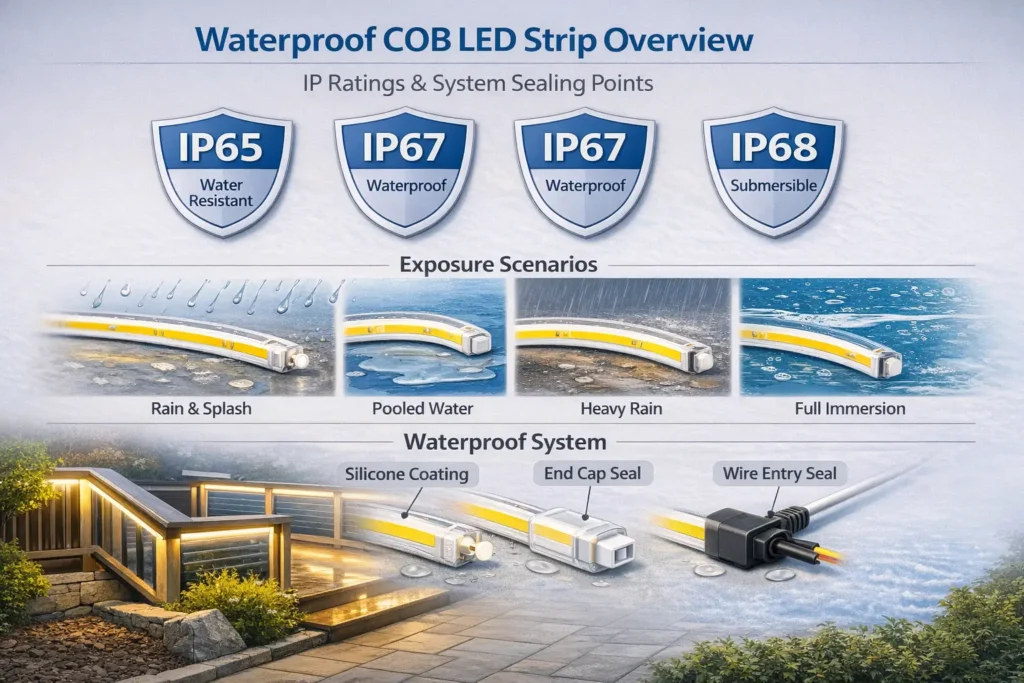
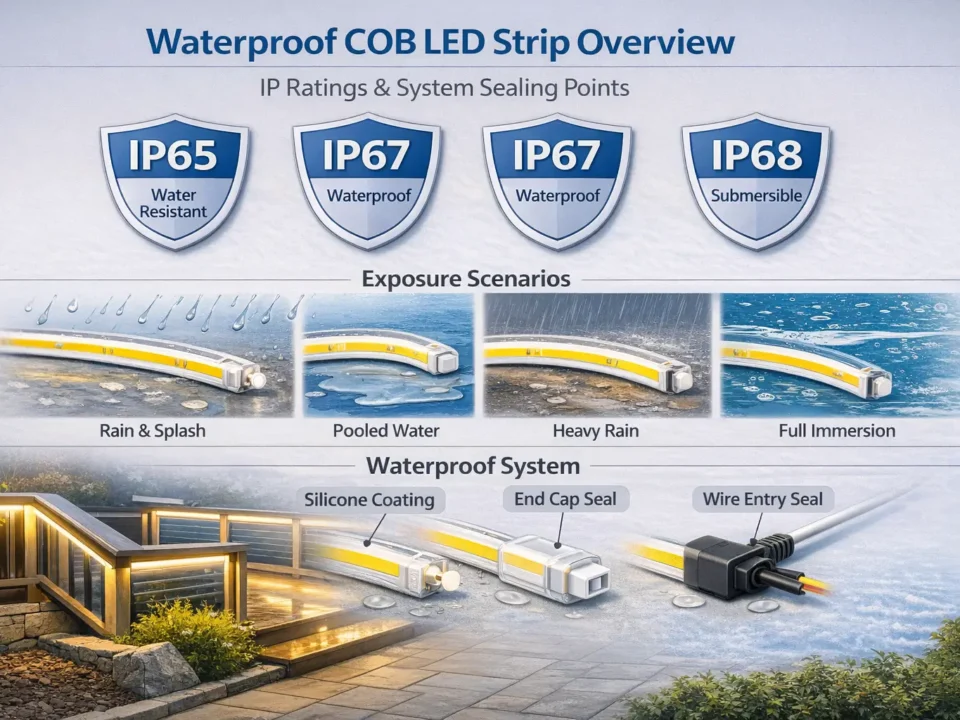
Choosing an IP build without sealing the ends and cable entry correctly (waterproofing failures are often installation-related).
Boundary conditions:
There is no universal “20m continuous guaranteed” rule; feasibility depends on product electrical design and the power plan.
Electrical work should follow applicable code and be performed by qualified personnel where required.
Can 20m Be One Continuous Run? What Determines It
A 20m run can be physically continuous, but performance and reliability depend on how the system is powered and mounted—not just the length on the label.
Determinants to verify:
Architecture (low-voltage vs high-voltage) and the intended power method
Feed strategy (single feed vs multiple feeds/injection points; parallel-fed sections)
Segmentation plan (serviceability and risk management)
Mounting/heat plan (profile/channel use, enclosure considerations, airflow/heat buildup)
Boundary condition: Confirm by datasheet and a wiring plan; do not rely on generic “ultra length” claims.
Common Failure Causes on Long Runs (and How to Reduce Risk)
Most long-run issues come from system integration details rather than the strip alone.
Common causes:
Driver/controller mismatch or incorrect dimming method
Voltage drop compounded by long wiring runs and poor connections
Overheating due to insufficient heat sinking or enclosed mounting
Water ingress due to improper end sealing/cable entry in damp/outdoor installs
Inadequate testing before full rollout (especially in multi-zone setups)
Mini-checklist: verify before full installation
Request/confirm a wiring diagram and connection method
Confirm control method and driver/controller compatibility
Confirm environment build and sealing accessories (if applicable)
Run a test segment to validate dimming behavior and thermal behavior
RFQ Checklist: Get Accurate, Comparable 20m COB Strip Quotes (Copy/Paste)
The most reliable way to get an accurate “20m price” is to send a standardized RFQ so every supplier quotes the same scope, environment build, and control requirements.
Copy/paste RFQ checklist (grouped):
APPLICATION & ENVIRONMENT
- Installation location: indoor / damp / outdoor (describe exposure)
- Mounting method: surface / channel(profile) / recessed / enclosed
- Project type: commercial / architectural / signage / other
- Required ingress protection: IP level target (if known) + sealing expectations (end caps, cable entry)

ELECTRICAL ARCHITECTURE
- Preferred architecture: low-voltage system / high-voltage system / open to recommendation
- Total run length: 20m (note if one continuous aesthetic run is required)
- Zoning: single zone / multi-zone (how many zones and where)
- Power distribution expectation: supplier to propose feed/injection/segmentation plan (datasheet-based)

LIGHTING & CONTROL (DO NOT GUESS NUMBERS)
- Color type: single color / tunable white (CCT) / RGB / RGBW
- Dimming/control method: specify requirement (e.g., project controller integration vs kit controller)
- Control components included? yes/no (controller, dimmer, receivers, remotes)

QUOTE SCOPE (STRIP-ONLY VS KIT)
- Quote as: strip-only / kit / both options
- List inclusions explicitly:
  - power supply/driver
  - controller/dimmer and accessories
  - connectors/cables/spares
  - mounting accessories (clips, profiles/channels)
  - sealing parts for damp/outdoor use
  - documentation pack

DOCUMENTS & COMPLIANCE (SCOPE-AWARE)
- Required documents: datasheet, wiring diagram, control compatibility notes
- Certification requirement (if any): specify what’s needed and request scope evidence for the exact model/series
- Ask for identifiers (model/series, file/certificate references) for verification

COMMERCIAL TERMS
- Target quantity / forecast and required MOQ
- Packaging/labeling needs (brand label, cartons, barcodes)
- Shipping destination and preferred shipping terms
- Sampling requirement: yes/no (what you want validated during sampling)
Must-have vs nice-to-have (for early budgeting):
Must-have: scope (strip-only vs kit), architecture preference, environment, control method, quantity/terms.
Nice-to-have early: exact accessory list and packaging details (but request optioned quotes instead of guessing).
Boundary conditions:
If a spec is unknown, mark it TBD and request optioned quotes—don’t fill in fake numbers.
Certifications must be verified by model/series scope using the issuer’s database (example: UL Product iQ). UL Product iQ
RFQ Fields — Application & Environment
Suppliers can’t price the right build if the environment is unclear.
Include:
Dry indoor vs damp vs outdoor exposure description
Boundary condition: Compare supplier prices only after scope alignment.
IP Rating & Environment: What Changes in Build (and Cost)
Environment drives build requirements and cost because ingress protection is not just a label—it affects materials, sealing steps, accessories, and installation method.
Environment-led selection notes (general):
Dry indoor: focus on mounting consistency and control compatibility.
Outdoor exposure: require robust sealing practices, appropriate accessories, and verification of the product’s intended use.
What often gets overlooked (cost + failure risk):
End sealing and cable-entry points (common water ingress paths)
Jointing method and strain relief (especially on long runs)
Profiles/channels for mounting consistency and heat management
Clear documentation on how the specific model achieves its IP performance
Boundary conditions:
IP codes are defined by IEC 60529; use that standard’s concept (dust/water ingress levels) rather than vague “waterproof” language. IEC: IP ratings overview
Verify the IP build and accessory compatibility for the exact model/series you’re quoting.
Controls & Dimming: Compatibility Checks for Long COB Runs
Control compatibility matters more on long runs because voltage drop interactions, wiring complexity, and multi-zone requirements can expose problems that don’t show up on short decorative installs.
What to verify (before you buy in volume):
Control method required (project controller integration vs bundled kit controller)
Dimming method compatibility with the selected driver/controller
Zoning plan (single-zone vs multi-zone) and wiring topology
Connection quality (joints/connectors) and polarity/wiring correctness
Whether the quote includes all control accessories (receivers, remotes, cables, connectors)
Mini-checklist: “verify before ordering”
Ask for a wiring diagram that matches your zones and control method
Confirm driver/controller compatibility and any installation constraints
Test a sample segment for dimming smoothness and stability
Boundary conditions:
“Dimmable” is not universal; compatibility depends on the specific driver and control method.
Long-run performance depends on the system plan; verify with documentation and testing.
Red Flags + Compliance Checks (Scope-Aware for Projects)
Many “price” problems come from missing scope, vague compliance claims, or unqualified long-run promises—spot them early to avoid procurement and installation risk.
Red flags checklist (pause and verify):
The offer does not clearly state kit vs strip-only inclusions.
“Ultra length / no voltage drop” claims appear without conditions or documentation.
IP claims appear without clear guidance on sealing ends/cable entry or required accessories.
Certification logos are shown without model/series identifiers or scope evidence.
Control compatibility is described vaguely (“works with everything”) without wiring notes.
How to verify certification scope (model/series-specific):
Request the exact model/series identifier and any file/certificate reference from the supplier.
Identify the exact SKU/model/series to be quoted and supplied.
Request the relevant file/certificate references (as applicable).
Search the issuer database (UL example: Product iQ) and match identifiers to the quoted product. UL Product iQ
Save the record and scope evidence with the RFQ/PO package.
Reconfirm scope if the model/series changes mid-project.
Boundary condition: Scope differs by model/series; re-check after any substitution.
Wholesale vs Retail Reality: MOQ, Packaging, Shipping, Customization, and Sampling
For B2B procurement, the effective price is a landed-cost outcome: the product, accessories, documentation, packaging, shipping terms, and customization together define what you’re really paying for.
Landed-cost drivers to include in comparisons:
MOQ tiers and quantity breaks
Packaging/labeling requirements (distribution-ready vs project-only)
Compare totals and risk (documentation, compatibility, environment fit), then sample
Boundary condition: Avoid treating lead time as fixed; timing is quote-specific and should be confirmed per order.
FAQ: 20m COB LED Strip Price and Long-Run Buying Questions
Q: What is a 20m COB LED strip light, and how is it different from standard LED strip types?
A 20m COB LED strip is often selected for a more continuous, uniform light appearance because the light-emitting structure is designed to reduce “dotting” compared with many standard strip formats. The practical difference for buyers is that “20m” becomes a system question—power distribution, mounting, and control compatibility matter as much as the strip itself.
Q: For a 20m run, should I choose low-voltage or high-voltage strips?
Choose based on the project scenario:
Choose low-voltage when you need engineered zoning/control integration and a serviceable, flexible installation plan.
Choose high-voltage when the system is intended for long-run convenience and you can verify the product’s intended installation method and compliance scope.
In both cases, require a clear quote scope and documentation.
Boundary condition: Local practices and model-specific design intent matter—verify before finalizing.
Q: Can a 20m COB strip be powered as one continuous run?
A 20m strip can be physically continuous, but performance depends on architecture and power design, including feed points, injection/segmentation strategy, connection quality, and mounting/heat plan. Treat “continuous run” as a design outcome, not a guaranteed feature.
Boundary condition: Confirm using datasheets and a wiring plan; don’t rely on generic claims.
Q: What causes uneven brightness, overheating, or failures on long (20m) LED strip runs?
Common causes include voltage drop effects compounded by long wiring and weak joints, driver/controller mismatches, insufficient heat management, and poor sealing for damp/outdoor installs. Reduce risk with a documented power plan, proper mounting, verified compatibility, and sample testing before full rollout.
Q: Which IP rating should I choose for indoor vs outdoor 20m projects, and how does it change cost?
Choose IP based on exposure (dry indoor vs damp vs outdoor) and include sealing and accessory requirements in the quote scope. Higher protection needs typically increase build complexity and accessory requirements, and installation practices become more critical. IP codes are defined by IEC 60529; avoid vague “waterproof” assumptions. IEC: IP ratings overview
Q: What controller/dimming options work for long COB strips, and what causes flicker?
Compatible dimming depends on the control method and driver/controller pairing. Flicker often comes from mismatched components, wiring issues, or long-run effects amplified by poor connections. Reduce risk by requesting a wiring diagram, confirming compatibility notes, and testing a sample segment before scaling.
Summary & Next Steps: How to Get a Confident 20m COB Price
A reliable 20m COB “price” comes from normalizing scope and designing the system around your install scenario, then quoting with documentation and terms aligned.
Quick workflow recap:
Normalize scope: strip-only vs kit inclusions.
Choose architecture: low-voltage vs high-voltage based on your scenario.
Plan power and mounting: reduce long-run risk before ordering volume.
Send a standardized RFQ: get comparable quotes.
Verify documentation: IP intent, wiring notes, and certification scope evidence where required.
If you want an accurate, comparable price quickly, send an RFQ that includes (1) your environment/IP needs, (2) your control method and zoning plan, and (3) whether you want strip-only or a full kit scope. Request a datasheet and wiring diagram with the quote, and validate with a sample before scaling.


 English
  Spanish
  French
  Arabic