Choosing a neon sign is more than a style choice. First, the sign type affects the look, install plan, custom work, service access, and quote details.
For example, a shop sign, event wall, brand display, or custom logo may need a different build. Therefore, the best next step is to compare the main types before you ask for a quote.
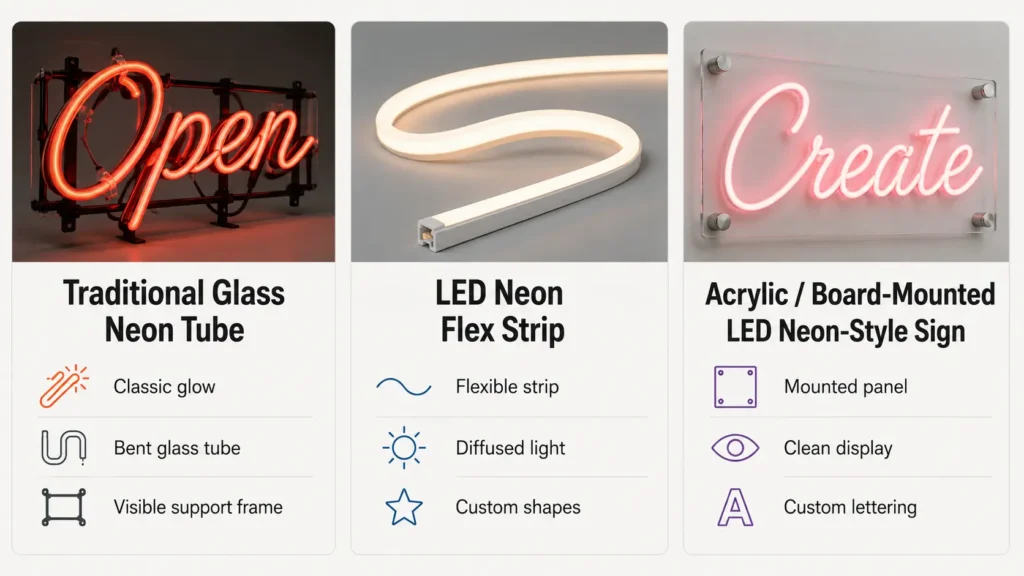
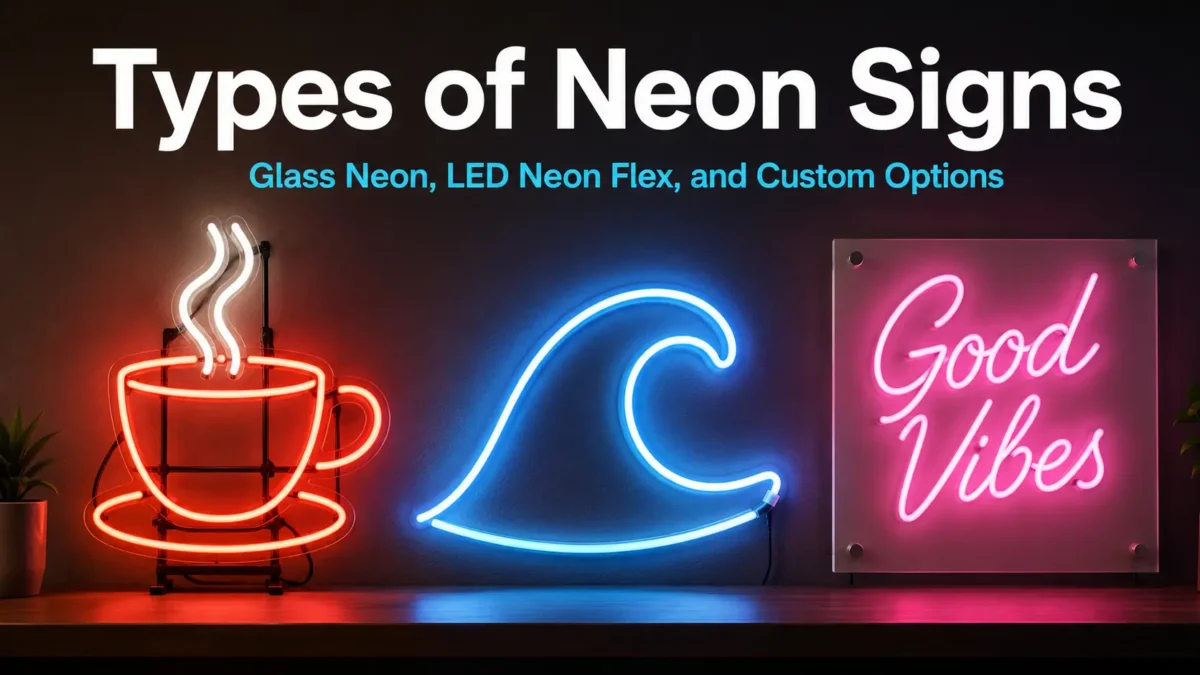
The main types of neon signs are traditional glass neon signs, LED neon flex signsو LED neon-style signs mounted on acrylic or board panels. Traditional neon uses shaped glass tubes and gas-discharge lighting. LED neon-style signs use LEDs and diffusers to create a similar glow. In short, choose by look, install site, custom needs, and supplier-confirmed specs.
Most buyers can group neon signs by how they are built. Also, this view makes it easier to see what to check before ordering.
| Sign Type | How It Is Built | Typical Look | Common Use | What to Check |
|---|---|---|---|---|
| Traditional glass neon sign | Shaped glass tubes with gas-discharge light | Classic exposed-tube glow | Retro shop signs, art signs, heritage-style rooms | Install method, service access, handling risk, local installer needs |
| LED neon flex sign | LEDs inside a flexible diffusing body | Smooth neon-like light line | Logo signs, brand walls, shop decor, custom letters | Bend limit, mount method, voltage, control, site rating if needed |
| Acrylic or board-mounted LED neon-style sign | LED neon-style letters or shapes fixed on a panel or frame | Clean custom sign look | Events, retail walls, photo zones, office decor | Panel size, holes, cable exit, dimmer or controller, artwork fit |
| Custom neon-style display | Project-based mix of LED neon-style parts, backing, wires, and mount parts | Built around a logo, shape, or brand layout | OEM work, campaigns, chain-store displays, distributor orders | Artwork, size, color, quantity, packing, documents, and sample steps |
However, this table is not a ranking. A sign type that works for one site may not work for another site if the build, install plan, or specs are different.
Traditional neon is the classic type many people picture when they hear “neon.” It uses shaped glass tubes and gas-discharge light to make a bright line.
As a result, this type can be a good fit when the project needs a real glass-tube look or a retro feel. However, buyers should also plan for handling, install skill, service access, and local support.
Therefore, use traditional neon when the main goal is the classic glass neon look and the team can handle the install and service needs of that format.
LED neon flex signs use LEDs and diffusing materials to create a neon-like line of light. Instead of shaped gas-filled glass tubes, the light source is LED-based.
Also, LED neon flex can suit letters, outlines, logos, and decor lines when the product design allows it. For this reason, many buyers review it for brand signs, retail walls, event signs, and custom logo work.
However, do not assume all LED neon flex products work the same way. Check bend direction, cut length, color, مزود الطاقة, وحدة التحكم, mount parts, and site conditions before you approve a design.
Some neon-style signs place LED neon-style letters or shapes on an acrylic panel, backboard, or frame. This format is common for logos, photo walls, event signs, retail displays, and indoor brand decor.
In addition, the panel is part of the final sign. So, buyers should check panel shape, sign size, cable path, holes, mount method, and any dimmer or control needs.
For example, a reception wall sign may need a neat cable exit and a clean panel shape. By contrast, an event backdrop may need easier handling and packing.
A simple “traditional neon vs LED neon” answer can be too broad. Instead, compare the two options by project fit.
| Decision Point | Traditional Glass Neon | LED Neon Flex / LED Neon-Style Sign | Buyer Note |
|---|---|---|---|
| Look | Classic glass tube look | Neon-like line with LED-based build | Choose by the look the project needs |
| Custom shapes | Depends on glass forming and the build process | Often used for letters, logos, outlines, and decor shapes | Provide clear artwork before quoting |
| Install plan | May need careful handling and skilled install work | Depends on panel, mount parts, wiring, and product type | Ask for install guidance for the chosen sign |
| Outdoor or exposed use | Must be checked by product and install method | Must be checked by product rating and install method | Do not assume outdoor use without documents |
| Service planning | Depends on build, site, and service access | Depends on LED product, power, site, and use | Ask what parts may need service or replacement |
| Quote details | Design, tube layout, power details, installer needs | Artwork, size, color, voltage, controller, backing, mount, quantity | Compare quotes with the same project details |
Therefore, define the project first. Before asking which type is better, check size, viewing distance, install surface, site conditions, color needs, and design detail.
Next, match the sign type to the place where it will be used. The same style may work well indoors but need more checks outdoors.
| Project Case | Type to Consider | Why It May Fit | Questions to Confirm |
|---|---|---|---|
| Vintage shopfront or retro room | Traditional glass neon | Classic exposed-tube effect | Who will install and service it? How should it be handled? |
| Indoor logo wall or brand sign | LED neon flex or mounted LED neon-style sign | Custom line effect with panel or mount options | What backing, holes, cable exit, and color are needed? |
| Event backdrop or photo wall | Acrylic or board-mounted LED neon-style sign | Custom display format | Will it be used once or often? How will it be packed and mounted? |
| Outdoor or semi-outdoor sign | Product-specific rated option | The site matters more than the category name | What rating, power protection, and install method are needed? |
| Distributor or repeat order | Custom LED neon-style product | Can be easier to repeat when specs are fixed | What files, samples, packing, and checks are needed? |
| Complex logo or special shape | Custom neon-style design | Can be built around the artwork | What bend limit, stroke width, and final size apply? |
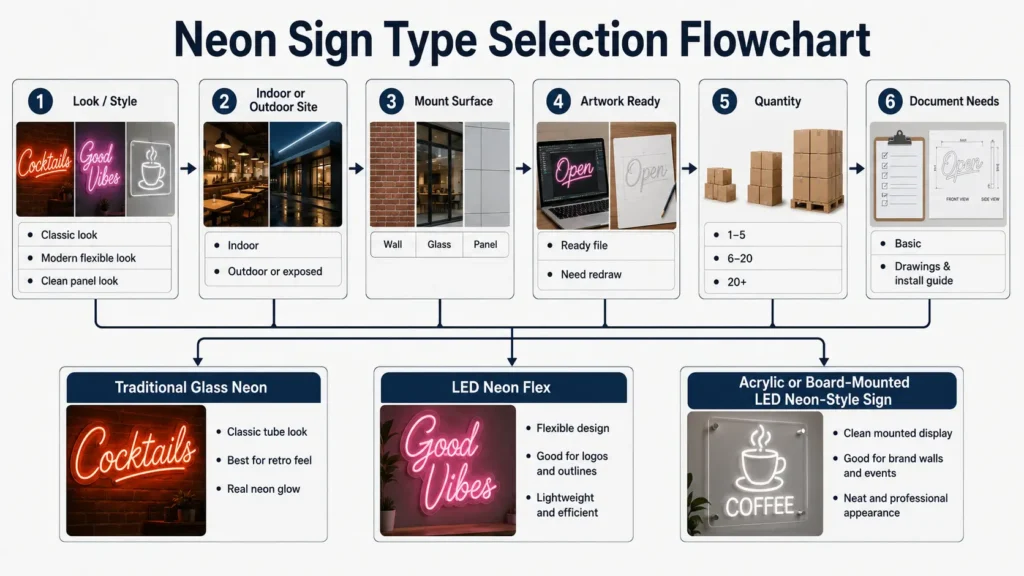
For indoor displays, start with the look and install plan. For example, a brand wall may need a clean cable route, while an event sign may need easier packing.
Also, indoor use still needs clear specs. Check power, mount method, controller or dimmer needs, and whether the sign will move often.
Outdoor and exposed sites need more care. For example, rain, sun, dust, cable runs, power placement, and the wall surface can all affect the sign choice.
Therefore, for any outdoor or exposed project, ask the supplier to confirm:
In short, do not assume all LED neon signs are waterproof or all neon signs can be used outdoors. The correct answer depends on the product and the install plan.
Custom neon-style signs need clear input. A supplier cannot review a project well from a vague note like “make my logo in neon.”
So, send artwork, size, color, panel choice, install site, and quantity. In addition, repeat orders may need packing rules, labels, sample approval, checks, and document needs.
However, exact MOQ, lead time, warranty, and capacity should be confirmed with the supplier. Do not assume those details from a general guide.
Before you compare quotes, check the details that affect risk. As a result, you can avoid comparing one complete quote with one vague quote.
| Detail to Check | Why It Matters | What to Ask For |
|---|---|---|
| Indoor or outdoor use | The site affects product choice and install work | Product rating, install guide, and power protection details |
| Service life | It depends on product design, power, site, and use | Product-specific service-life data or warranty terms |
| Voltage and power | It affects install and safety planning | Recommended power supply, voltage, and wiring guide |
| Dimming or control | It affects use and system fit | Compatible controller or dimmer details |
| Mount method | It affects install cost and final look | Mount parts, hole positions, and panel design |
| Color and look | It affects brand match | Color option, sample photo, or approved drawing |
| Certificates or compliance | Some projects may require documents | Exact document, if available |
| الضمان | It affects buying risk | Written terms and exclusions |
Also, keep each supplier quote on the same basis. If one quote includes only a sign size and another includes the panel, controller, packing, and mount parts, the prices may not mean the same thing.
Finally, prepare a clear RFQ. This helps the supplier review the right sign type and reduces back-and-forth.
Before you contact a supplier, prepare:
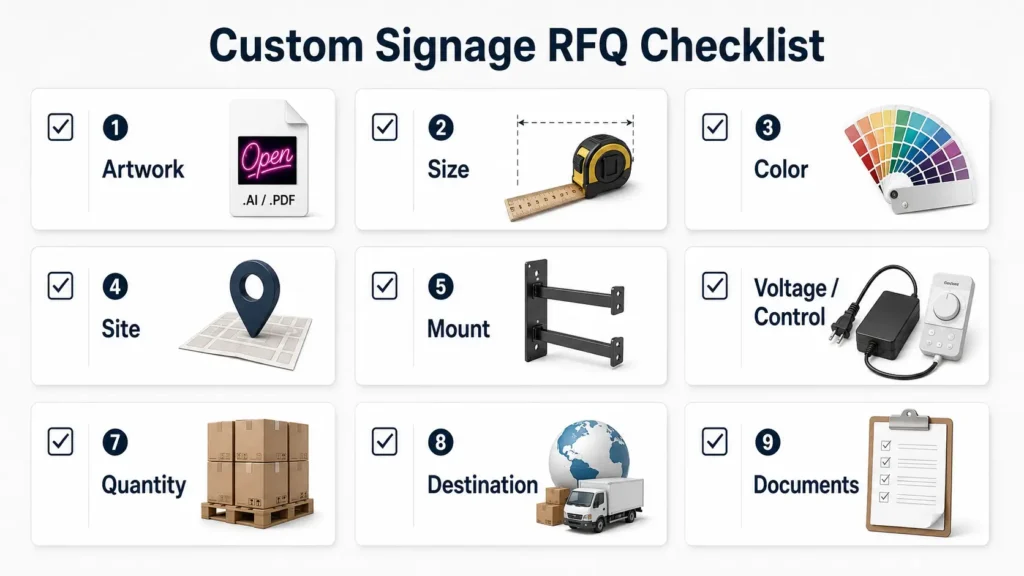
In addition, send drawings or visual references for custom work. If your project has strict brand color, install, or document needs, mention them early.
The most practical groups are traditional glass neon signs, LED neon flex signs, and LED neon-style signs mounted on acrylic or board panels. Also, buyers may group signs by use, such as shop signs, wall signs, event signs, logo signs, or custom displays.
There is no single fixed count. Instead, buyers usually group neon signs by build and use. A practical comparison includes traditional glass neon, LED neon flex, and mounted LED neon-style signs.
Traditional neon uses shaped glass tubes and gas-discharge light. By contrast, LED neon-style signs use LEDs and diffusers to create a similar line-of-light effect. The right option depends on look, design, install site, and supplier-confirmed specs.
Usually, LED neon-style signs are not traditional gas-filled glass neon. Instead, they are LED-based products made to create a neon-like look. For clear buying terms, call them LED neon-style signs or LED neon flex.
There is no universal best type. For example, a shopfront, indoor brand wall, event backdrop, and custom logo may each need different build, mount, and site details. Therefore, choose by look, install site, custom needs, and supplier-confirmed specs.
Prepare artwork, target size, color, indoor or outdoor use, mount method, panel choice, voltage or control needs, quantity, destination, and required documents. Also, for logo signs, send a clear design file instead of only a screenshot.
Some signs may be made for outdoor or exposed use. However, this should not be assumed. Confirm the product rating, install method, power protection, and site conditions before ordering.
Service life depends on product type, power supply, site, install method, and use. Therefore, avoid relying on a general number without product data. Ask for service-life data, warranty terms, and service guidance for the exact product being quoted.
Before choosing a neon sign, define the project conditions. Then, share your artwork, target size, color choice, indoor or outdoor condition, mount method, quantity, destination, and document needs with the supplier.
With those details, the supplier can review which LED neon or neon-style option may fit the project. Also, the supplier can point out which specs still need to be confirmed before production.

 English
  Spanish
  French
  Arabic